Hugo van der Goes
Hugo van der Goes (active 1440-1480) stands as one of the late fifteenth century’s most significant and original Early Netherlandish masters. Primarily active in Ghent, he specialized in both monumental altarpieces and penetrating psychological portraits, establishing an artistic voice that exerted influence well beyond the Northern European tradition. His relatively short career produced a body of work that defined the transition from the meticulous detail of earlier Netherlandish painting toward a style marked by dramatic scale and intense emotionality.
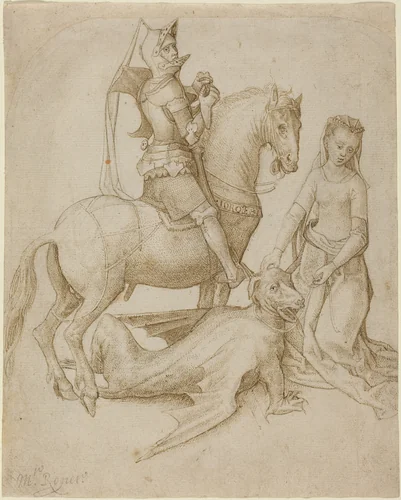
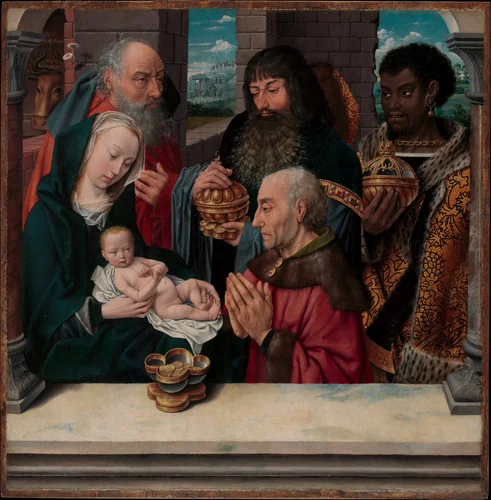
Van der Goes’s innovations stemmed from a deliberate move toward grandeur and pathos. His style is defined by a striking monumental scale, evident even in fragments such as Saint George and the Dragon, and a highly personalized palette distinguished by its rich intensity and occasional cool tonalities. His compositions, including The Adoration of the Magi, possess an immediate, often dramatic visual impact that distinguished them from his contemporaries.
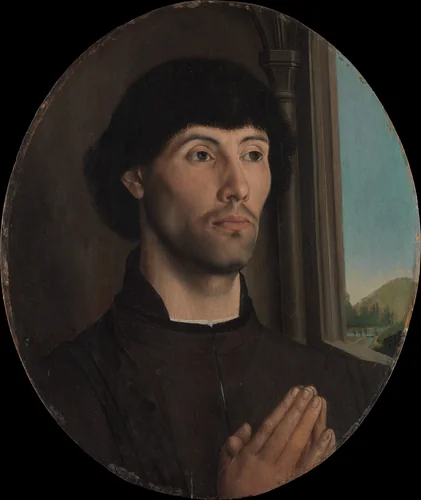
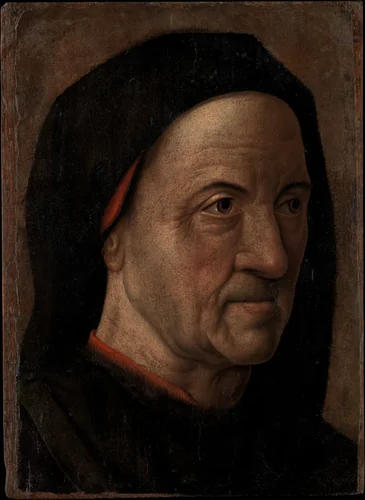
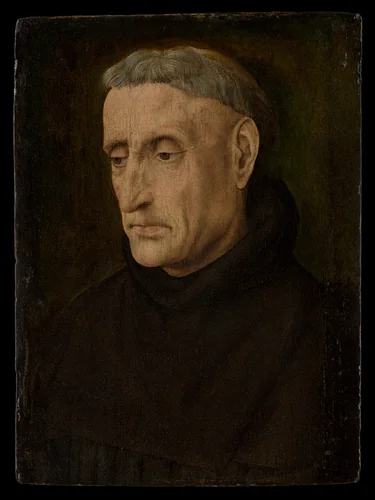
His approach to portraiture was notably individualistic. While the specific identities of sitters in works like Portrait of an Old Man often remain historically elusive, Van der Goes renders the character with such unmistakable, palpable realism that the viewer feels they have just been introduced to the sitter personally. This psychological depth and technical mastery made him an essential figure in the development of Northern European portraiture.
His international relevance was cemented by his acknowledged masterpiece, the Portinari Triptych. Commissioned for the high altar of the hospital of Santa Maria Nuova in Florence and installed there around 1483, its arrival proved profoundly important for Italian Renaissance art. The Northern master’s sophisticated handling of the oil medium, intense realism, and intricate detail in the representation of nature acted as a crucial catalyst in Florence, encouraging a bolder and more analytical approach to naturalism among local artists.
Despite the relatively limited number of surviving Hugo van der Goes paintings, his legacy remains widely appreciated in major institutions globally, including the National Gallery of Art and the Metropolitan Museum of Art. Fortunately, many of his seminal compositions are now available through institutional archives. Consequently, scholars and enthusiasts can easily find high-quality prints of this pivotal artist’s works for study, preserving the complex and profound contribution of this key figure in fifteenth-century art history.
Source: Wikipedia · CC BY-SA 4.0