Hugo Henneberg
Hugo Henneberg stands as a critical, if sometimes understated, figure in the history of Austrian visual culture at the turn of the twentieth century. Active primarily between 1890 and 1906, Henneberg uniquely combined the rigorous precision of a scientist, the structural understanding of a graphic artist, and the atmospheric sensibility of an Art Photographer (Kunstphotograph). This multidisciplinary background allowed him to push the boundaries of photographic technique, particularly within the nascent Pictorialist movement.
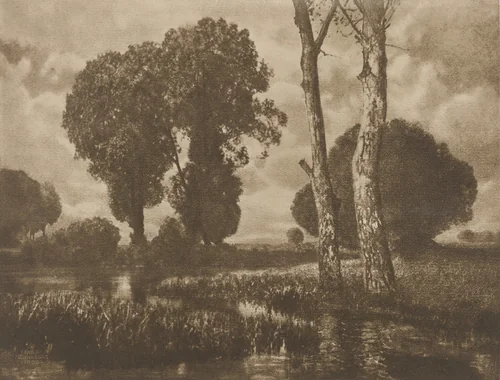
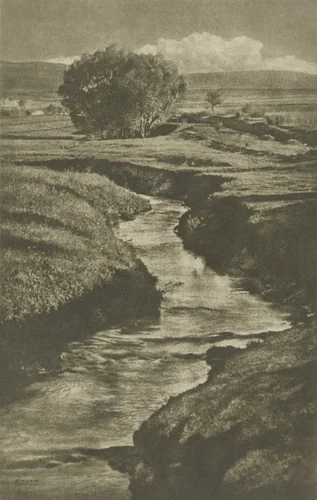
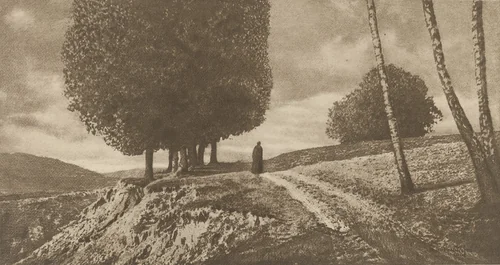
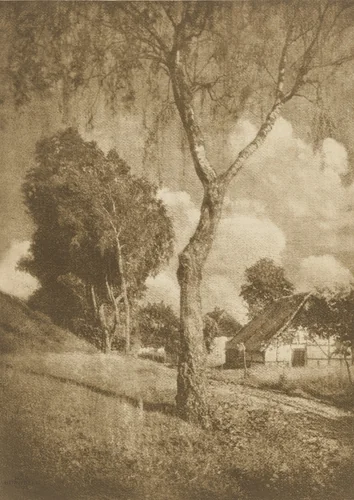
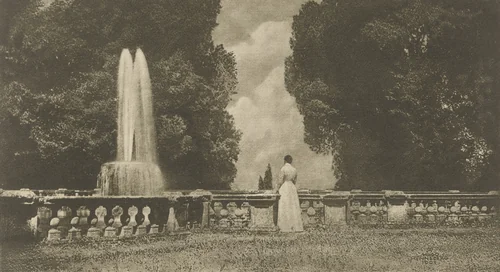
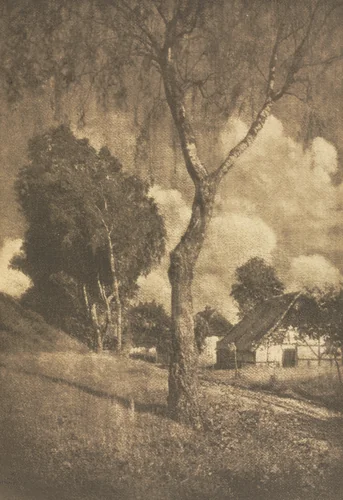
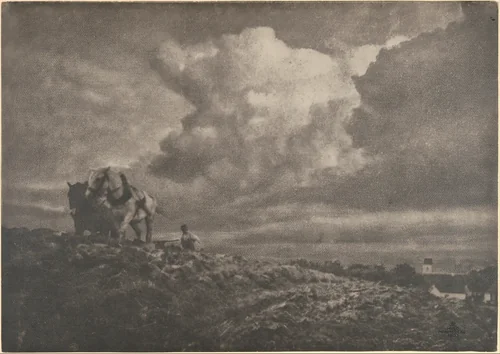
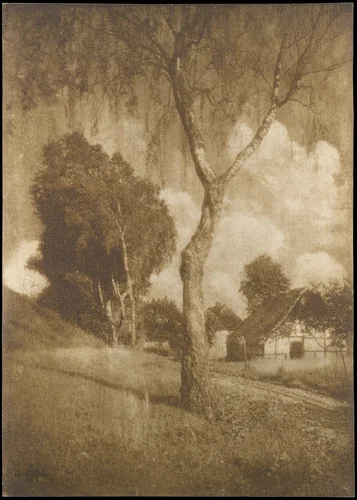
Henneberg was instrumental in redefining photography not merely as a mechanical reproduction process, but as a medium capable of achieving the nuance and emotional resonance of traditional painting. His compositions, often characterized by soft focus, rich tonal variations, and atmospheric depth, were meticulously crafted using complex processes such as Gum Bichromate and oil pigment printing. This technique allowed Henneberg to manually manipulate the final image, blurring the lines between the optical recording and the artist’s hand-rendered interpretation. His oeuvre, though numerically small, includes powerful studies of landscape and rural life, such as Pflügen (Plowing), Motiv aus Pommern (Motive from Pomerania), and the strikingly intimate Bach Im Fruhjahr (Stream in Spring).
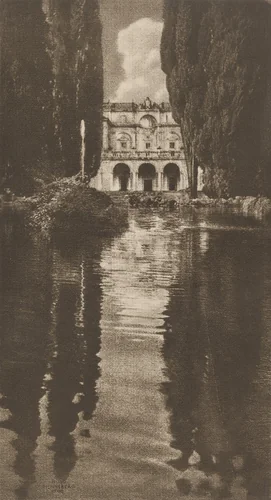
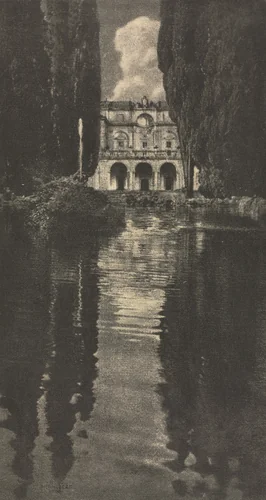
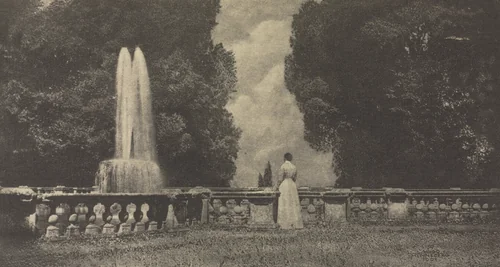
The artist possessed a remarkable talent for distilling profound poetic stillness from deceptively simple subject matter. He preferred the quiet dignity of a provincial scene, as evidenced by his iconic rendering of the autumnal foliage surrounding an [Italian Villa in Autumn], over grand, sweeping vistas. This commitment to atmosphere and mood secured his reputation among the leading innovators of the Secession era.
Henneberg’s historical significance is confirmed by the placement of his work in foundational institutions globally, including the Museum of Modern Art, the Metropolitan Museum of Art, and the Cleveland Museum of Art. His visual legacy, defined by complex processes and deliberate artistry, remains crucial for understanding fin-de-siècle Viennese aesthetics. Today, the surviving examples of authentic Hugo Henneberg prints are highly valued; given their historical importance, many key images have entered the public domain, making high-quality prints accessible for scholarly study and contemporary appreciation. Although his career as a photographer was brief, Henneberg’s profound mastery of light and shadow fundamentally advanced the status of the photograph as a museum-quality object.
Source: Wikipedia · CC BY-SA 4.0
![[Italian Villa in Autumn] by Hugo Henneberg, photograph, 1898](https://img.artbee.org/a962ff81-6548-460b-9b50-3d8acc25cd98/small.webp)