Hugh Welch Diamond
Hugh Welch Diamond occupies a unique intersection in 19th-century visual culture, bridging the nascent fields of photography and psychiatric study. A pioneering British psychiatrist, Diamond established the foundational parameters for psychiatric photography, effectively harnessing the newly developed camera obscura to document and categorize mental illness. His contribution to the craft remains a central reference point in the history of medical imaging and psychological portraiture.
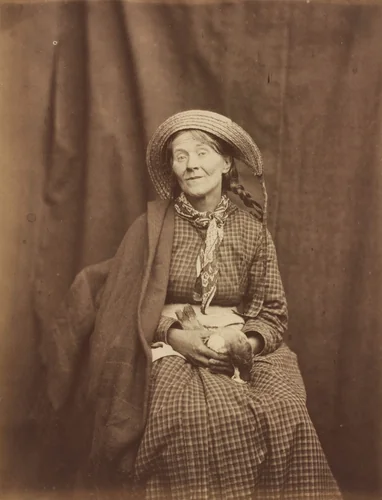
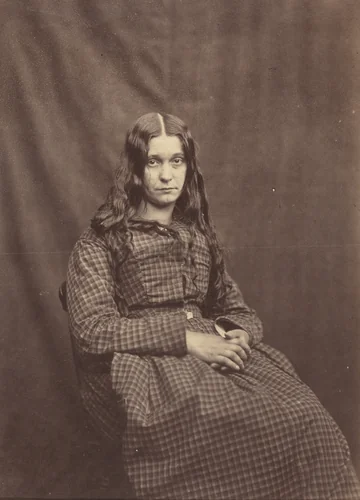
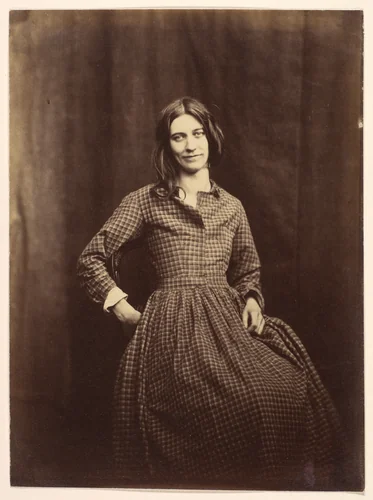
Working primarily between 1848 and 1857, Diamond’s position as Superintendent at the Surrey County Lunatic Asylum provided the setting for his most crucial series of portraits. He believed deeply in the diagnostic potential of the camera, hypothesizing that subtle shifts in facial physiognomy could provide objective evidence of specific mental states that might otherwise evade simple clinical observation. Unlike purely clinical records, however, Diamond’s resulting calotypes often possess a striking psychological intensity, capturing patients not merely as subjects of pathology but as individuals confronting profound emotional distress.
His dedication to the precision of the image was matched by a pronounced professional empathy; he reportedly only photographed patients after gaining their trust, occasionally offering them a small monetary sum or a piece of cake in exchange for their participation. This blend of clinical ambition and humane consideration elevates his work beyond simple documentation.
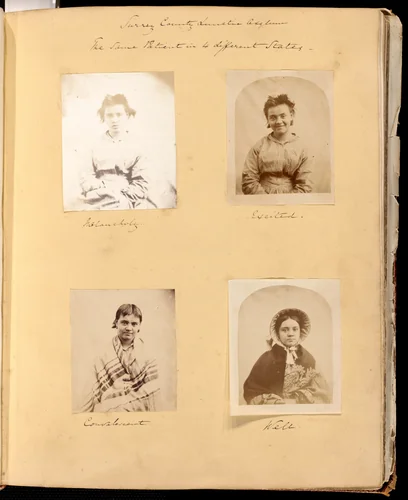
Key surviving works, such as the methodical multi-state composite Surrey County Lunatic Asylum, The Same Patient in 4 Different States: Melancholy, Excited, Convalescent, Well Untitled (assembled 1849-60), reveal his structured approach to charting pathological progression. Although the original intent was strictly medical, these early photographs are now celebrated as powerful, defining examples of early psychological portraiture. Highly sought after by museums and collectors, original Hugh Welch Diamond prints reside in the permanent collections of institutions like the Metropolitan Museum of Art and the National Gallery of Art. Ensuring the preservation of these historical documents, much of this significant body of work is now available as downloadable artwork for scholarly review, underscoring its dual importance to the history of the camera and the mid-Victorian asylum system.
Source: Wikipedia · CC BY-SA 4.0
![[Patient, Surrey County Lunatic Asylum] by Hugh Welch Diamond, photograph, 1850-1855](https://img.artbee.org/e832d6c0-1219-423c-abc9-95ac4e21acee/small.webp)