Hugh Douglas Hamilton
Hugh Douglas Hamilton RHA (1740-1801) was a highly accomplished Irish painter who specialized in portraiture, strategically positioning himself within the cosmopolitan centers of late eighteenth-century patronage. His career trajectory, spanning Dublin, London, and Rome, reflects a continuous adaptation of technique and scale driven by the demands of aristocratic European society.
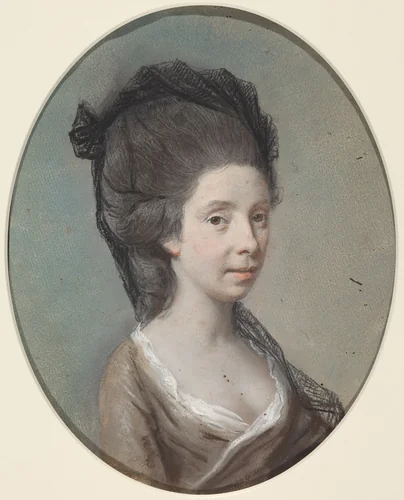
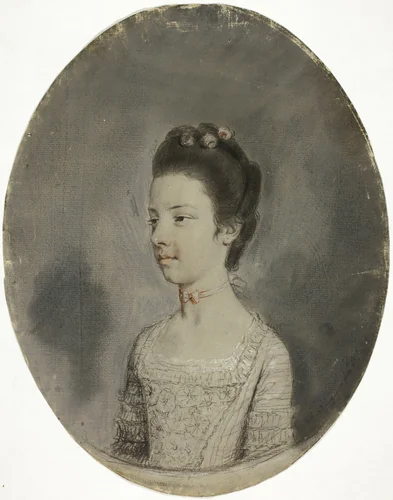
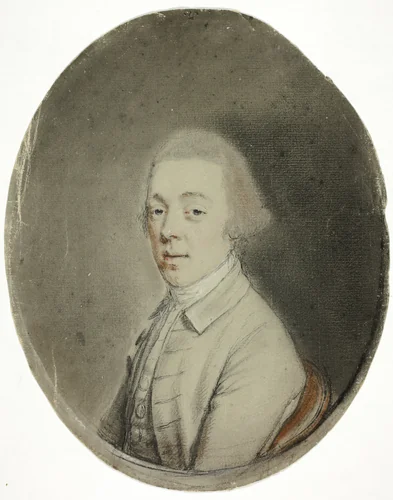
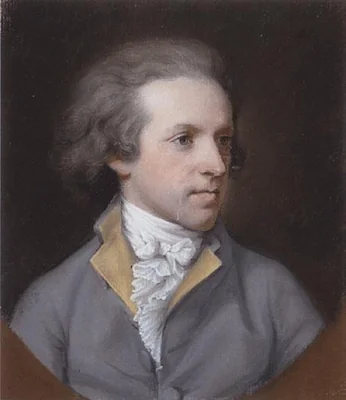
Until the mid-1770s, Hamilton cultivated his reputation almost exclusively through the medium of pastel. This choice of material, which demands both speed and intimate precision, established him quickly in London society. His early successes often involved smaller-scale, elegantly rendered works, displaying a keen ability to capture the sitter’s personality with an easy informality unusual for the era. This refined approach to chalk and pigment proved influential on contemporaries, notably the English painter Lewis Vaslet.
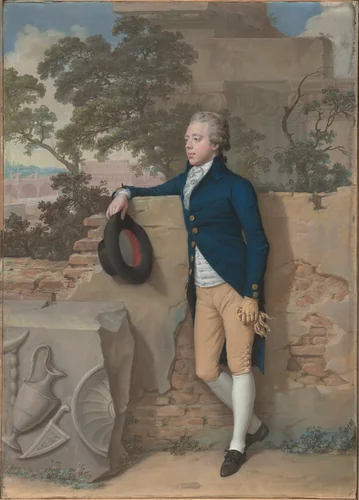
Following his initial establishment in Britain, Hamilton spent a considerable period in Rome. The Eternal City, the requisite stop for Grand Tour travelers and a hub of classical influence, informed a necessary evolution in his oeuvre. While remaining dedicated to portraiture, the Roman environment often required a shift in scope, culminating in grander, more formally arranged studies, designed to commemorate the status of figures such as George Clavering Cowper, 3rd Earl Cowper. Whether depicting British nobility or prominent locals, Hamilton’s skill lay in blending fashionable elegance with psychological insight.
This continuous evolution, from the delicate intimacy of pastels like Lady Holland (Lady Mary Fitzpatrick) to the later consolidation of oil technique, defined his significant contribution to British and Irish art. Hamilton returned to Dublin in the early 1790s, where he cemented his legacy as a society painter of the highest order.
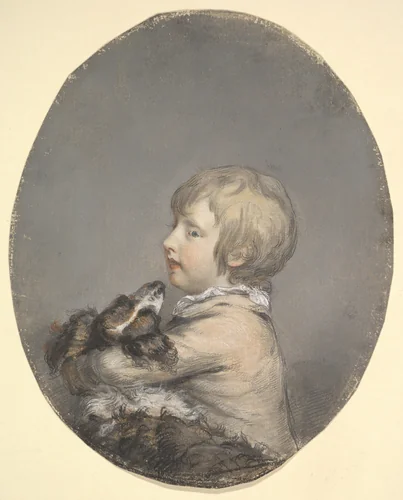
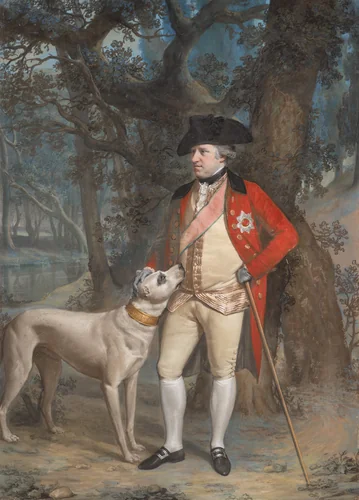
Today, his refined works, which include the detailed study William Evelyn of St Clere, Kent, holding a spaniel, are held in major institutions worldwide, confirming their enduring museum-quality status. As many of these compositions are now in the public domain, enthusiasts can easily obtain high-quality prints and appreciate the delicate balance of formal structure and spontaneous likeness that characterized Hugh Douglas Hamilton paintings throughout his active years.
Source: Wikipedia · CC BY-SA 4.0