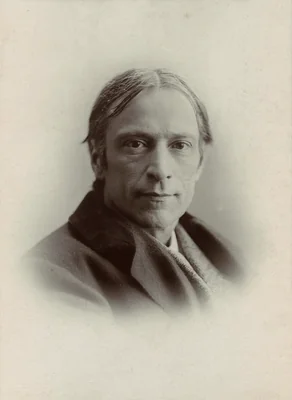
Hubert von Herkomer
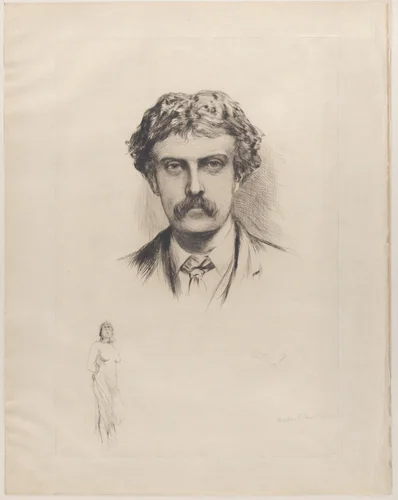
Sir Hubert von Herkomer (1849-1914) stands as one of the most commercially successful and professionally diverse artists operating in late Victorian Britain. Born in Bavaria, he emigrated to England and cultivated a prolific career that spanned painting, composition, and pioneering work in the nascent field of film direction. While his immediate, commanding reputation during his lifetime rested upon his immense success as a society portraitist, particularly of influential men, his lasting critical significance is anchored in his earlier contributions to social realism.
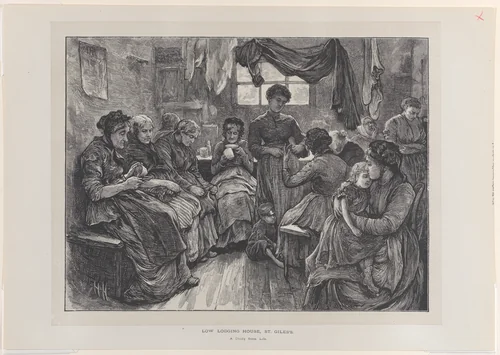
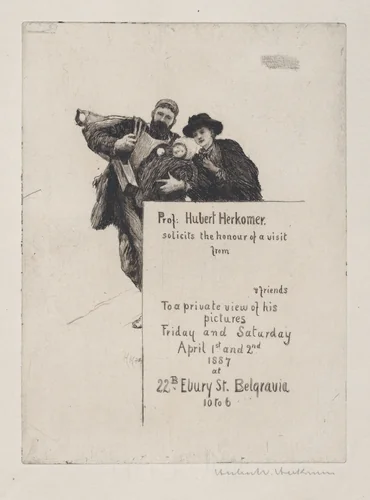
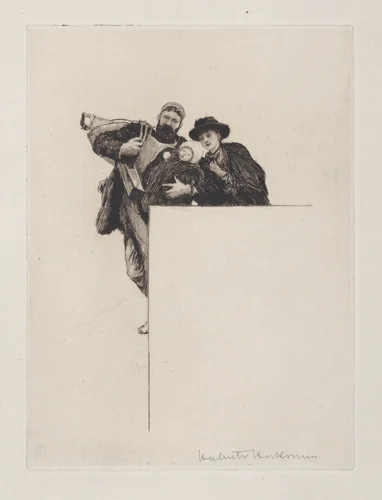
Herkomer’s early work rejected the romanticizing tendencies common in high Victorian art, instead utilizing a frank, direct approach to capture the stark realities of life among the working poor. This dedication to documenting unvarnished truth was evidenced in his impactful illustrations for publications such as The Graphic, where pieces like Low Lodging House, St. Giles's; A Study from Life brought the harsh conditions of urban life into middle-class homes. His most enduring painting from this period, Hard Times, depicts the fraught moment of a traveling day-laborer’s family stranded at the roadside and is recognized as a landmark achievement in British social observation. Collections interested in high-quality prints from this era often focus on the striking contrast and narrative detail inherent in these compositions.
Later in his career, Herkomer established himself as the leading interpreter of powerful Victorian and Edwardian society through his lucrative portrait commissions. Yet, he was restless; he did not confine his immense energy solely to the canvas. He was also a distinguished composer and, most surprisingly, a key innovator in motion pictures, directing experimental films at his own studio complex. It is a unique irony that the man who achieved fame by sensitively painting static subjects was simultaneously obsessed with the newly mechanized power of moving images.
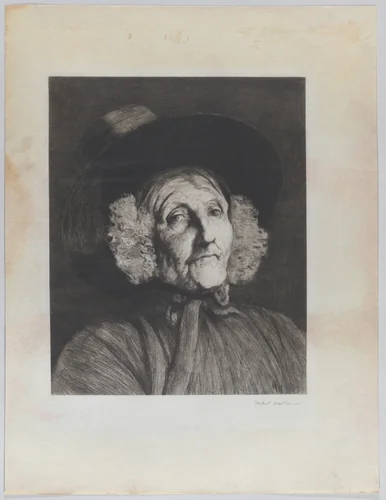
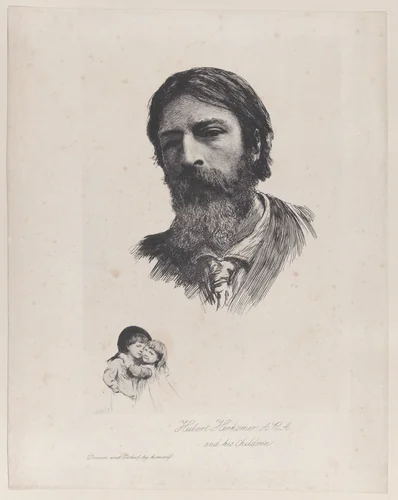
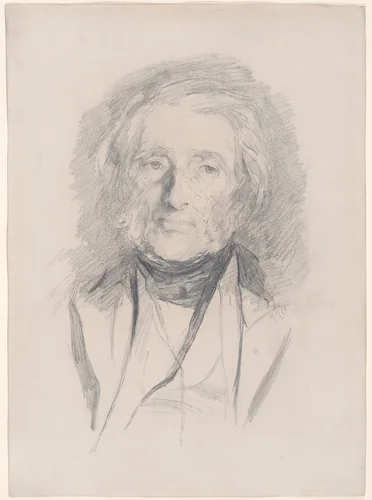
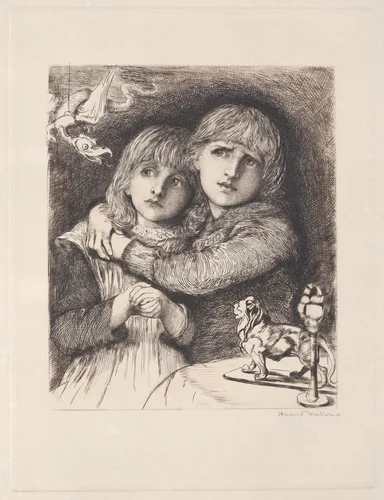
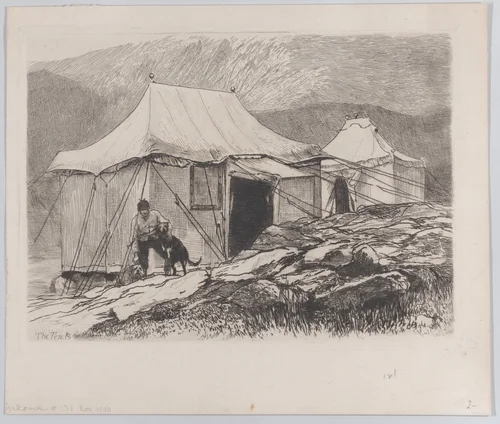
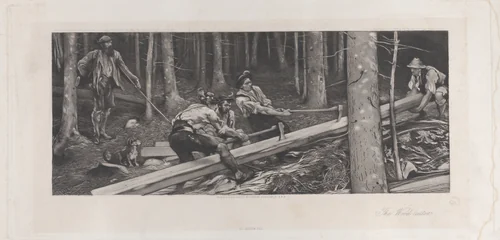
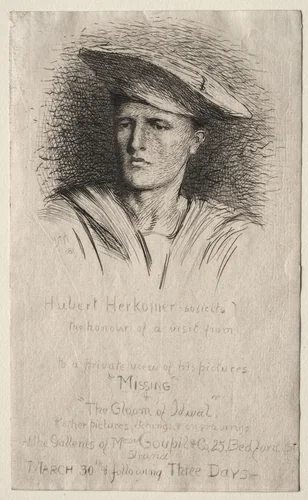
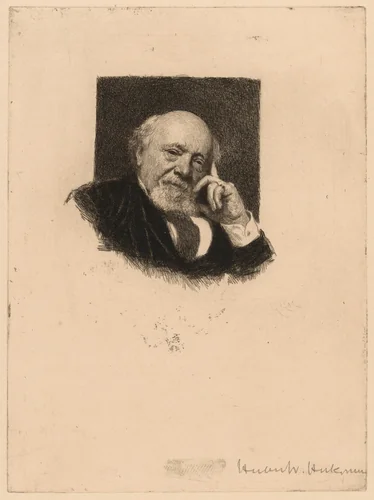
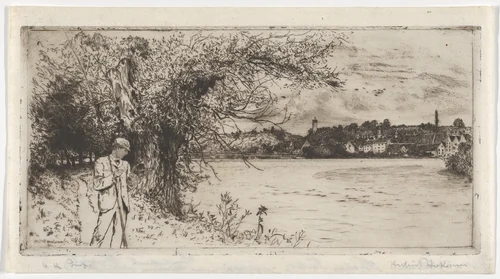
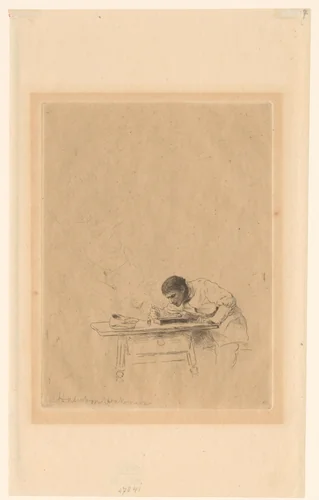
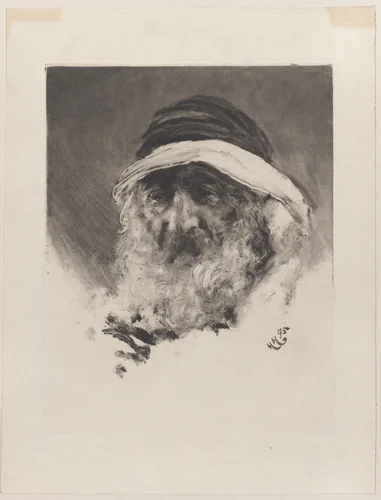
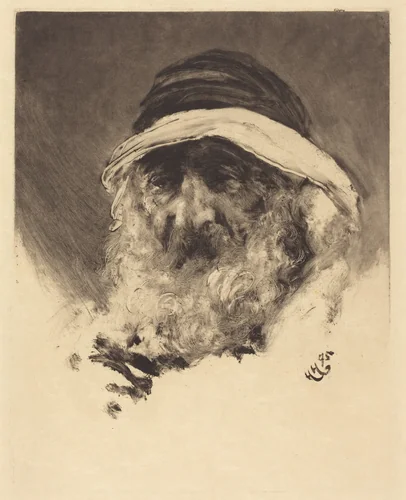
Today, Hubert von Herkomer paintings and prints are preserved in major institutions globally, including the Metropolitan Museum of Art and the National Gallery of Art. The accessibility of his wide-ranging output ensures his continued relevance; many of his historically significant images are now available as royalty-free downloadable artwork, making museum-quality reproductions accessible to a global audience.
Source: Wikipedia · CC BY-SA 4.0