Hu Yuan
Hu Yuan, courtesy name Yizhi, was a distinguished Chinese painter active across the mid-19th century, a critical era in late Qing Dynasty art history. Hailing originally from Hailing, Taizhou, Hu established a reputation primarily through his refined execution of landscapes and the detailed hua-niao (flower-and-bird) genre. His strong geographical identity is often referenced through his adopted sobriquet; having resided in Fort Anding, in what is now Zichang County, he was formally known as "Mr. Anding."
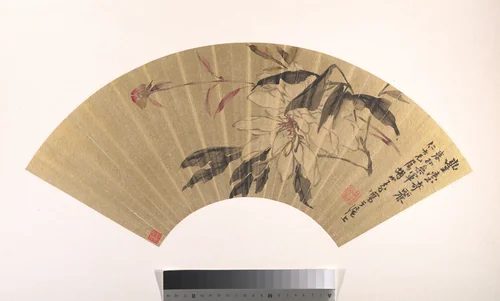
His relatively restrained surviving corpus, which includes six known works now held by prestigious institutions like the Metropolitan Museum of Art, exhibits a remarkable command over both scale and detail. Hu Yuan paintings are characterized by their balanced composition and highly precise technique. Works such as the vibrant Herbaceous Peony demonstrate a confident mastery of color wash and precise line work, hallmarks often associated with the refined gongbi style in late Qing floral painting.
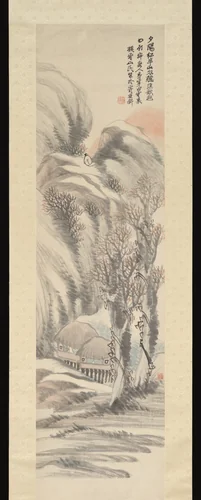
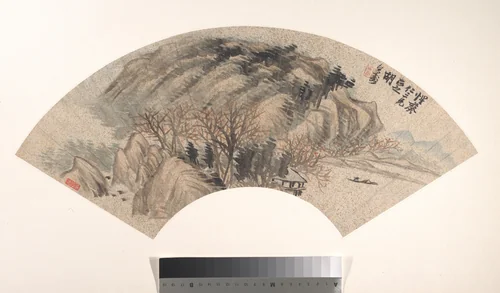
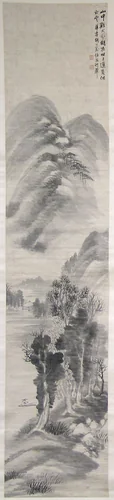
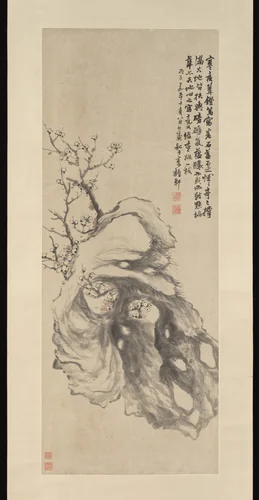
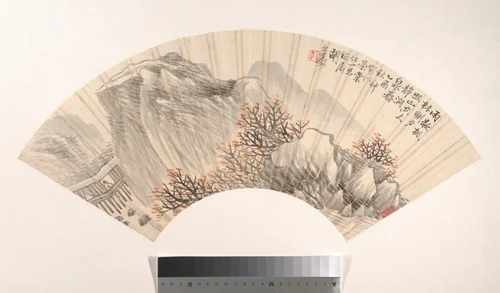
Hu’s aptitude was not limited to intimate studies. His documented series, Landscapes of the Four Seasons, reveals an ability to handle complex compositional cycles, capturing the gradual, poetic transition of nature over an annual span. The contrast between the meticulous delicacy of Flowering Plum and Rock and the broader, atmospheric rendering of his general Landscape studies suggests a versatile hand, adept at shifting focus between the micro and the macro elements of the natural world.
His adoption of the specific moniker "Mr. Anding," derived from his residential fort, implies a profound, grounded sense of place and a quiet pride in his settled status, offering a subtle layer of personal meaning to his detailed landscape interpretations. This connection to a specific locale, rather than solely to major artistic centers, adds unique context to his work.
Hu Yuan’s enduring relevance stems from this fusion of technical refinement and conceptual clarity. Today, his historically significant, museum-quality compositions are studied globally. The increasing availability of his significant output as downloadable artwork, stemming from its transition into the public domain, ensures that high-quality prints of his thoughtful compositions continue to inspire contemporary audiences and researchers worldwide.
Source: Wikipedia · CC BY-SA 4.0