Hon'ami Kōetsu (本阿弥光悦)
Hon’ami Kōetsu (本阿弥光悦) was an influential figure active between 1573 and 1624, with his work spanning the late Momoyama and early Edo periods in Japan. Although renowned for his versatility across various artistic disciplines, his surviving compositions frequently focus on the integration of masterful calligraphy and decorative design.
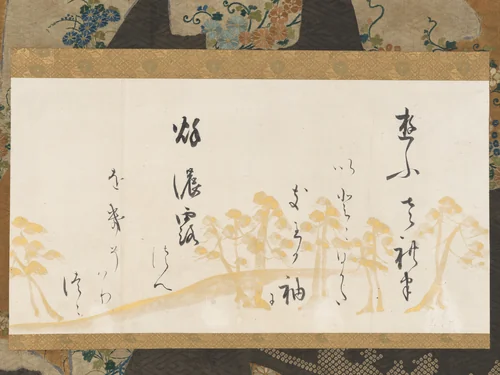
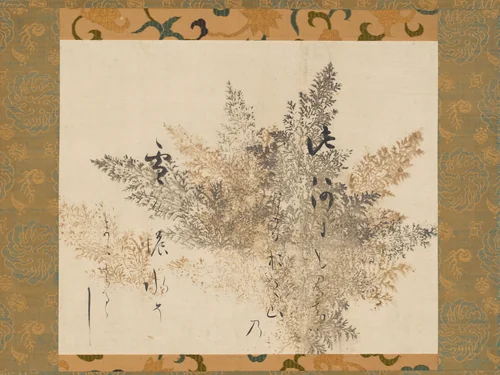
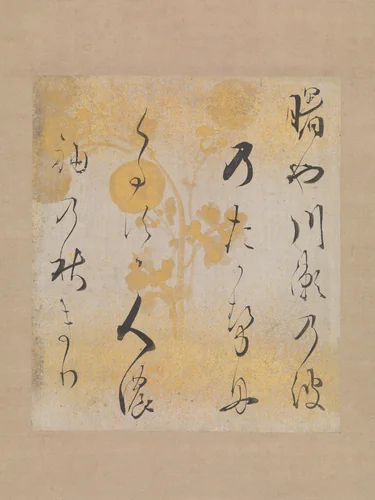
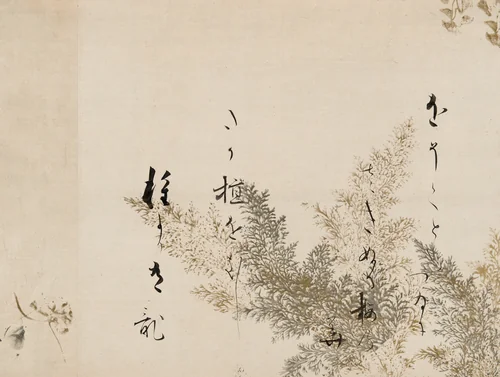
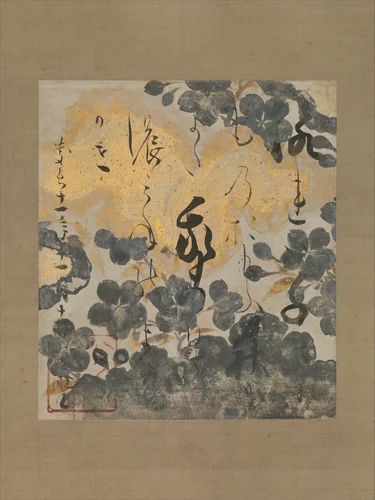
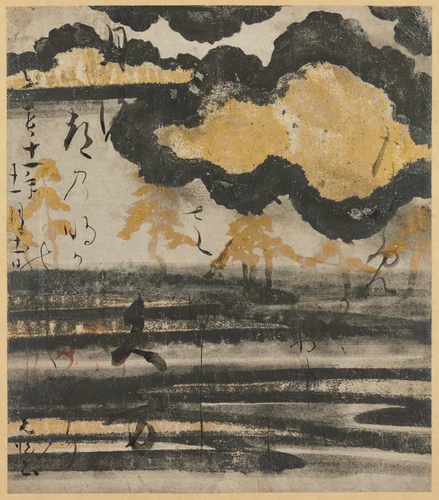
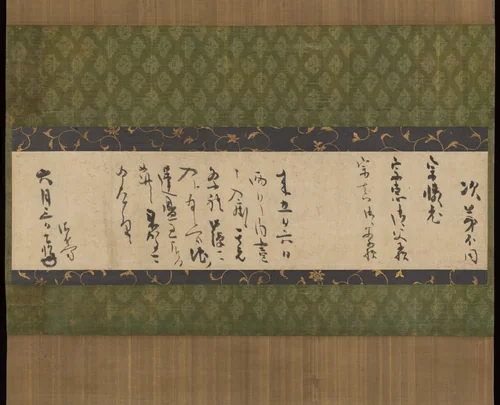
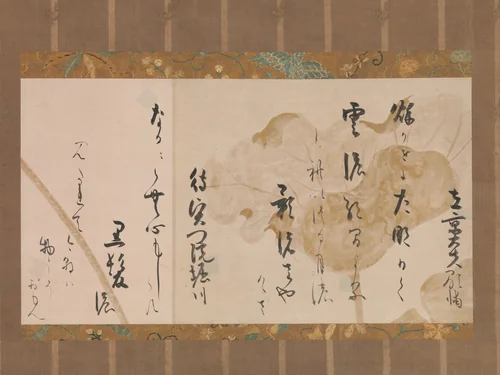
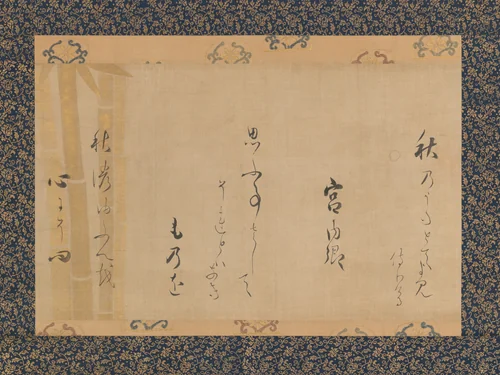
The artworks attributed to Hon’ami Kōetsu (本阿弥光悦) in prominent Western institutions primarily consist of illuminated texts and handscroll sections dedicated to Waka poetry. Museum collections hold six paintings and five other related works by the artist. These documented pieces, often using elaborate underpaintings or printed designs, include Section of a Handscroll with Waka and Underpainting of Pines and Selections from the New Collection of Japanese Poems from Ancient and Modern Times (Shinkokin wakashū) with Printed Designs of Chinese Lions and Crab Finger Grass. Another notable work is Waka Poem from Collection of Poems Ancient and Modern with a Design of Moss Ferns.
The artistic legacy of Hon’ami Kōetsu (本阿弥光悦) is preserved in several major American institutions, establishing him as a key figure of the era. His work is represented in the collections of the Metropolitan Museum of Art, the Art Institute of Chicago, and the Cleveland Museum of Art. Examples of Hon’ami Kōetsu (本阿弥光悦) paintings and calligraphy are increasingly accessible. Many important historical works from this period are now digitized, making high-quality prints available to researchers through public domain collections.