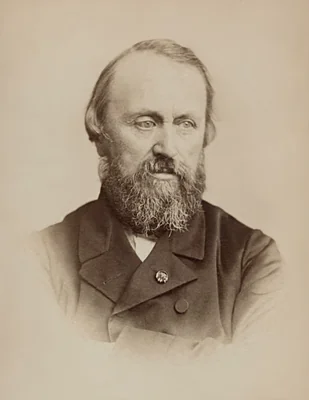
Hippolyte Flandrin
Jean-Hippolyte Flandrin (1809-1864) was a preeminent figure in French academic painting, securing his position as a master of high Neoclassicism during the mid-nineteenth century. A pupil of Jean-Auguste-Dominique Ingres, Flandrin inherited a devotion to formal purity, meticulous draughtsmanship, and the classical ideal, principles that would govern his entire career across easel painting and monumental mural decoration. His early renown was solidified by his success in the 1832 Prix de Rome competition.
Flandrin’s most celebrated early work, Jeune Homme Nu Assis au Bord de la Mer (1836), housed in the Musée du Louvre, perfectly embodies the fusion of idealized anatomy and restrained sentiment that characterized his output. This early triumph demonstrated the formal rigor that later led to numerous prestigious state and ecclesiastical commissions throughout his active period, 1820-1860.
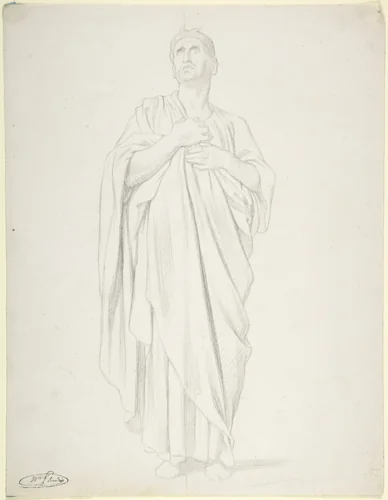
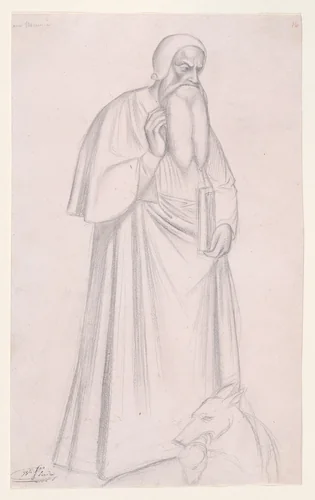
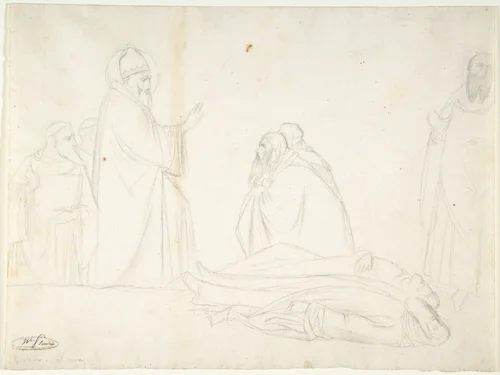
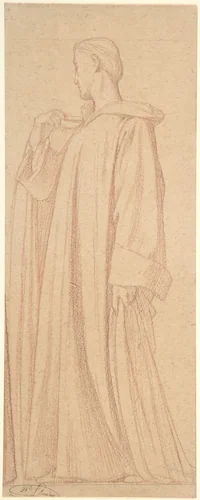
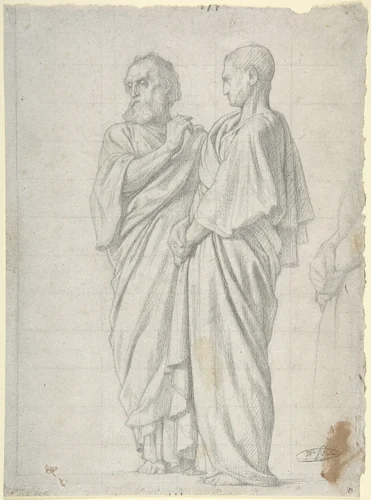
Unlike many of his contemporaries who embraced Romantic drama, Flandrin often applied his formidable technique to expansive religious and historical narratives, executing cycles for churches like Saint-Germain-des-Prés in Paris. The comprehensive nature of these undertakings required deep historical and anatomical study, evidenced by surviving preparatory works now held in major collections, including the Metropolitan Museum of Art. Drawings such as Study of an Apostle, for the painting of the Ascension in Saint-Germain-des-Pres, Paris (executed between 1839 and 1863), showcase his methodical approach to form and composition. This dedication also extended to his scholarship, demonstrated by preparatory sketches like Figure Study after Andrea di Bonaiuto, S. Maria Novella, Florence, illustrating Flandrin's commitment to transcribing and internalizing the techniques of Italian Renaissance masters.
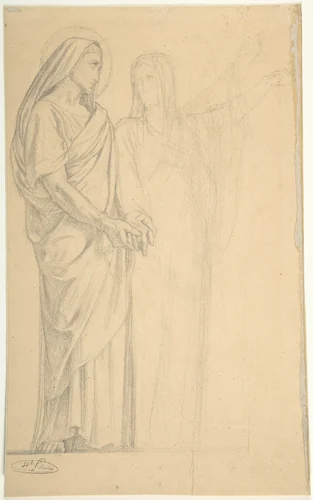
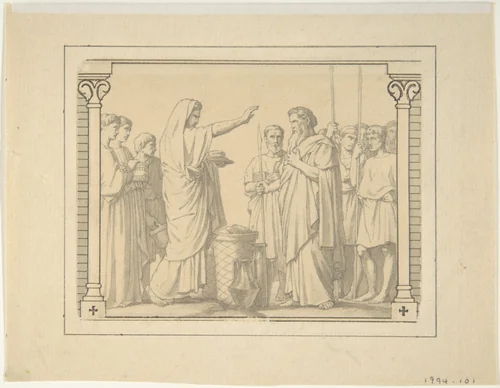
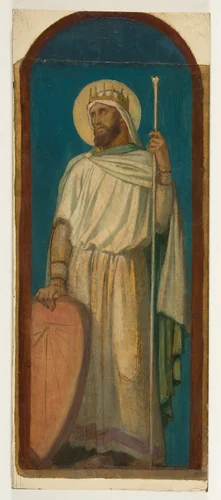
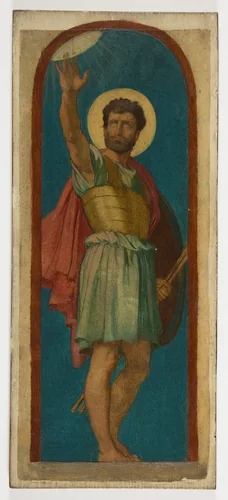
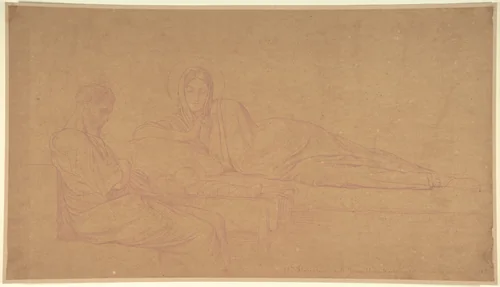
Flandrin’s systematic process and adherence to classical form ensured that his work, whether in narrative pieces like Melchizedek Presenting Abraham with Bread and Wine or in his intimate studies like Saints Adrian and Natalia, maintained a steady, contemplative tone. It is perhaps an irony that an artist who spent his life working within the highly formal structure of the Salon and state patronage is now widely accessible. Today, many of the foundational Hippolyte Flandrin paintings and studies are in the public domain, offering contemporary audiences the chance to appreciate his subtle genius through easily obtainable high-quality prints and downloadable artwork.
Source: Wikipedia · CC BY-SA 4.0