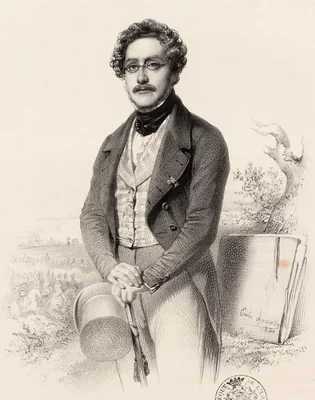
Hippolyte Bellangé
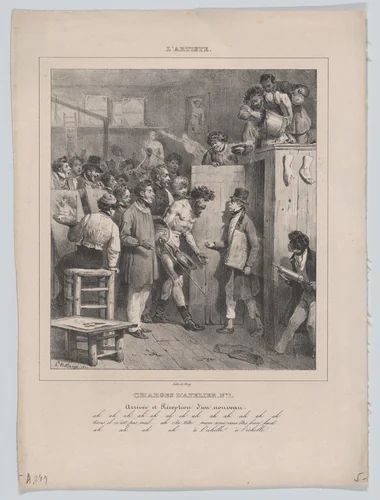
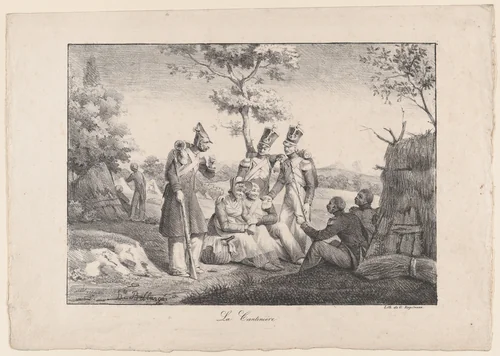
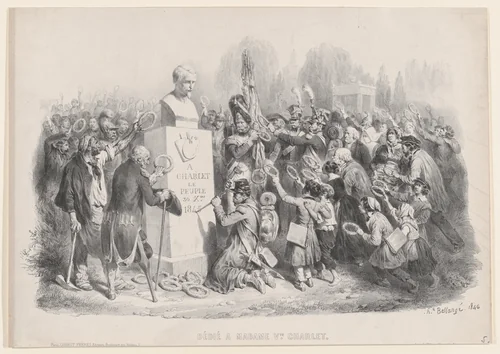
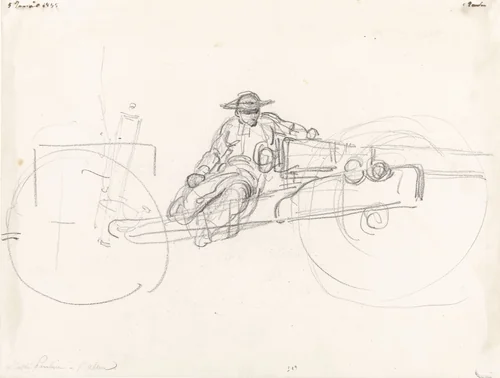
Joseph Louis Hippolyte Bellangé (1800-1866) established himself as a prominent figure in French military art and graphic production, uniquely situated to chronicle the shifting sensibilities of the post-Napoleonic era. Influenced profoundly by the extensive campaigns of the First Empire, Bellangé swiftly utilized the relatively new process of lithography, translating the immediacy of military sketches into easily distributable media. His early output, including detailed works such as A Seated Soldier and the instructive series Five Vignettes, demonstrates an early fluency in printmaking that brought complex genre scenes to a wider audience.
Bellangé pursued systematic academic studies under Baron Gros, a celebrated master of history painting whose large-scale works defined the martial aesthetics of the era. Despite this rigorous classical training, Bellangé dedicated his professional life almost exclusively to the depiction of battle-pieces, occasionally producing portraits as diversion. He was instrumental in evolving the genre, moving away from purely heroic ideals and toward a subtler observation of military life. This approach allowed for occasional moments of understated wit and gentle critique, exemplified by his early satirical drawing, Caricature of the Art of Painting. This quiet focus on the daily experience of the soldier, rather than just the climax of the conflict, defined his distinctive style.
His dedication to precise and evocative military painting earned him substantial official recognition throughout his career. He received a second class medal for a historical picture in 1824 and was decorated with the Legion of Honour in 1834, rising to the rank of Officer in 1861. Further cementing his stature, he won a major prize at the Paris Universal Exhibition of 1855. Today, his extensive portfolio of drawings and Hippolyte Bellangé prints are held in major institutions globally. These museum-quality works, which offer valuable insight into nineteenth-century military life, are frequently available in the public domain, allowing for widespread access to downloadable artwork for collectors and scholars alike.
Source: Wikipedia · CC BY-SA 4.0