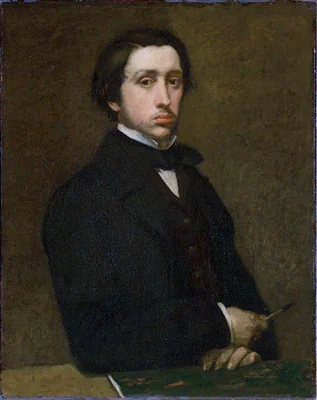
Hilaire-Germain-Edgar Degas
Hilaire-Germain-Edgar Degas (1834-1917) stands as one of the most penetrating and significant French artists of the late nineteenth and early twentieth centuries. Though frequently categorized as a co-founder of Impressionism, Degas maintained a rigorous, almost classical focus on line, structure, and academic draftsmanship that distinguished his work from the movement’s emphasis on purely optical color and fleeting landscape light. Celebrated globally for his sophisticated oil paintings and brilliant pastel drawings, his commitment to observation fundamentally redefined the representation of modern urban life.
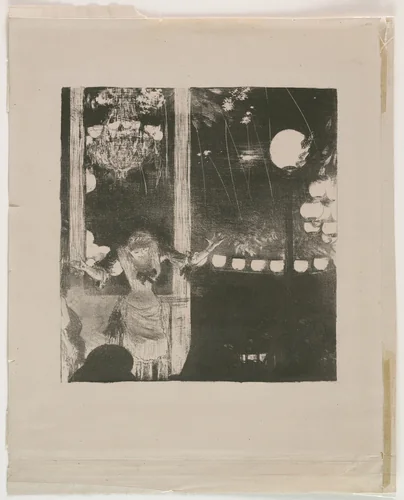
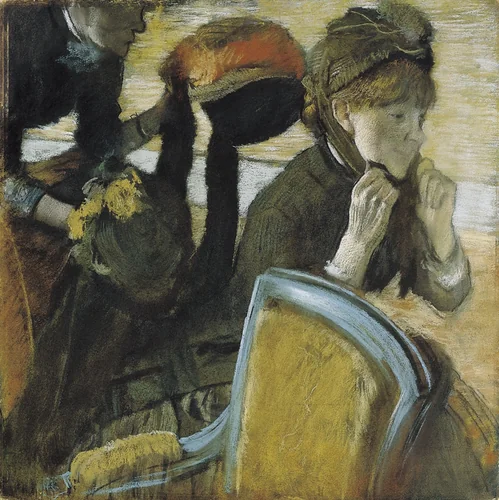
Degas was an uncompromising chronicler of the Parisian spectacle and its demanding backstage reality. Rather than focusing on historical or mythological subjects, he dedicated his vision to the often-overlooked moments of contemporary existence: the strenuous, practiced grace of ballet dancers, the quiet intimacy of bathers, the weary labor of milliners, or the manufactured energy of the variety stage, exemplified by the print Mademoiselle Bécat at the Ambassadeurs.
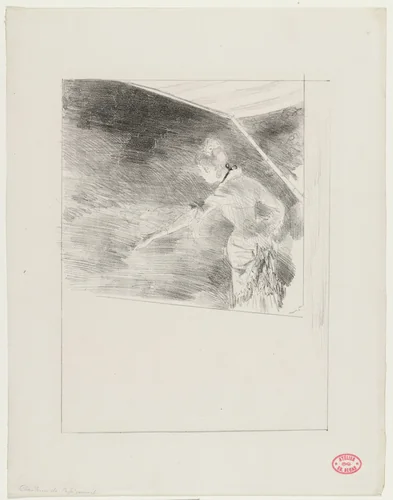
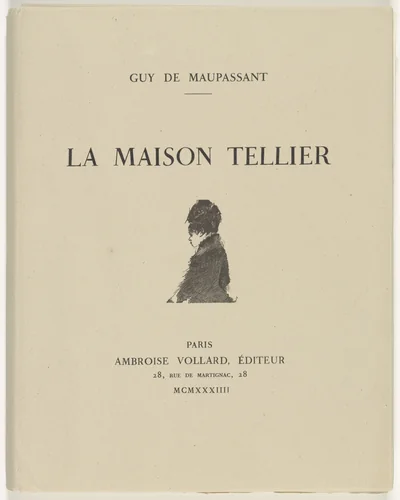
He innovated ceaselessly, utilizing radical compositional techniques inspired by Japanese woodblock prints and emerging photographic technology. His works often feature radical cropping, elevated viewpoints, and asymmetrical arrangements, lending his scenes the spontaneous, unposed immediacy of a snapshot. This experimentation extended beyond traditional painting; between 1875 and 1895, Degas dedicated substantial effort to printmaking. His explorations in etching, drypoint, and monotype yielded complex and moody graphic works, including illustrations for La maison tellier and the delicate observational study At the Milliner's, confirming his mastery of multiple media.
Degas was famously solitary and demanding, preferring the rigor of the studio to social engagement; he once reportedly claimed that an artist needed only “three friends: a model, a bottle of brandy, and a pipe.” This relentless commitment to craft resulted in a prolific and nuanced body of work, now housed in major institutions globally, including the Museum of Modern Art. Fortunately, much of the legacy of Hilaire-Germain-Edgar Degas prints and paintings predates 1923 and is available in the public domain. This accessibility allows researchers and enthusiasts to access high-quality prints and downloadable artwork, ensuring that his crucial contribution to modern art remains widely studied.
Source: Wikipedia · CC BY-SA 4.0