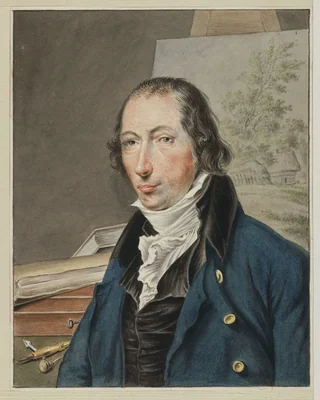
Hermanus van Brussel
Hermanus van Brussel (1763–1815) occupies a notable position among the Dutch graphic artists active during the late eighteenth century. Operating primarily between 1773 and 1800, Van Brussel specialized in landscape painting and, more critically, the art of etching, contributing essential transitional works that bridge the classical traditions of the Golden Age and the burgeoning focus on Romantic naturalism.
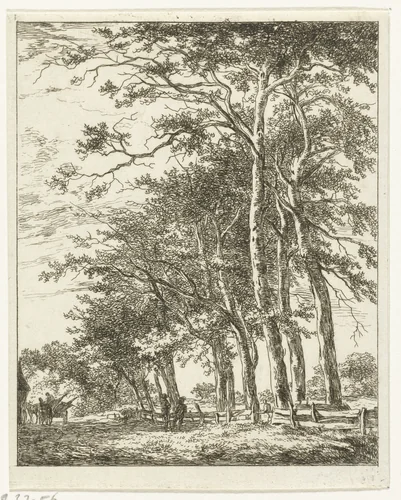
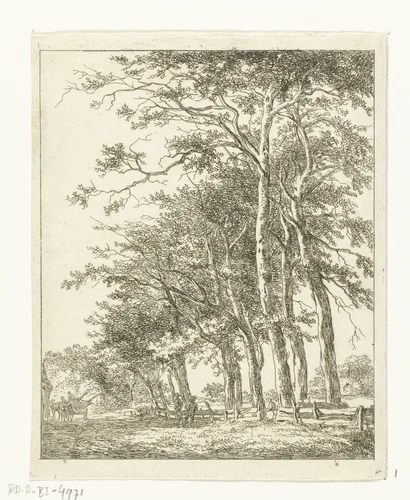
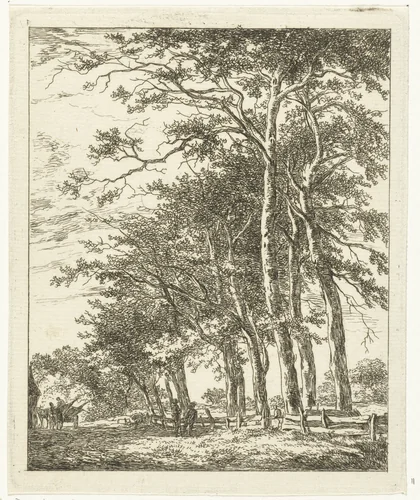
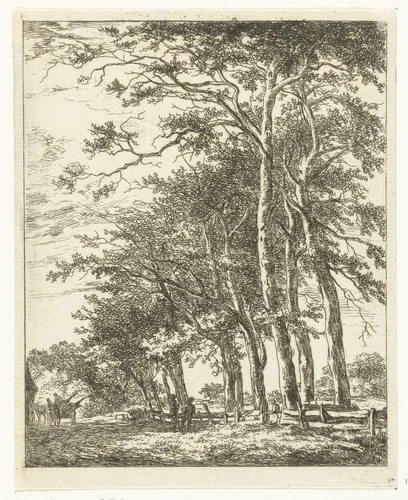
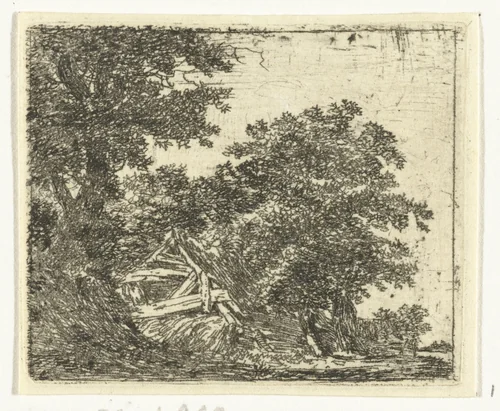
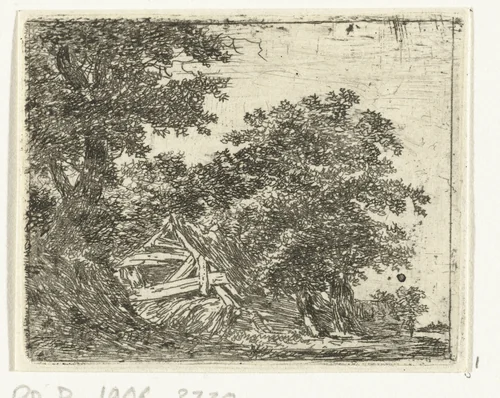
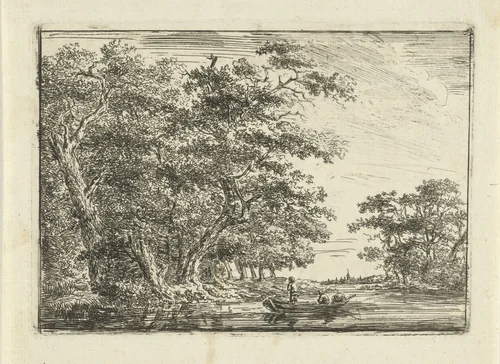
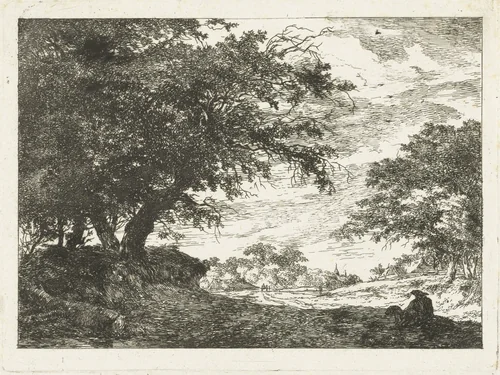
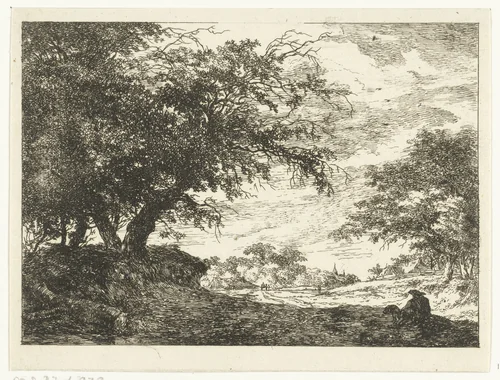
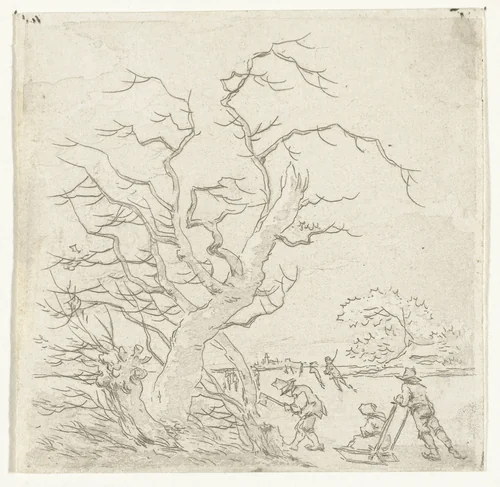
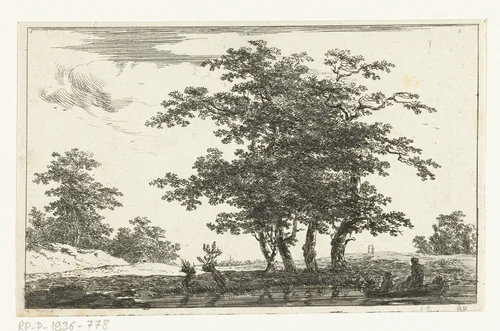
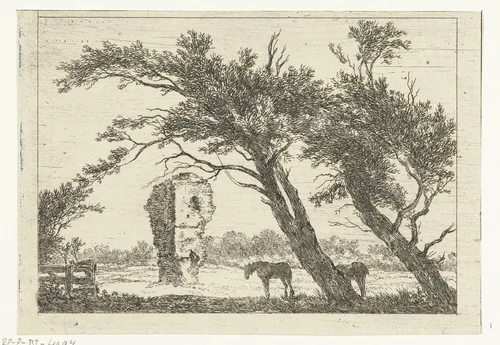
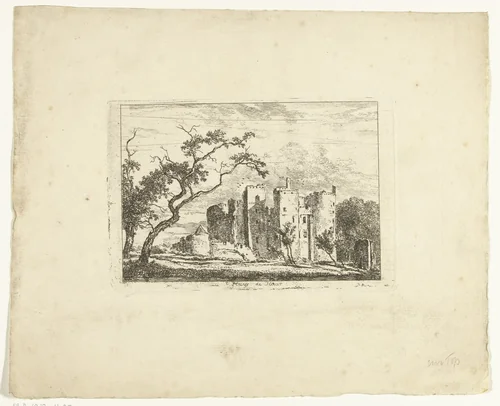
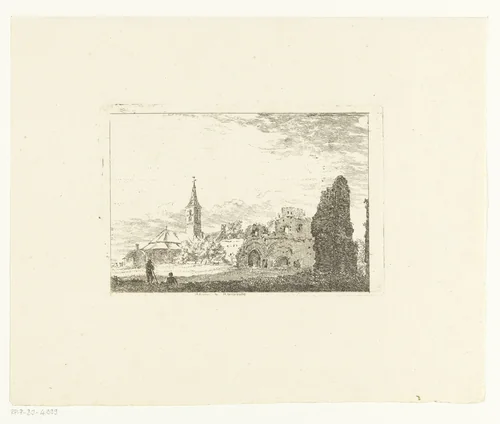
His lasting significance rests largely on his proficiency as an etcher. He is distinguished by a highly regarded series of twenty-one etched landscapes, known for their atmospheric quality and skillful inclusion of figures, demonstrating a sophisticated ability to balance expansive natural settings with intimate human scale. His prints are technically precise, utilizing sharp lines and varied hatching to render complex textures, from the reflective surfaces of waterways to the dense foliage of country lanes.
Works such as Gezicht aan een vaart met een hengelaar (View along a canal with an angler) exemplify his signature approach, documenting the quiet engagement of Dutch life with its waterways and rural topography. Conversely, more populous scenes, including Gezicht in de Haarlemmerhout, met een menigte mensen voor het Heerenlogement, showcase his versatility. This particular view of the Haarlemmerhout reveals Van Brussel’s keen eye for social dynamics and architecture, a subtle reminder that even dedicated landscape artists must occasionally capture the complex, sometimes surprisingly dense, spectacle of human congregation.
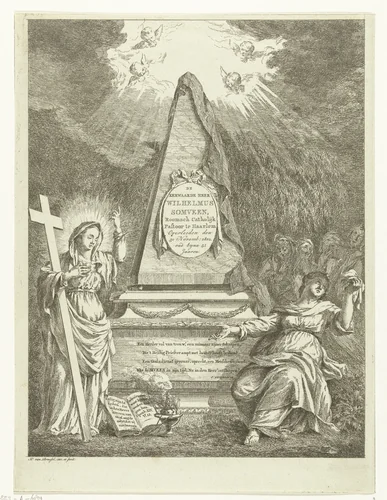
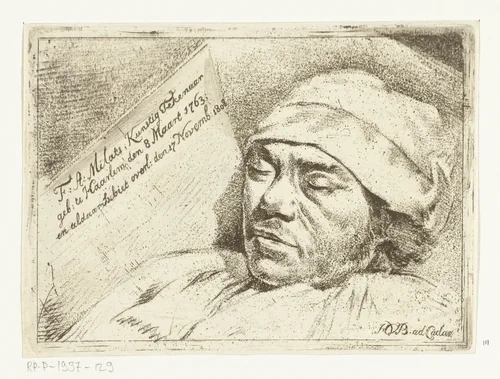
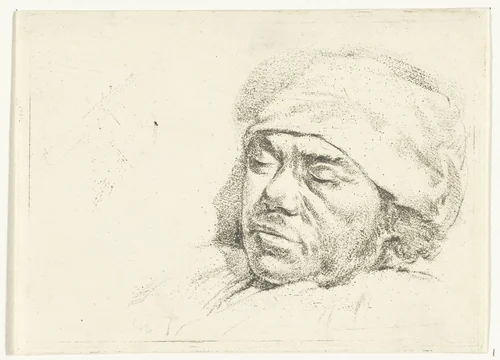
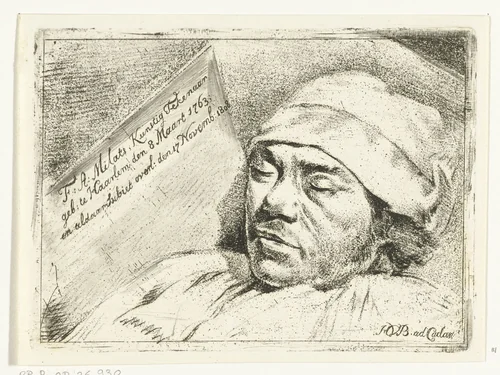
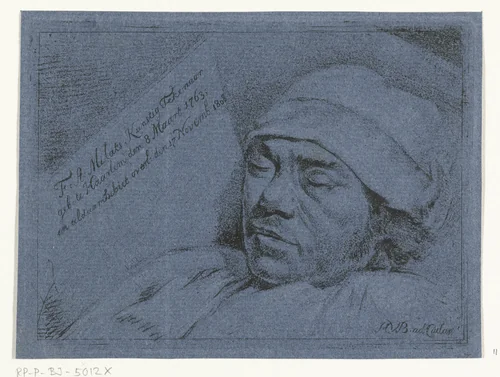
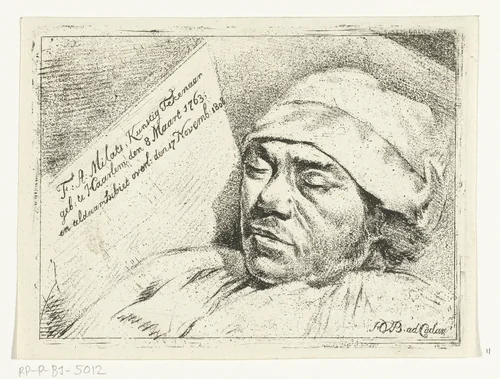
Van Brussel’s surviving oeuvre, which includes 13 documented prints and 2 drawings held in major institutions like the Rijksmuseum, provides a detailed record of the visual culture of the era. These museum-quality objects underscore the importance of printmaking as both a primary artistic medium and a means of disseminating detailed views of the Dutch countryside. Today, many works by Hermanus van Brussel, including his high-quality prints, are considered part of the public domain, ensuring that these carefully observed landscapes remain readily accessible for scholarly study and public appreciation.
Source: Wikipedia · CC BY-SA 4.0