Hermann Weyer
Hermann Weyer was an artist whose documented professional activity spanned a long career, operating from 1541 through 1616. He is known primarily for his detailed drawings, many of which utilize both sides of the sheet (recto and verso), indicating studies or economical practices typical of the 16th century.
Weyer’s surviving output focuses heavily on major Biblical and mythological narratives. Nine of his drawings are represented in institutional holdings, confirming his historical significance. These works are preserved in major American collections, including the Art Institute of Chicago, the National Gallery of Art, and the Metropolitan Museum of Art.
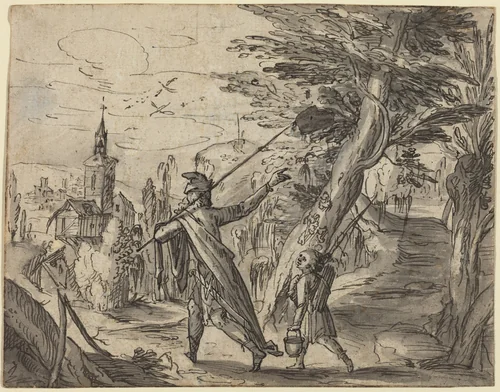
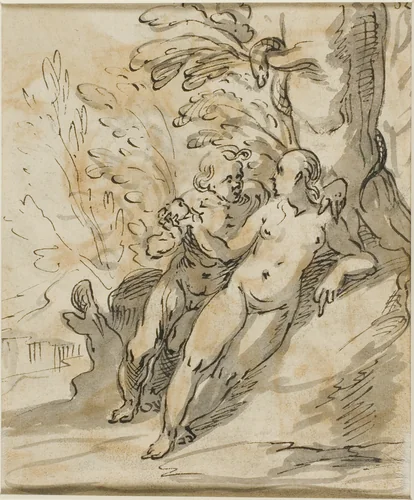
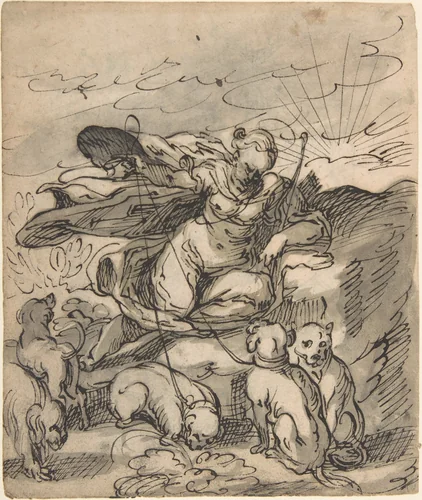
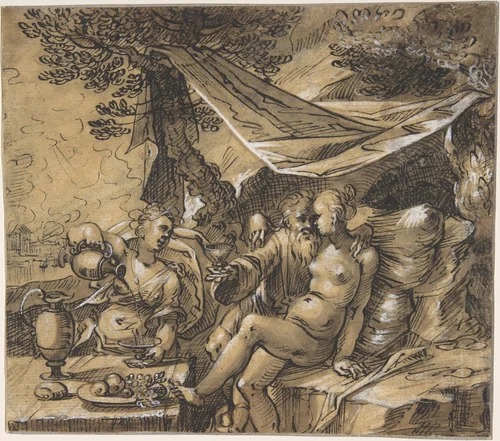
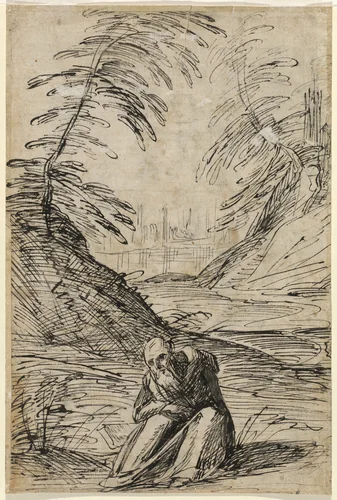
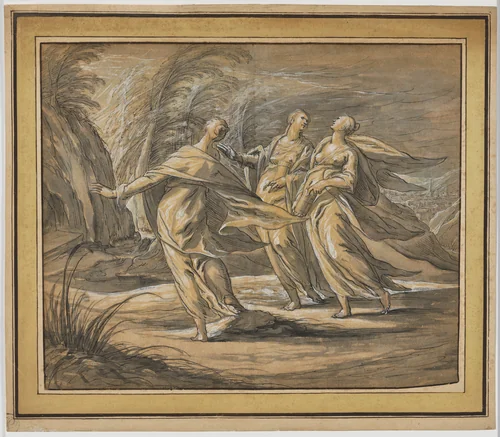
The subjects addressed in Weyer’s oeuvre include powerful dramatic scenes such as Abraham and Isaac, Lot and His Daughters (recto), and Adam and Eve Under a Tree (recto). His technical range is also demonstrated by landscape studies, including Desert Landscape with a Hermit (verso), and classical themes like Diana Resting with Her Hounds. Notably, some drawings reflect the study of his contemporaries; for example, the verso of the Diana drawing features Flora Seated by a Vase with Two Harks on the Ground, executed after Jost Amman.
The presence of Weyer’s original drawings in these prestigious institutions establishes his relevance to 16th- and 17th-century drawing traditions. Today, these historical records ensure that high-quality Hermann Weyer prints are available as downloadable artwork for study and research, maintaining the legacy of these museum-quality pieces.
![The Holy Family with Saints [recto] by Hermann Weyer, drawing, 1616-1617](https://img.artbee.org/acff9edb-bd62-4ed8-8b3d-f846ee37686b/small.webp)
![Tobias and the Angel [verso] by Hermann Weyer, drawing, 1616-1617](https://img.artbee.org/a61ec284-7c40-4a87-94e6-a41759db3f09/small.webp)