Henry Pollock
Henry Pollock holds a distinct, if fleeting, place among early photographers whose works were quickly absorbed into major institutional collections. Active solely during a concentrated period between 1855 and 1856, his output consists of just eight known photographs, yet these documents of early American architecture and domestic life are preserved today by the Metropolitan Museum of Art and the National Gallery of Art.
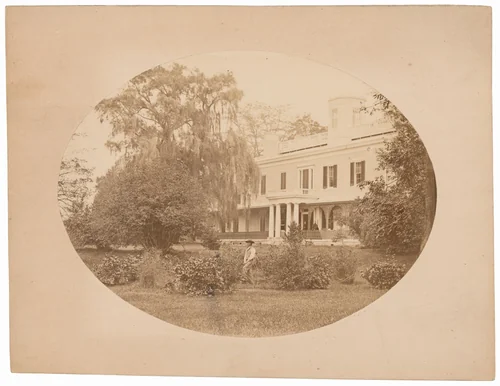
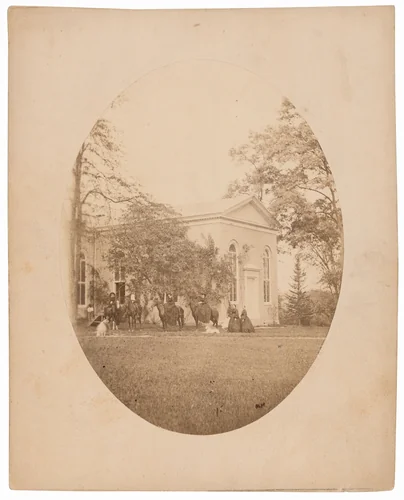
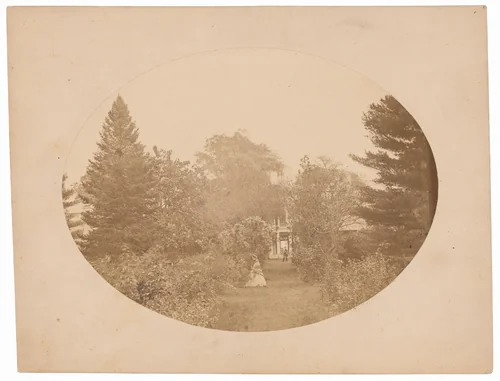
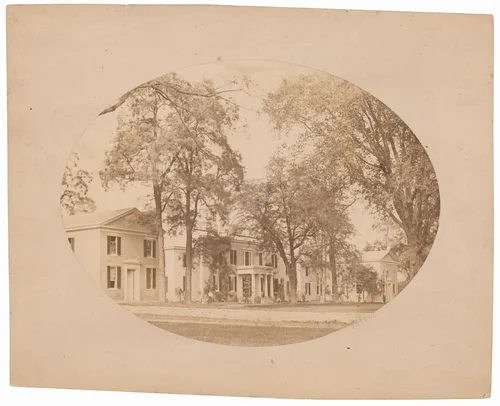
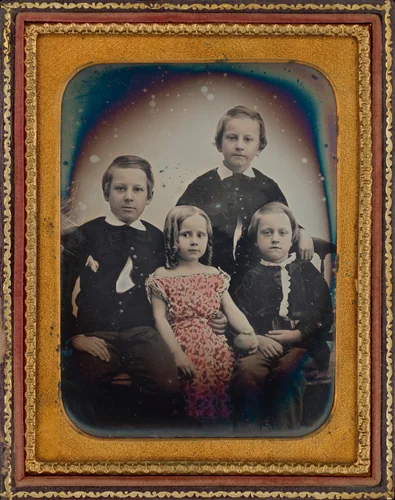
Pollock’s lens focused notably on documenting specific sites, most prominently captured in his series of views of Doughoregan Manor, Maryland. His repetition of the subject suggests an interest not merely in representation but in architectural survey, capturing the sprawling estate, the ancestral home of the Carroll family. These images, alongside the intimate study Portrait of Four Children, exhibit the quiet precision characteristic of the mid-nineteenth century photographic study, valuing clarity and formal composition over dramatic staging. The significance of Pollock’s contribution rests largely on the inherent rarity and high museum-quality of the surviving prints, which offer valuable insight into photographic technology and subject prioritization of the era.
Despite the highly sensitive nature of this artistic venture, the photographic career of Henry Pollock contrasts sharply with the towering public service that defined the rest of his life. Born Sir Henry Edward Pollock, QC, JP, he would embark on a decades-long career as an influential English barrister and statesman.
Pollock dedicated himself primarily to political and legal service in the Far East. He served on multiple occasions as Attorney General in Hong Kong and held the same post briefly in Fiji. For many years in pre-Pacific War Hong Kong, he was the Senior Unofficial Member of both the Legislative Council and Executive Council. This extensive commitment to governance found its lasting culmination in his role as a key co-founder of the University of Hong Kong, alongside figures like Sir Paul Chater and Governor Sir Frederick Lugard. It is perhaps an intriguing historical footnote that a man who helped shape the highest strata of modern colonial governance began his professional documented output producing delicate, technically masterful photographic high-quality prints now accessible to the public domain.