Henry Peach Robinson
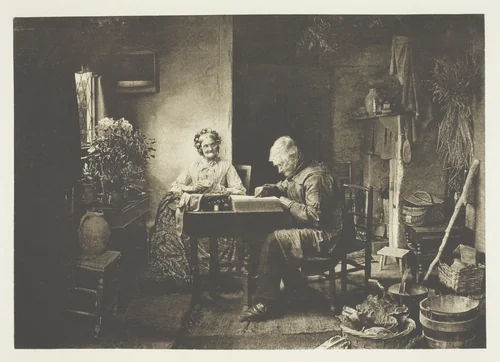
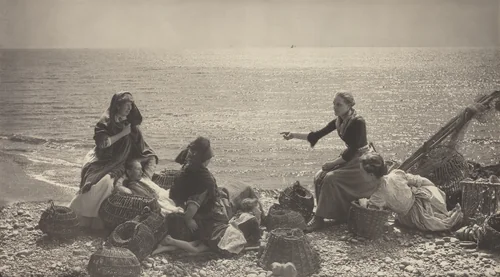
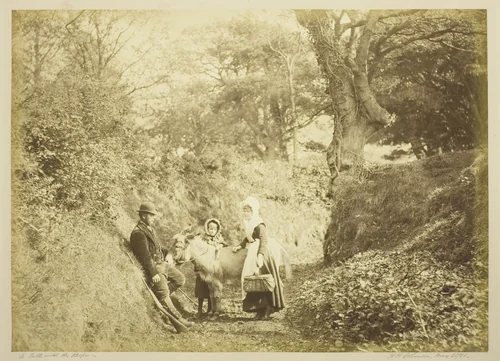
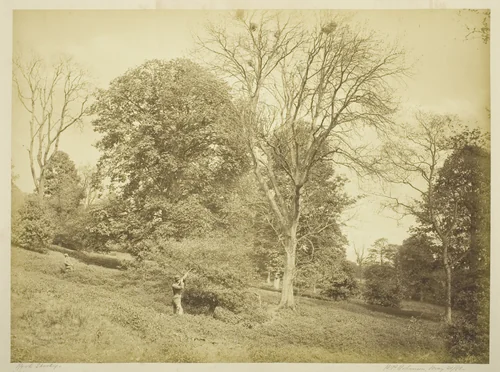
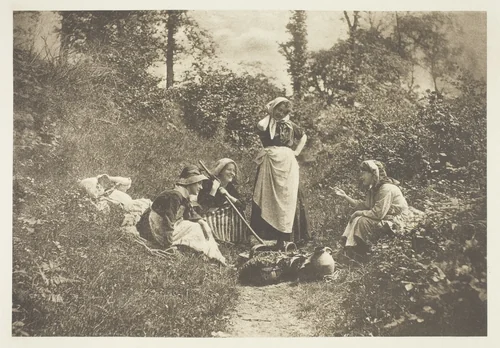
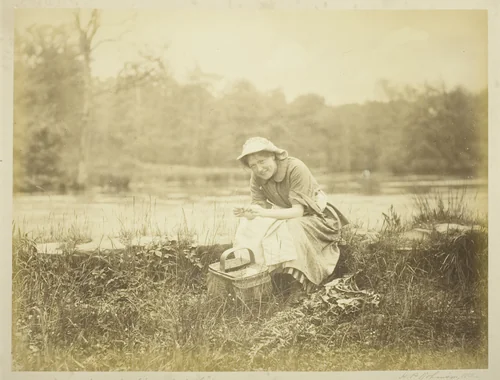
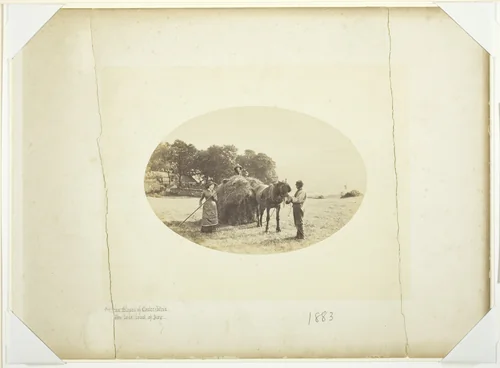
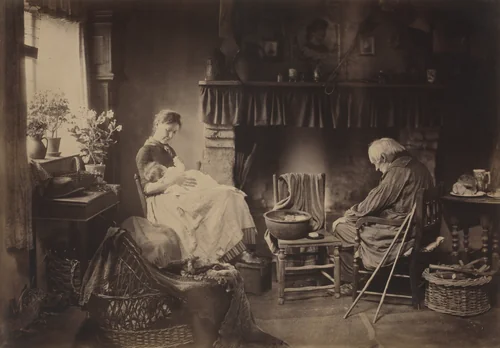
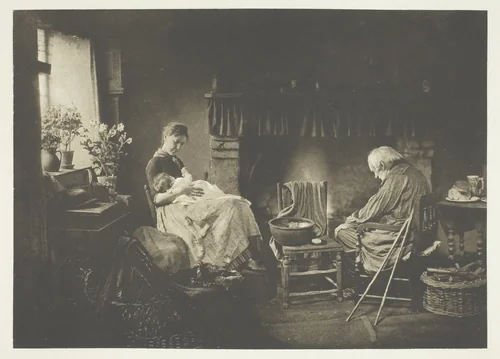
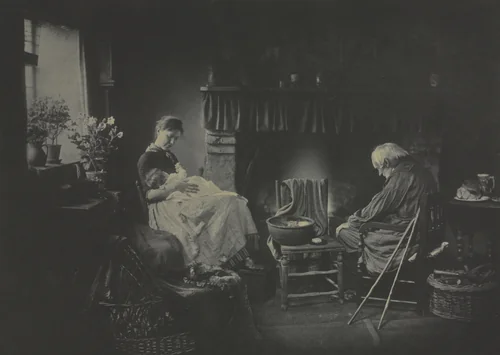
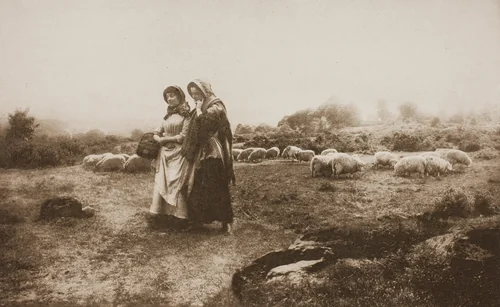
Henry Peach Robinson (active 1857-1885) holds a foundational position in the history of English photography, distinguished as a leading practitioner and tireless proponent of the pictorialist movement. His significance rests primarily on his pioneering technique of combination printing, an intricate process involving the meticulous layering of multiple negatives to produce a single, emotionally resonant composite image. This method, a sophisticated early form of photomontage, allowed Robinson to bypass the technical limitations of mid-nineteenth century optics and emulsions, thereby enabling the creation of complex genre scenes previously considered exclusive to painting.
Robinson was more than an innovator behind the camera; he was a central polemicist in the contemporary cultural debates surrounding the status of ‘art photography.’ Arguing forcefully through the photographic press and various associations, he defended the legitimacy of manipulation and the combining of separate images. For Robinson, technical artifice was not cheating, but a necessary means for the medium to achieve the narrative complexity and expressive depth required to stand alongside fine art.
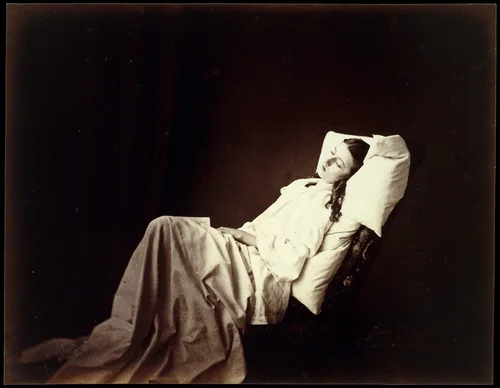
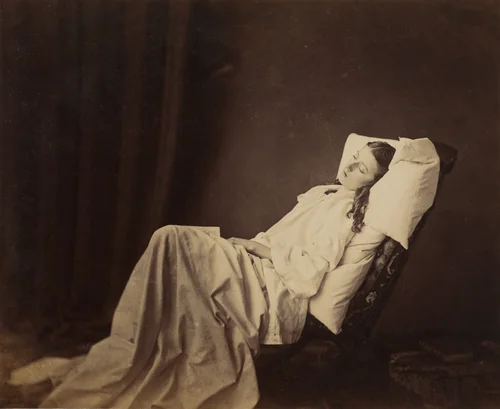
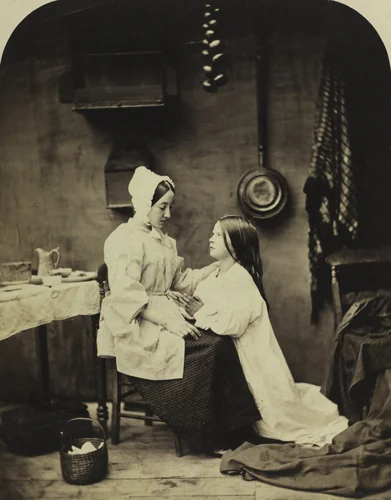
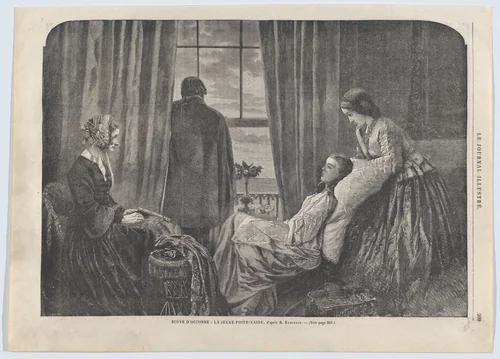
His artistic output is dominated by ambitious narrative subjects, often rooted in literature or domestic sentiment. The work Fading Away (1858), constructed from five distinct negatives, remains his most widely recognized and debated piece. Depicting a young woman in decline, the image garnered both acclaim for its pathos and criticism for its perceived overly theatrical engineering. Other celebrated compositions include the complementary prints She Never Told Her Love and She Runs Home and Tells Her Mother All about It. Interestingly, Robinson was highly particular about the expressive details within his compositions; surviving accounts note his meticulous insistence that his chosen sitters possess "good hands," indicating the level of exacting attention he paid to every expressive element of the human form.
Robinson’s commitment successfully elevated photography’s artistic standing in the Victorian era. His work cemented the foundational importance of the pictorialist approach, securing his place in major institutional holdings worldwide, including the Metropolitan Museum of Art, the National Gallery of Art, and the Art Institute of Chicago. As many of these important pieces enter the public domain, the underlying quality of Henry Peach Robinson prints remains evident. Today, scholars and enthusiasts benefit from the ability to study museum-quality high-quality prints and downloadable artwork, ensuring that the legacy of this pivotal photographer endures.
Source: Wikipedia · CC BY-SA 4.0