Henry Moore
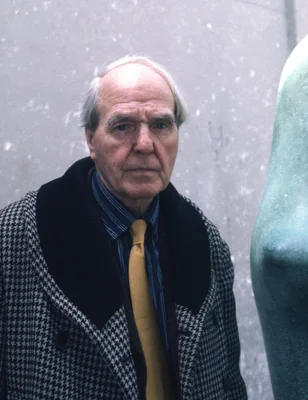
Henry Spencer Moore (1898-1986) stands as the preeminent English visual artist of the 20th century, defining the parameters of modern sculpture in the public sphere. His profound reputation rests primarily on his semi-abstract, monumental bronze works, celebrated for their unique exploration of the reclining figure and the relationship between negative space and mass. These massive, biomorphic forms, often conceived for placement against natural vistas or in major civic centers globally, fundamentally shifted expectations regarding public works of art. Moore was instrumental in establishing that complex, museum-quality abstraction could serve as essential architecture for the global community.
Moore’s sculptures demonstrate a sophisticated dialogue between organic nature and fundamental human forms, particularly evident in his treatment of voids, holes, and concave surfaces, which invite the viewer’s eye into the material rather than solely focusing on the exterior mass. He successfully translated primal concepts of landscape, bone structure, and anatomical shelter into enduring metal and stone.
However, reducing Moore’s contribution only to his large bronzes overlooks his prolific output in graphic media. He maintained a rigorous drawing practice throughout his life, producing hundreds of works on paper, including crucial preparatory studies for his three-dimensional pieces. His most widely recognized works outside of sculpture are the documentary drawings created during the Second World War. These compelling depictions of Londoners sheltering in the Underground during the Blitz offer an intimate study of human vulnerability and collective endurance, standing as vital historical records.
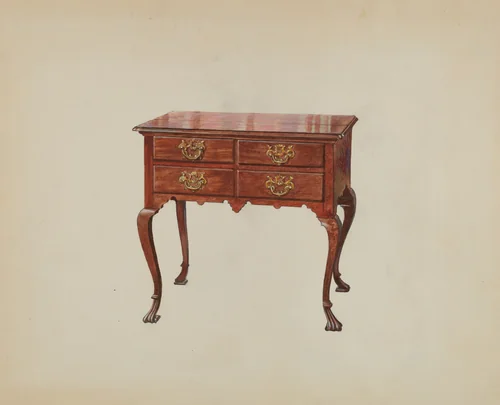
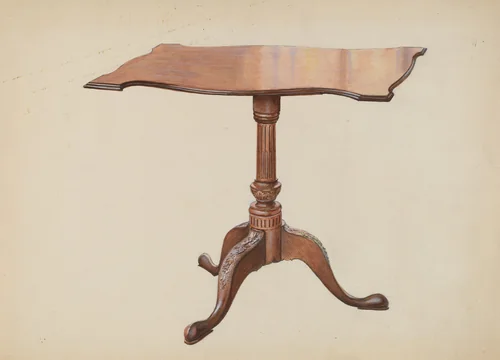
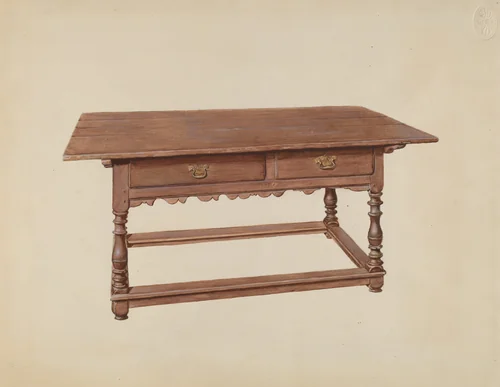
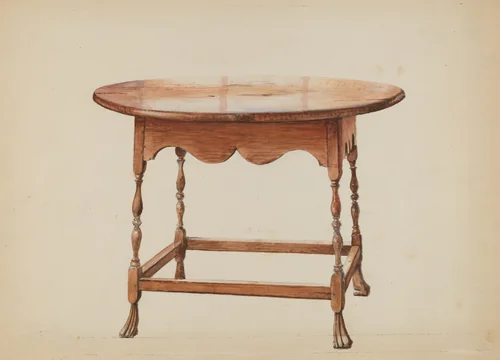
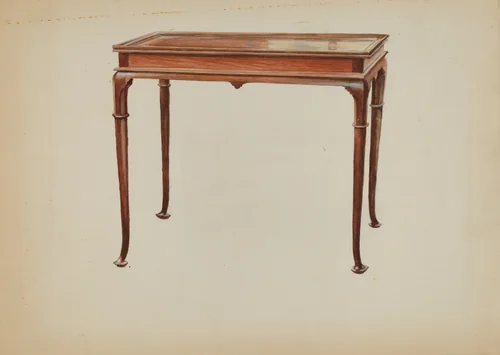
Interestingly, while known for pioneering abstraction, Moore’s keen interest in objective observation is evidenced by his earlier contribution to the Index of American Design, where he executed precise visual records of historical furniture, including lowboys and tea tables. This early dedication to clarity of line and functional structure underlines the versatile foundation of his artistry. Today, the legacy of Henry Moore prints and preparatory drawings is widely disseminated, with much of his graphic work available as royalty-free images through major institutional collections.
Source: Wikipedia · CC BY-SA 4.0