Henry Linton
Henry Linton (active 1830-1865) holds a distinctive, if understated, position within the history of mid-Victorian visual culture, having produced notable high-quality prints that bridge the technical demands of fine art reproduction and the rigorous scheduling of mass-market illustration.
Unlike many of his contemporaries who dedicated their lives solely to the studio, Linton maintained a curious duality. His professional commitment was anchored by a role as an officer in the demanding Indian Civil Service, while his private life included an unexpected pursuit as an accomplished first-class cricketer. This varied background suggests an individual whose commitment to artistic production existed outside the conventional constraints of professional necessity, viewing the print medium perhaps less as a livelihood and more as an intellectual endeavor.
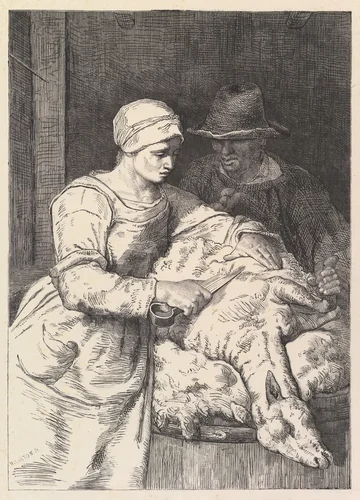
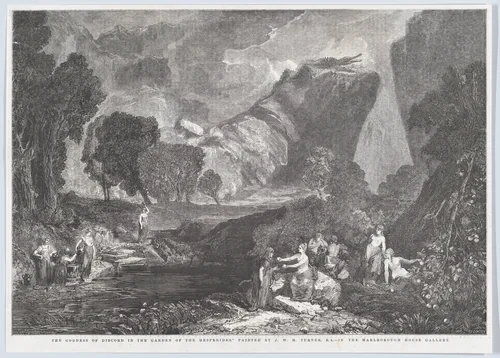
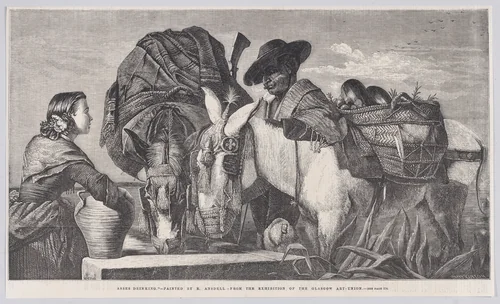
Linton’s body of work, though relatively concise, is highly significant, reflecting the burgeoning era of illustrated periodicals. His print work flourished during the crucial decades when publications like the Illustrated London News revolutionized public access to visual information. Working primarily in wood engraving, he demonstrated a commanding versatility across subject matter. He was adept at translating classical allegory, seen in pieces like The Goddess of Discord in the Garden of the Hesperides, published in the Illustrated London News, while also capturing poignant genre scenes, such as the pastoral study The Sheepshearer or the subtly observed Asses Drinking.
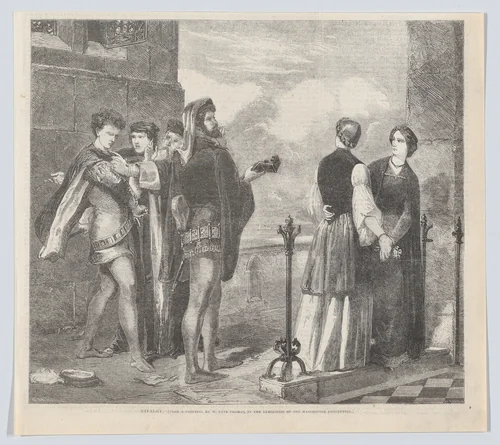
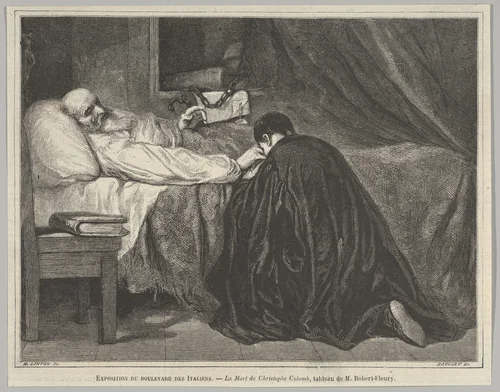
His reach was international, a testament to the aggressive global distribution networks of the time. This is particularly evidenced by works like The Death of Christopher Columbus, which appeared in the prominent French publication Le Monde Illustré, securing Linton a transatlantic readership interested in historical drama and current events. Likewise, the narrative tension inherent in a social observation like Rivalry further reveals his capacity to distill complex human interaction into a single visual moment.
Though documentation for Henry Linton paintings is scarce, his technical skill as a printmaker ensures his continuing relevance. The preservation of eight of his original works by the Metropolitan Museum of Art confirms the enduring value and museum-quality of his contributions to the era of reproductive engraving. Today, these historic Henry Linton prints are widely accessible, frequently found among collections of downloadable artwork available in the public domain.