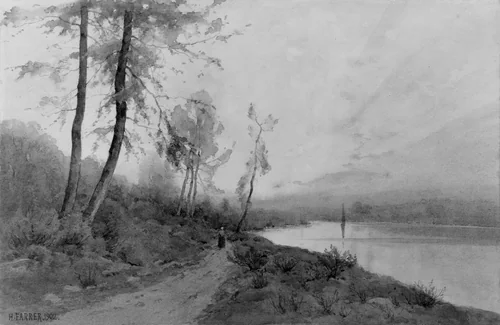
Henry Farrer
Henry Farrer (1843-1871) was an influential English-born American artist who played a formative role in developing the American Tonalism movement. Though his active career was relatively brief, spanning less than three decades, his contributions across watercolor painting and etching secured his status among the period’s most evocative landscape artists. Farrer was particularly adept at capturing the subtle atmospheric shifts and melancholic mood that characterized the emerging aesthetic sensibility of the post-Hudson River School generation.
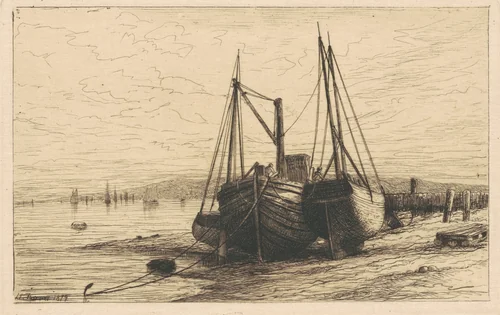
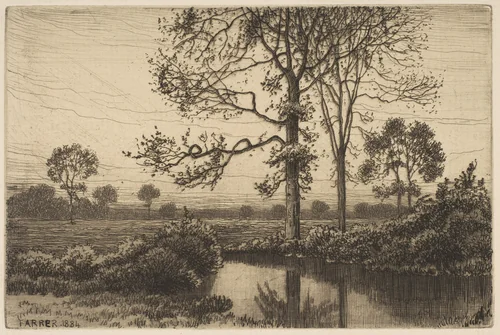
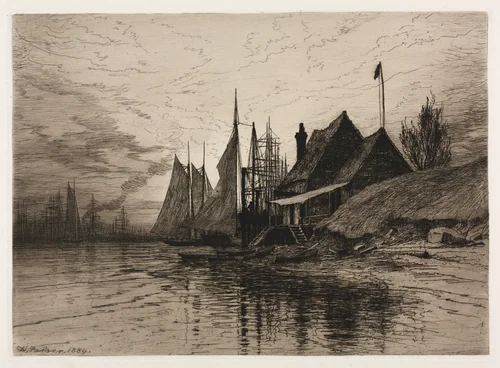
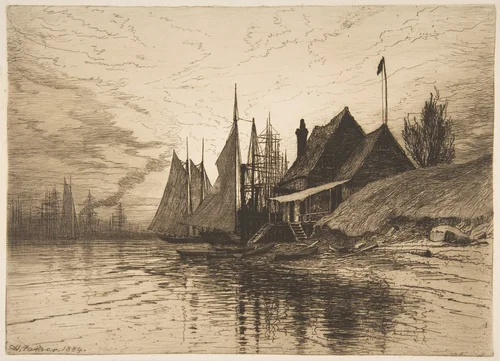
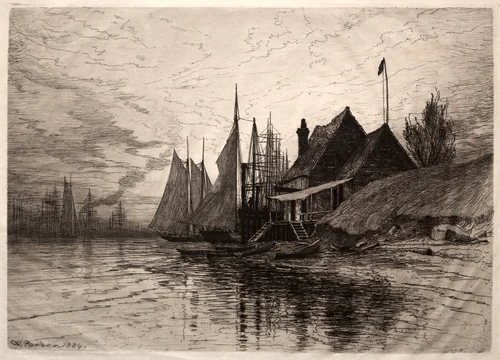
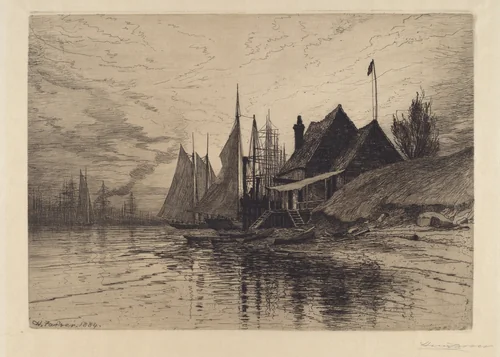
Farrer’s work prioritized intimate observation over the grand panorama. He excelled at depicting scenes where nature and the nascent urban environment met, often filtered through a hazy curtain of dusk or fog. His style rejected the sharp detail favored by earlier realists, instead focusing on unified color harmonies and deep, suggestive shadow. This technical approach is evident in watercolors like Asian Tea Pots and his well-known Fishing Boats and Shack, which demonstrate his preference for quiet, domestic, or marine motifs.
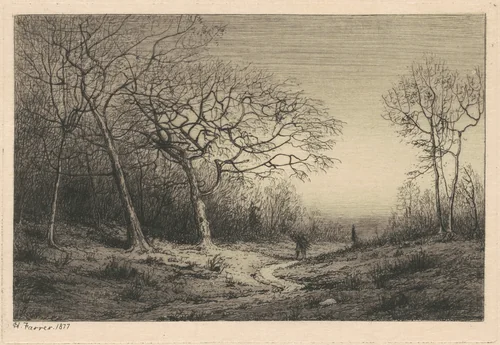
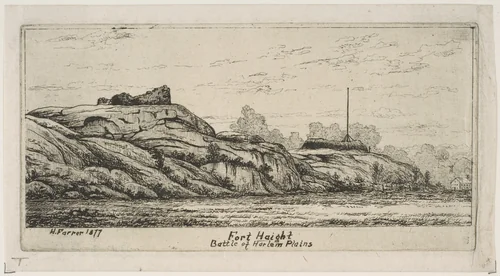
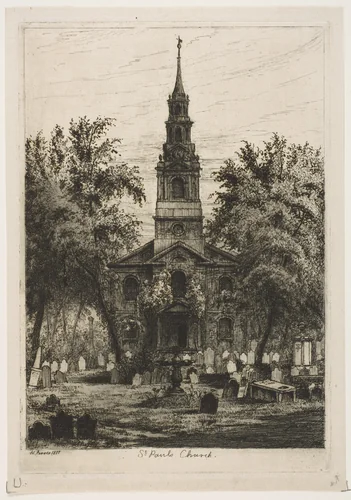
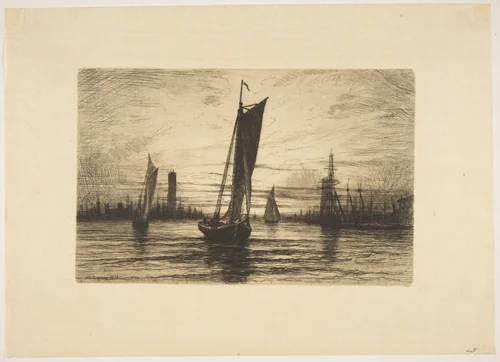
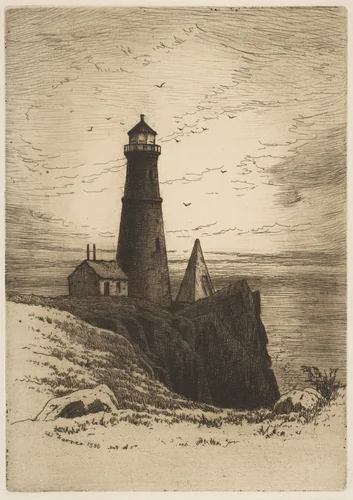
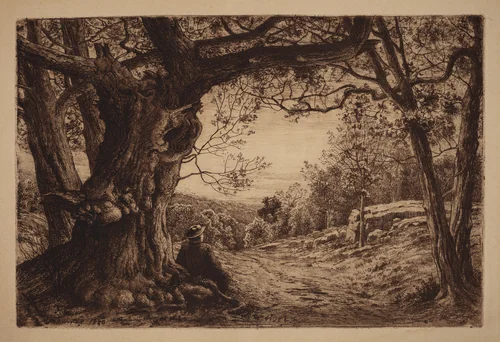
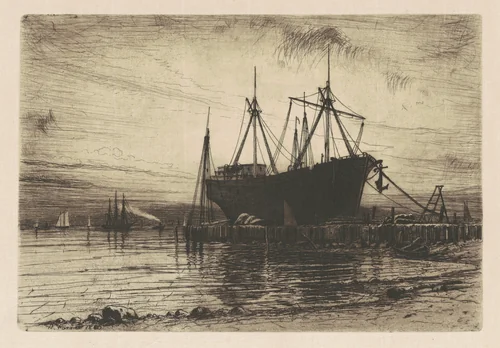
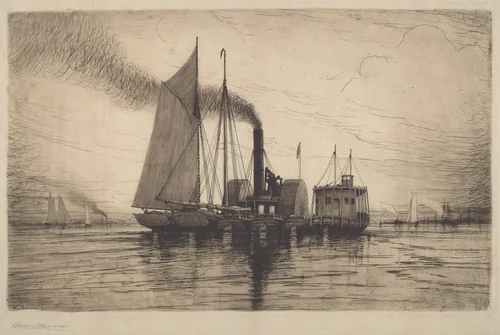
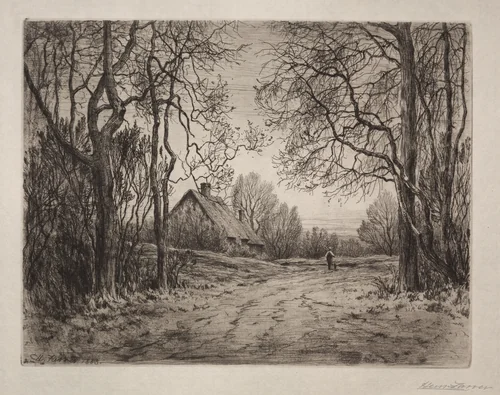
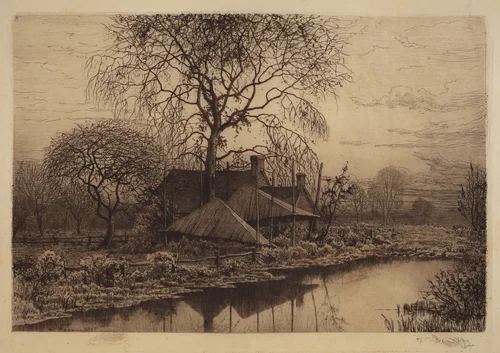
While often recognized for his serene watercolor landscapes, it was Farrer’s commitment to etching that defined his technical innovation. He was a dedicated member of the New York Etching Club and used the medium to explore complex light phenomena. Works such as City and Sunset and the highly atmospheric Winter Scene in Moonlight demonstrate his mastery of value and shadow, preferring suggestion over strict topographical accuracy. His views of rapidly changing New York City, such as Fifth Avenue Building from Grace Church, suggest a quiet, almost reluctant acknowledgment of modernity creeping into the established skyline.
Farrer’s short, productive career ended abruptly in 1871, yet his dedication to capturing fleeting light and atmosphere placed him among the key forerunners of American aestheticism. Major examples of his delicate drawings and detailed Henry Farrer prints are preserved in prestigious institutions such as the Metropolitan Museum of Art and the National Gallery of Art. Because many of these historic images are now in the public domain, they are widely accessible, allowing contemporary audiences to study his exacting technique. The availability of high-quality prints ensures that Farrer’s subtle visual poetry remains a vital touchstone in the history of American graphic art.