Henry Bryan Hall
Henry Bryan Hall was a central figure in nineteenth-century transatlantic print culture, responsible for shifting the meticulous tradition of English stipple engraving to the burgeoning American market. Originally an English stipple engraver and portrait painter, Hall (1805-1884) specialized in translating contemporary and historical figures into reproducible images, ensuring the visual legacy of political and military leadership for a broad audience.
The crucial achievement of his career was the founding of the printmaking enterprise, H. B. Hall and Sons, in the United States. This firm became a leading source for circulating high-quality prints of prominent Americans. Unlike artists focused solely on unique oil paintings for private patrons, Hall’s operation concentrated on the specialized technical process of stipple engraving, a technique involving patterns of intricate dots to achieve tonal depth and photographic-like precision. This resulted in images of remarkable clarity that achieved a museum-quality standard necessary for formal publication.
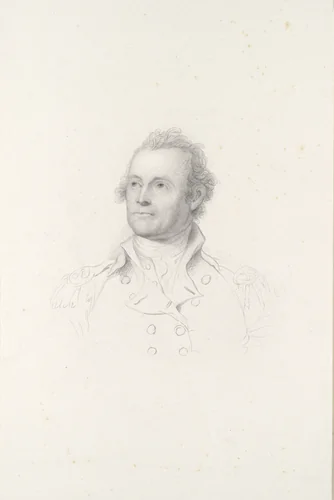
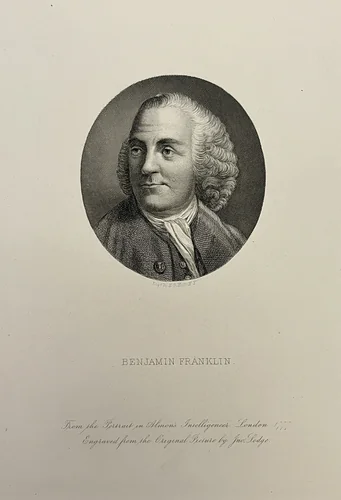
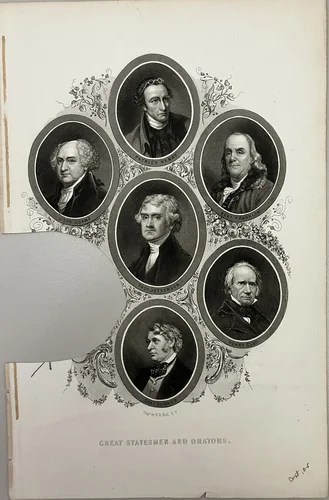
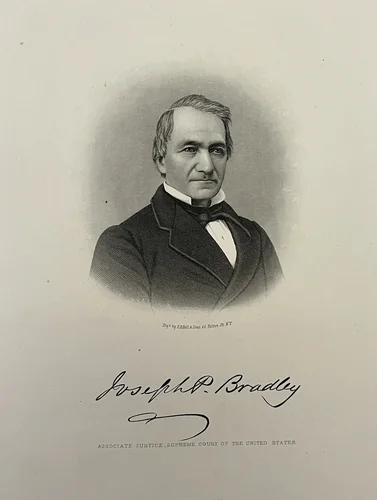
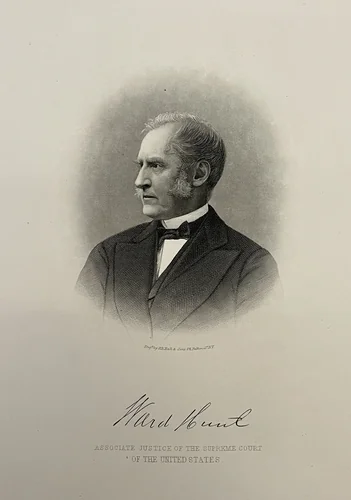
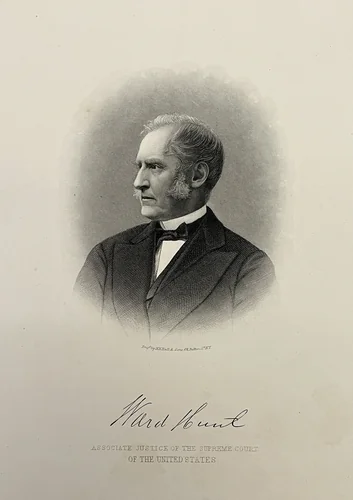
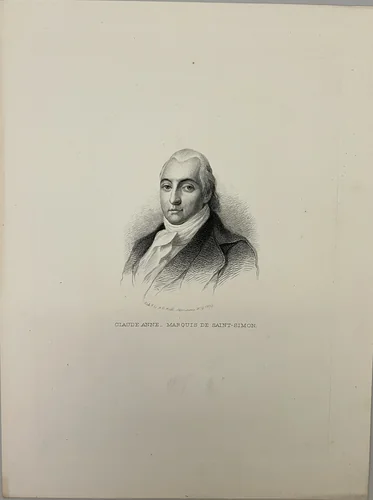
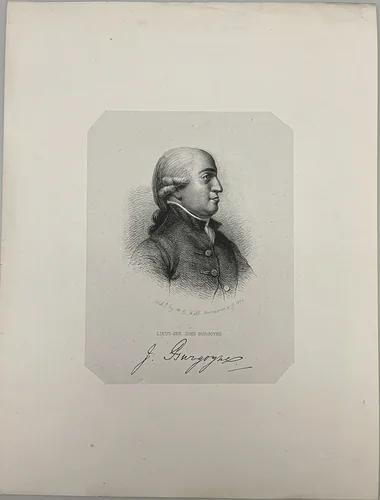
Hall’s portfolio functioned as a visual register of American governance and history. His works include likenesses of foundational statesmen such as Benjamin Franklin, wartime heroes like Brigadier General John Glover, and key judicial figures, notably Joseph P. Bradley and Ward Hunt. He also produced significant plates for the composite work Great statesmen and orators.
It is perhaps an understated observation of Hall's professionalism that, despite engraving hundreds of portraits over his half-century career (active 1820-1873), his work remained consistently rigorous, prioritizing accuracy and dignity over dramatic flair. This approach cemented the firm’s reputation as the reliable source for trustworthy likenesses used in biographies, government records, and private collections. The sustained significance of Henry Bryan Hall prints is demonstrated by their continued inclusion in major institutional holdings, including the Metropolitan Museum of Art and the Art Institute of Chicago. Today, many of these historical documents have entered the public domain, offering downloadable artwork and free art prints that define the visual memory of the nineteenth century.
Source: Wikipedia · CC BY-SA 4.0