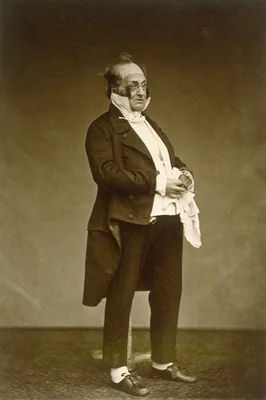
Henry Bonaventure Monnier
Henry-Bonaventure Monnier (1799-1877) occupied a distinctive and often contradictory position in 19th-century French culture, uniquely balancing a successful career on the Parisian stage with a formidable output as one of the era’s most astute caricaturists and graphic artists. Active across several decades, from 1809 to 1861, Monnier used both performance and visual media to dissect the habits, pretenses, and social absurdities of the rising French bourgeoisie during the July Monarchy.
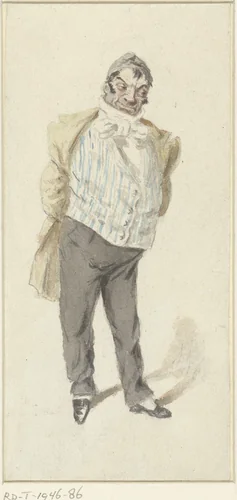
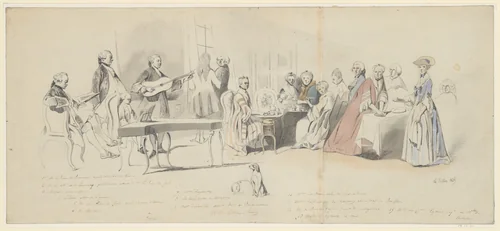
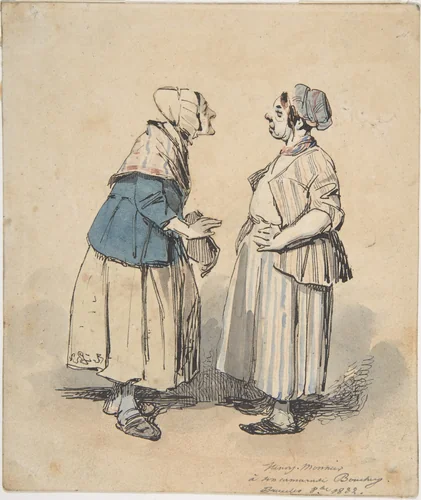
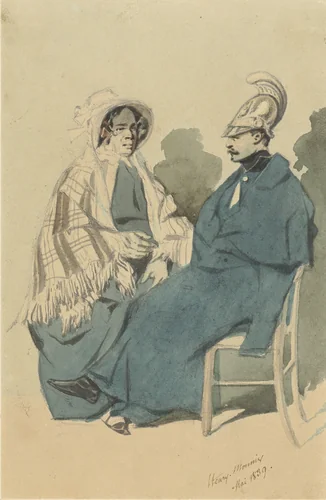
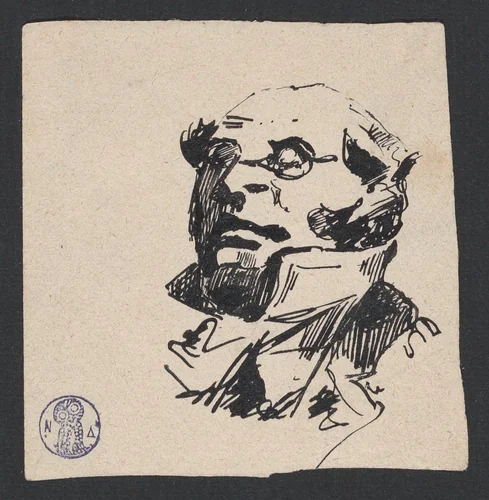
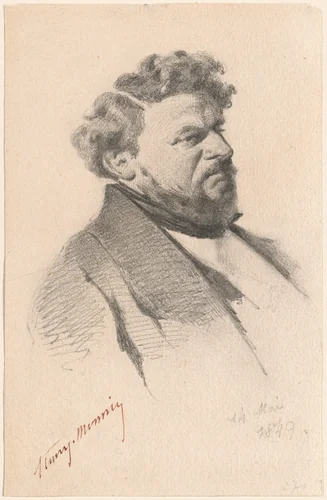
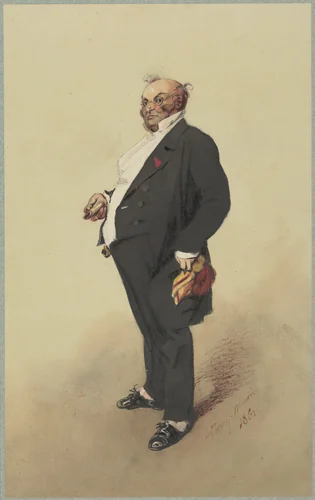
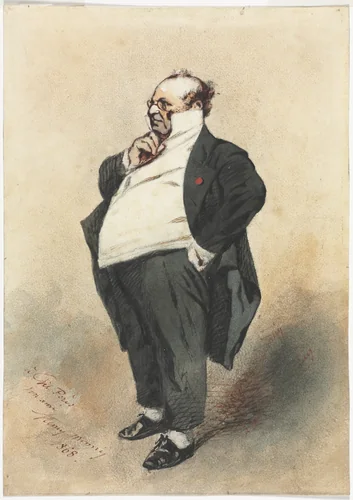
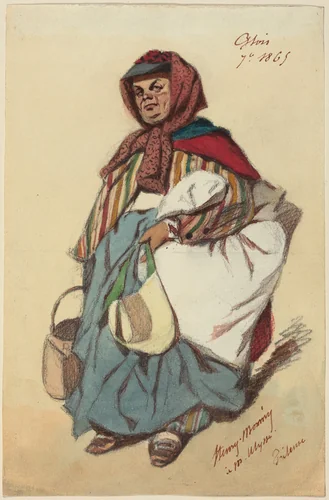
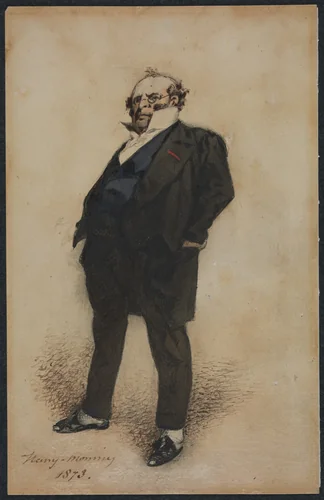
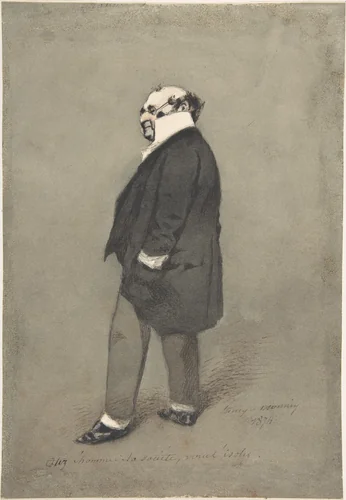
While widely celebrated as a beloved actor and playwright, Monnier’s lasting scholarly relevance rests largely on his sharp visual commentary. His critical body of work, comprising over nine extant drawings and six key print series, documented the subtleties of social aspiration and domestic life with meticulous detail. Monnier excelled at creating precise, contained vignettes, providing the public with visual documents that were as recognizable as they were trenchant. He frequently utilized the lithographic process to disseminate his observational studies widely. Pieces such as the early, focused character study Karikatuur van een staande heer and the busy social scene depicted in Tea Party at the Prince de Conti's demonstrate his mastery of rendering social space and body language.
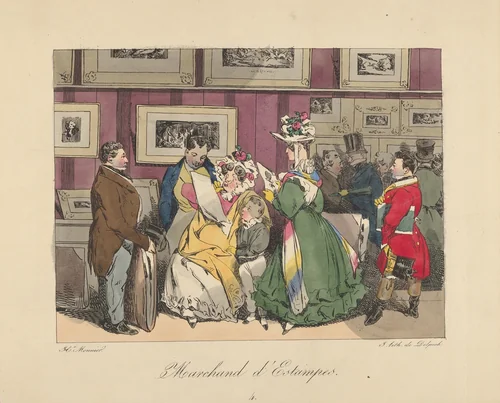
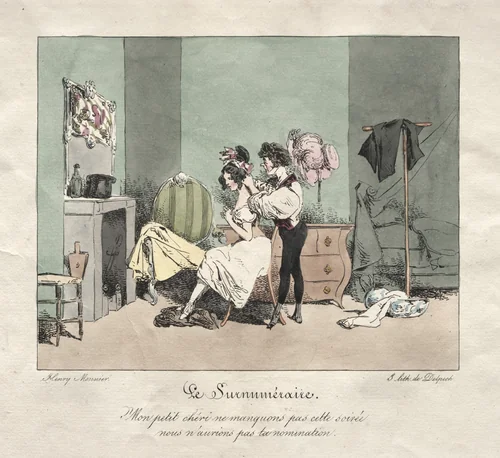
Monnier proved instrumental in formalizing the physiognomie of the Parisian middle class. His most enduring innovation was the creation of specific, recurring character types that were referenced throughout French visual art and literature for decades. Perhaps his most famous invention was Joseph Prudhomme, the quintessential self-satisfied, pompous civil servant whose very name became shorthand for bureaucratic mediocrity. This fascination with administrative and commercial banality is further exemplified in works like the dryly humorous Administrative Customs: Supernumerary and Print Dealer.
The enduring quality and informational value of Henry Bonaventure Monnier prints ensure their continued study. The clarity and precision of his vision are safeguarded in major international holdings, including the National Gallery of Art, the Metropolitan Museum of Art, and the Rijksmuseum. Because of their institutional preservation and age, many of Monnier’s original works are now in the public domain, making high-quality prints and downloadable artwork available for scholarly examination, securing his place as an essential visual chronicler of 19th-century French social manners.
Source: Wikipedia · CC BY-SA 4.0