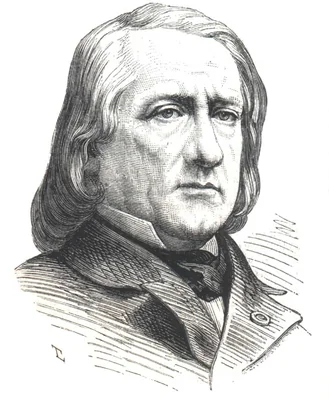
Henri-Victor Regnault
Henri-Victor Regnault (1810-1878) holds a unique, transitional place in the history of visual arts, primarily recognized through the lens of early scientific photography. A preeminent French chemist and physicist of his era, Victor Regnault, who consistently eschewed his given first name Henri, was known throughout his life for the rigorous precision he applied to measurement, particularly concerning the thermal properties of gases. This scientific dedication to empirical accuracy profoundly influenced the short but vital photographic output he generated between 1847 and 1855.
A key figure in the nascent field of thermodynamics, Regnault was an intellectual mentor to figures like William Thomson (later Lord Kelvin) in the 1840s. While his primary laboratory work was conducted at the École Polytechnique and later at the Sèvres porcelain manufactory, his photographic practice developed in parallel, driven by a commitment to the technical possibilities offered by the newly emerging calotype process. His works do not merely record; they demonstrate an architect’s understanding of space and light, coupled with a scientist's exacting eye for detail and composition.
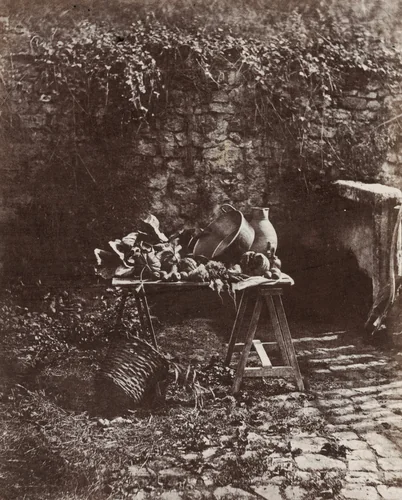
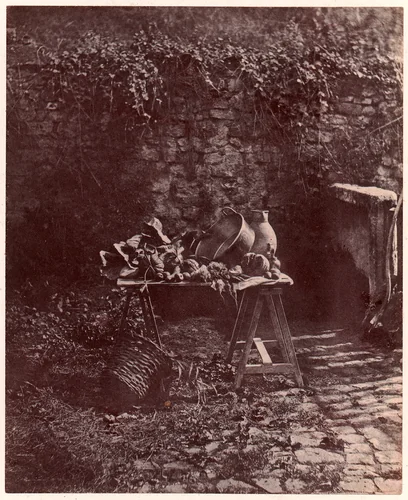
Regnault’s surviving photographic portfolio often focuses on the architectural structure and industrial output of the Sèvres factory. Studies like The Royal Porcelain Factory at Sèvres and the geometrically arresting The Ladder, Sèvres Porcelain Manufactory capture the industrial environment with striking clarity. These works stand as early documents of modern labor and infrastructure, yet their formal balance elevates them beyond simple documentation. Conversely, works such as Nature Morte: chaudron, cruche et legumes, sur une table a tretaux demonstrate a quieter mastery, applying the same precision to a domestic still life arrangement, revealing the texture and weight of common objects with unusual gravity.
Although his active period in photography was brief, Regnault’s contribution is preserved in major institutions including the Museum of Modern Art and the Metropolitan Museum of Art. His historical importance ensures these early photographic masterworks, fundamental to understanding mid-nineteenth century visual culture, are increasingly available to researchers and the public domain, sometimes appearing as high-quality prints that capture the delicate tonal range of his original compositions.
Source: Wikipedia · CC BY-SA 4.0
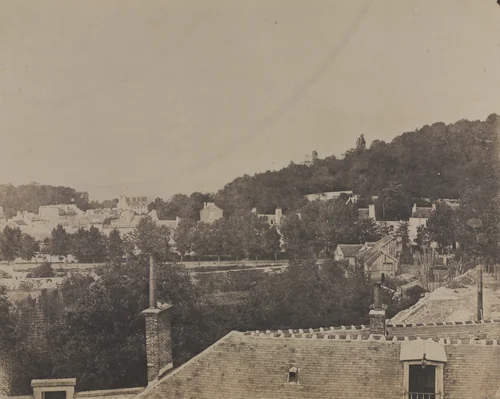
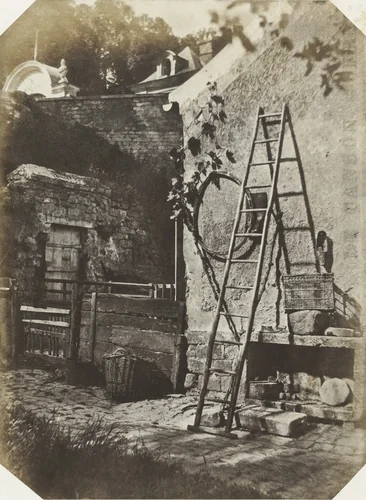
![[Gardens of Saint-Cloud] by Henri-Victor Regnault, photograph, 1855](https://img.artbee.org/ba935ed0-9b5e-4a7c-9ec4-4a97185664d7/small.webp)