Henri Mauperché
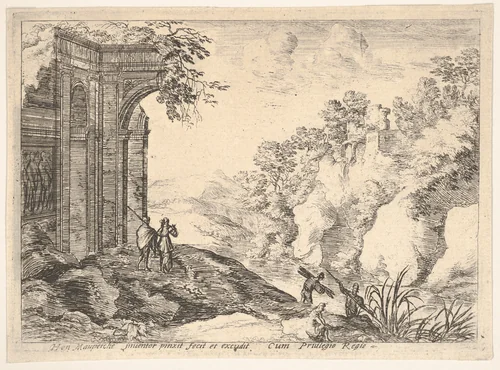
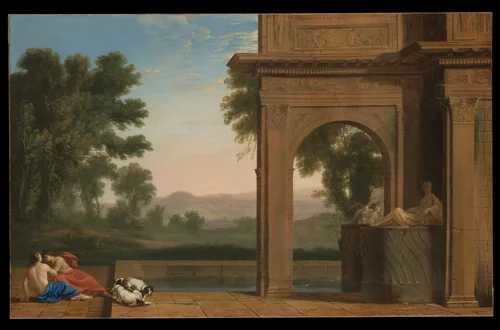
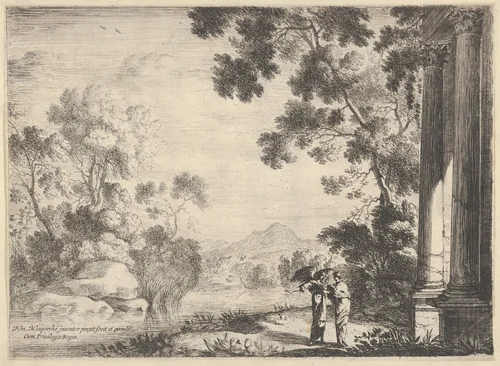
Henri Mauperché, active during the first quarter of the 17th century (1602-1625), holds a minor but intriguing position within French landscape art and engraving. He is documented primarily as a painter and engraver whose surviving corpus consists of twelve known prints and a singular painting. Although his nomenclature occasionally shifted, appearing variously as Henri Maupercher or Henri Montpercher in contemporary records, his artistic focus remained consistent: the capriccio. This specialized genre allowed him to combine meticulous architectural fantasies with topographical elements, granting his works a distinct, often dramatic flavor unique for its time.
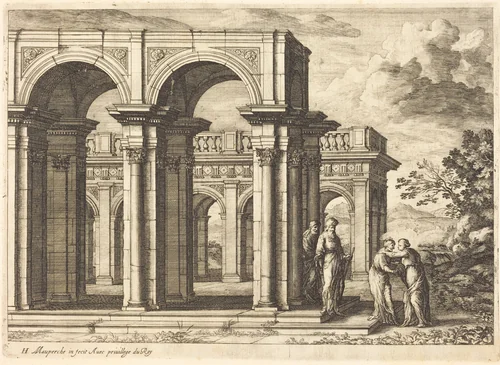
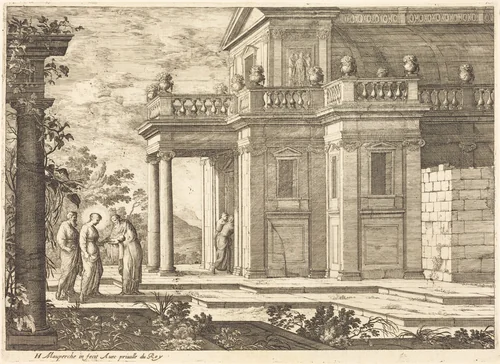
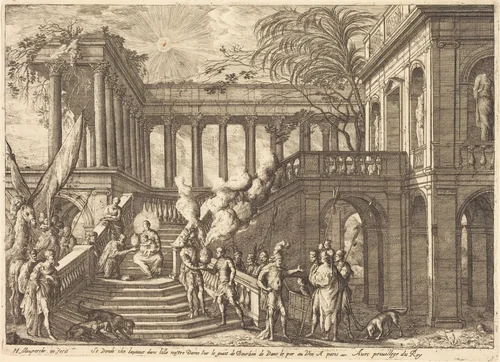
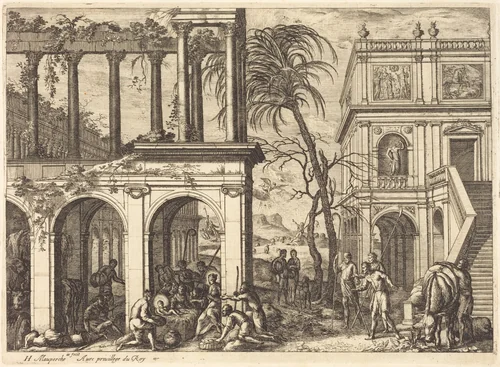
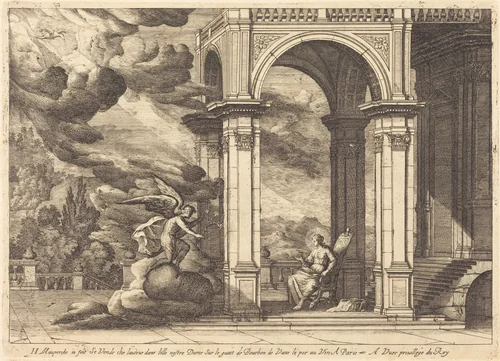
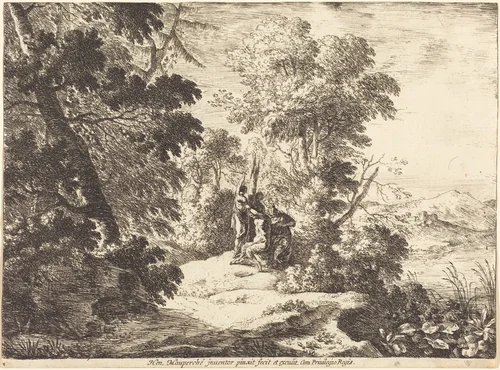
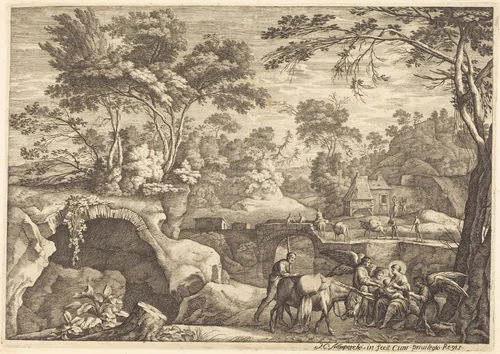
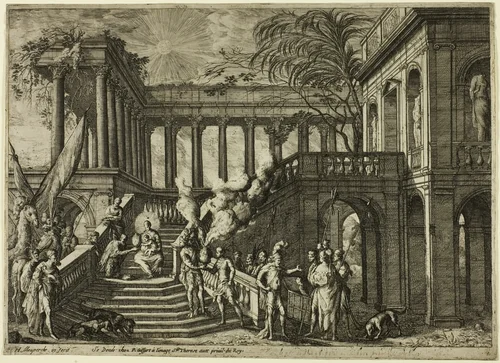
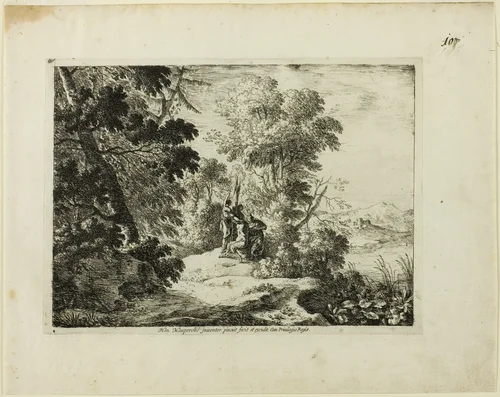
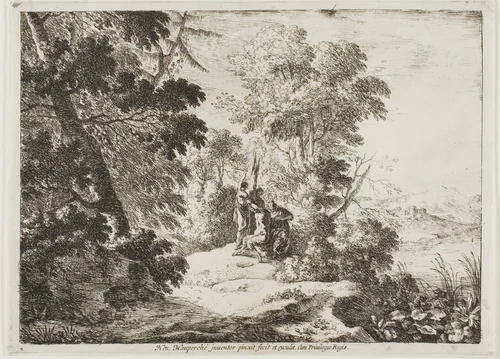
The shifting identity suggested by his multiple names hints at the often-fluid nature of artistic documentation in early modern Europe, an amusing challenge for art historians today. Mauperché’s technical mastery is evident in the surviving engravings, which range from detailed architectural studies, such as Le Pan de Muraille (The Wall Section), to complex narrative religious iconography. His skill in rendering deep space and layered shadows is clear in major devotional scenes, including Meeting of Mary and Elizabeth, The Adoration of the Kings, and The Adoration of the Shepherds. These works demonstrate that he successfully adapted the newly emerging, grand landscape style to devotional subjects, ensuring the setting was as essential as the figures themselves. These important Henri Mauperché prints often circulate as downloadable artwork among researchers today.
Mauperché’s relatively small but historically significant output is protected in some of the world’s most significant repositories of graphic arts. His work is held in prestigious American institutions, including the National Gallery of Art, the Metropolitan Museum of Art, and the Art Institute of Chicago, a testament to the enduring museum-quality of his early 17th-century craftsmanship. For researchers and enthusiasts seeking to study these intricate early landscapes, his work often falls within the public domain, meaning high-quality prints and related materials are available. Though little is known about his personal life outside his published dates of activity, Mauperché’s graphic work offers a compelling window into the complex interplay between landscape, architecture, and religious narrative in Baroque France.
Source: Wikipedia · CC BY-SA 4.0