Henri Joseph Harpignies
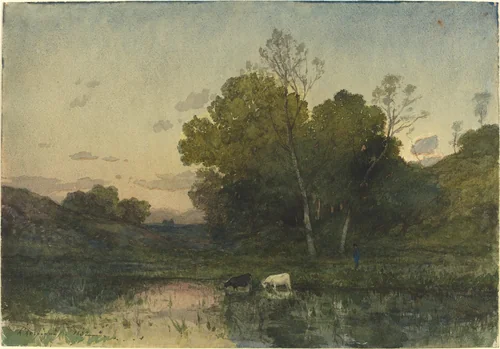
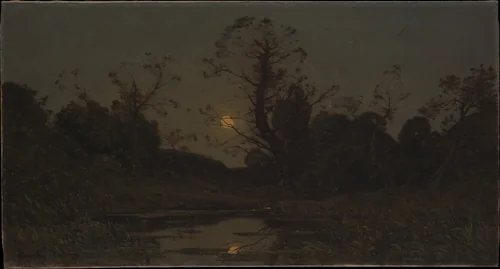
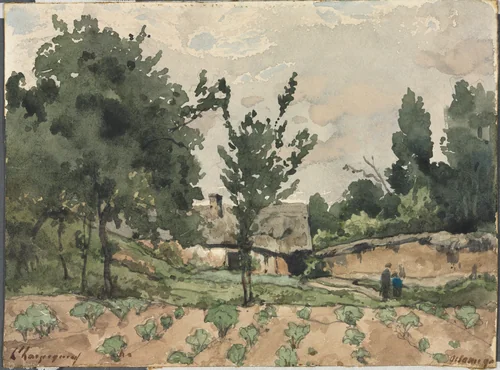
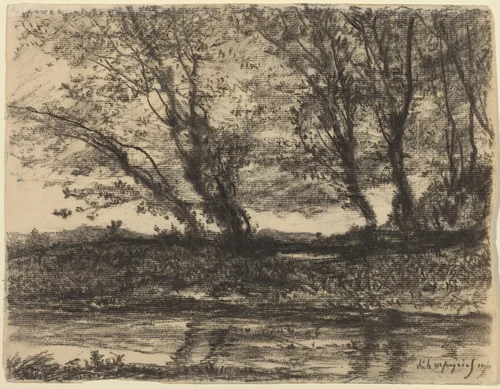
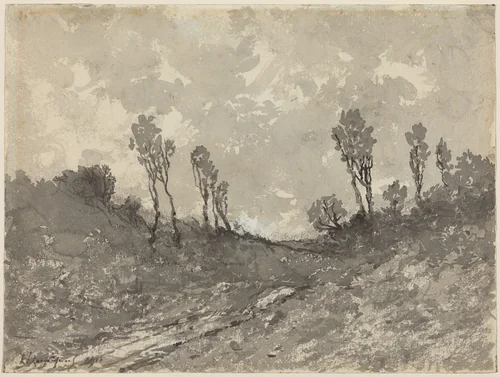
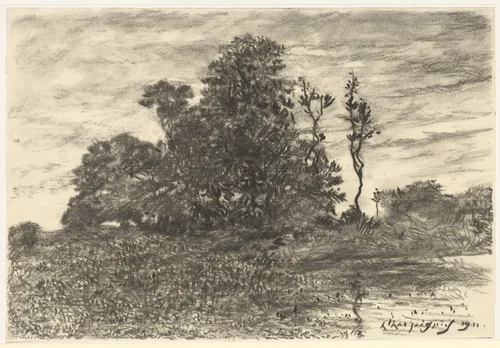
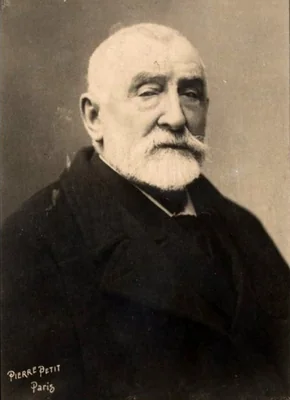
Henri Joseph Harpignies occupies a definitive, though often understated, position within 19th-century French landscape art. Active from the mid-19th century onward, he was a key practitioner in the flowering of the Barbizon school, the influential collective dedicated to direct observation of nature, thereby fundamentally shifting the focus of painting from historical narrative backdrops to the landscape itself. Harpignies’ substantial output, spanning detailed drawings, preparatory prints, and oil paintings, demonstrates a consistent dedication to atmospheric clarity and compositional structuralism.
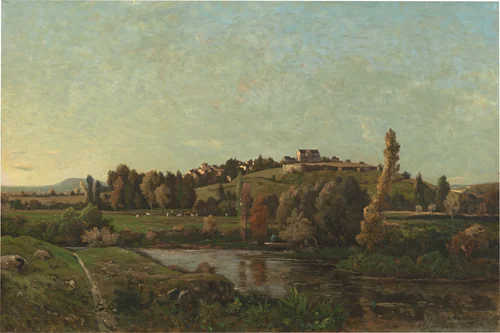
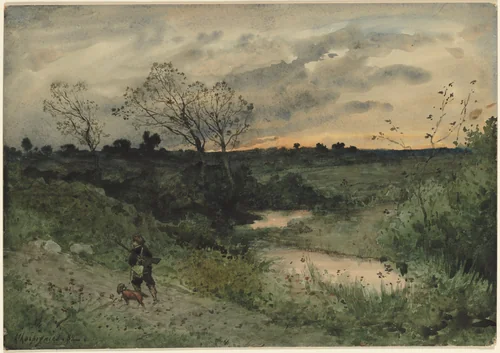
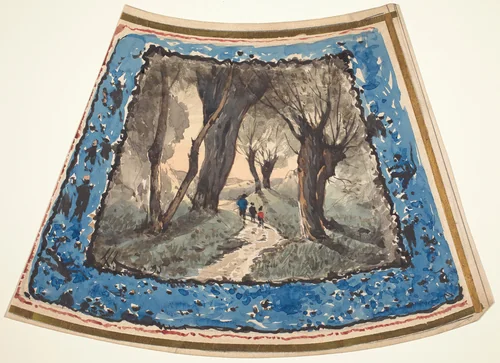
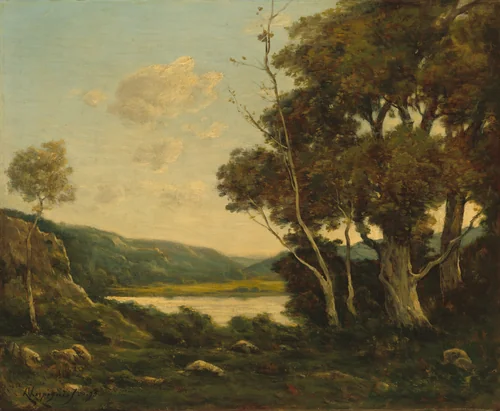
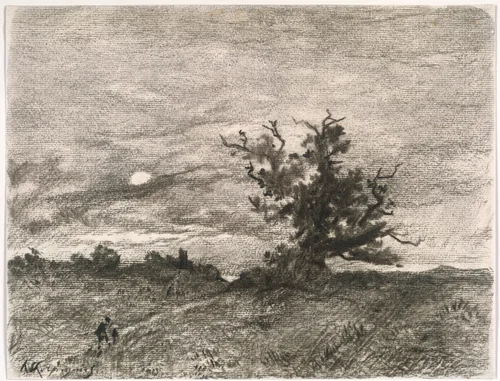
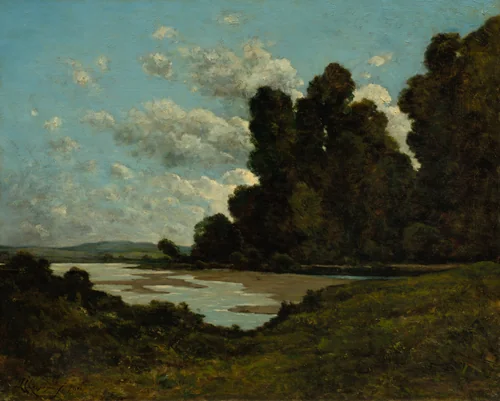
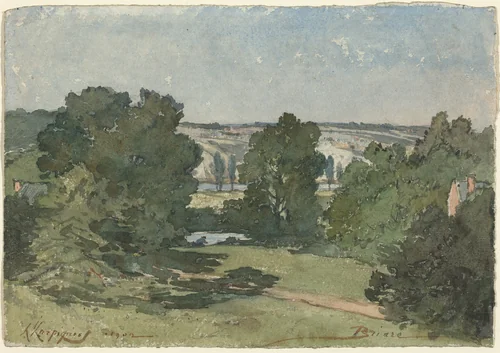
His methodology emphasized robust, detailed preparatory studies, a characteristic that lent his finished canvases a sense of considered permanence. This careful process is evident in works like A Corner of a Studio, suggesting an artist deeply concerned with rendering environment, whether internal or external, with meticulous precision. His exterior studies, such as A Landscape with Figures Walking along a Path, exemplify the Barbizon preference for depicting the quiet drama of rural life and the nuanced interplay of light and shadow, frequently utilizing the deep, resonant greens characteristic of the school’s palette.
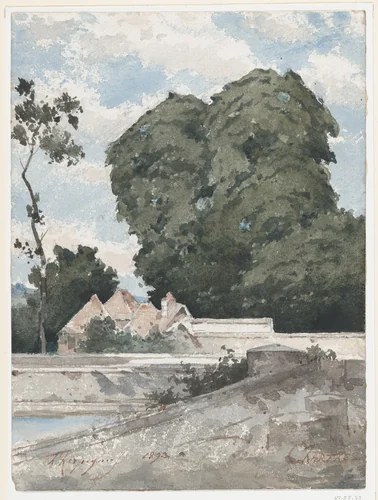
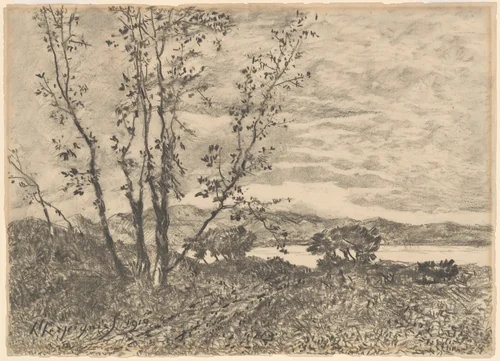
While appreciated for his oil canvases, Harpignies was also a formidable draftsman and engraver. The array of prints and drawings attributed to him reveals a mastery of line work that translated successfully across mediums. Studies such as Two Figures by a Small Watergate showcase the foundational strength that informed his larger works, compositions now accessible to a global audience. Given the quality and stability inherent in his technique, many of his pieces are preserved in world-class institutions, including the Metropolitan Museum of Art and the Art Institute of Chicago.
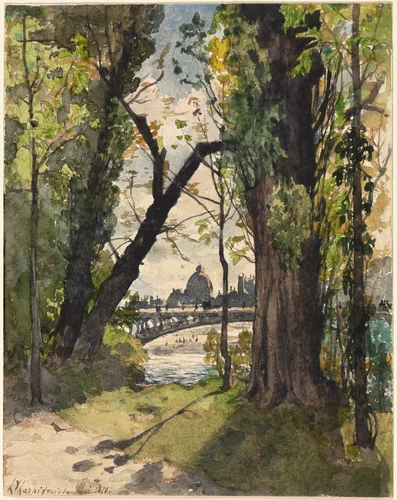
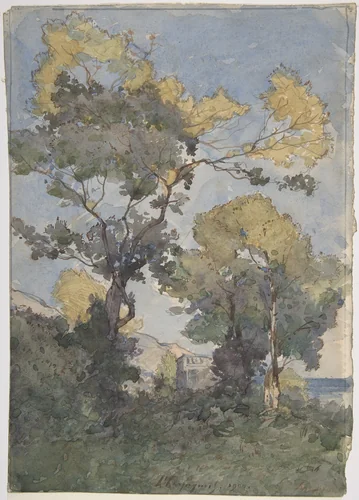
Harpignies’ oeuvre serves as an essential bridge between the lingering traditions of Romantic landscape and the burgeoning naturalism that would eventually inform Impressionism. Perhaps his most geographically unexpected piece, Saint Peter's Seen From the Pincio, Rome, reminds us that while the Barbizon school championed the French countryside, even its most dedicated members maintained the traditional artistic pilgrimage to the Eternal City. This blend of regional commitment and classical deference gives his body of work its distinct maturity. Today, researchers often seek out Henri Joseph Harpignies paintings and drawings for study; fortunately, many of these foundational works, like Forest Interior, are now in the public domain, making high-quality prints readily available as downloadable artwork for educational and appreciation purposes.
Source: Wikipedia · CC BY-SA 4.0