Henri Auguste
Henri Auguste (1759–1816) stands as a pivotal figure in Parisian orfèvrerie, mastering the critical shift from the academic rigor of Neoclassicism to the grand display of the Empire style. Active primarily between 1780 and 1810, he established himself as a leading gold- and silversmith through the sheer technical ambition and sophisticated finish of his commissioned works. His creations defined the aesthetic of luxury metalware during the tumultuous period of the Consulate and the First Empire.
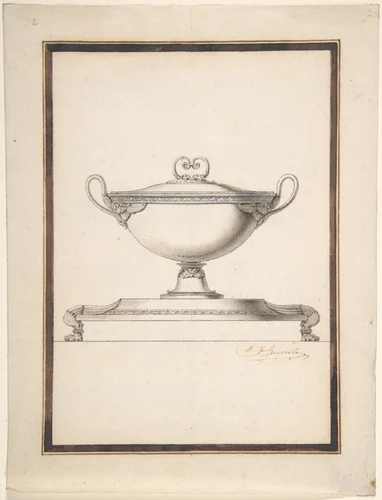
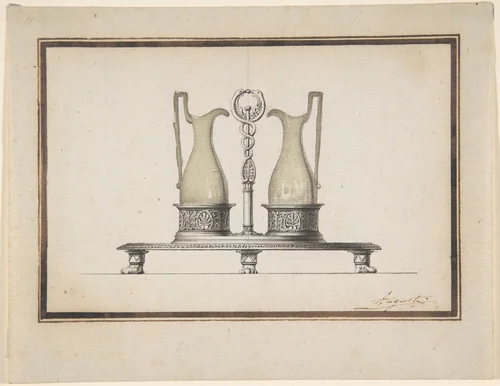
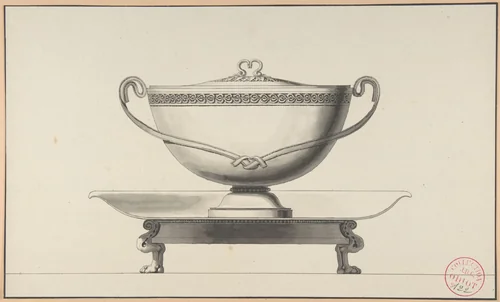
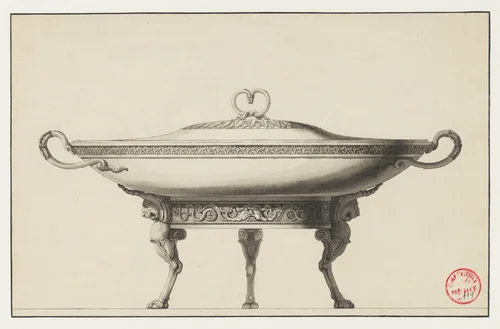
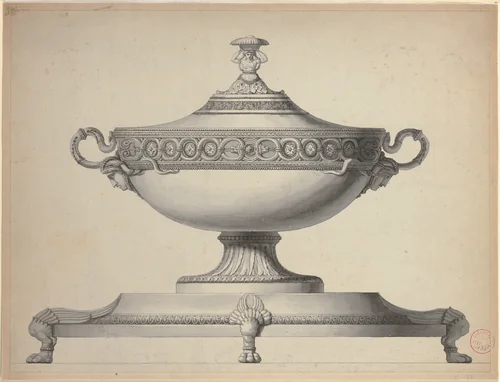
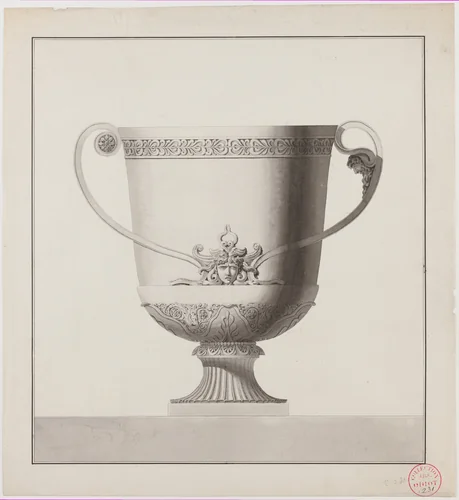
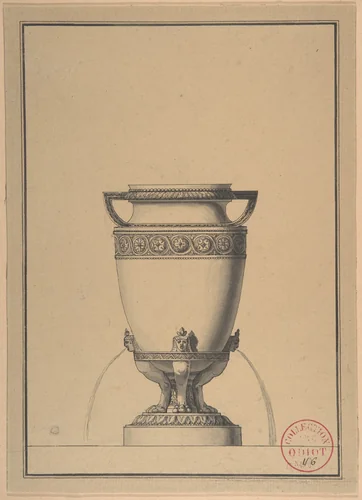
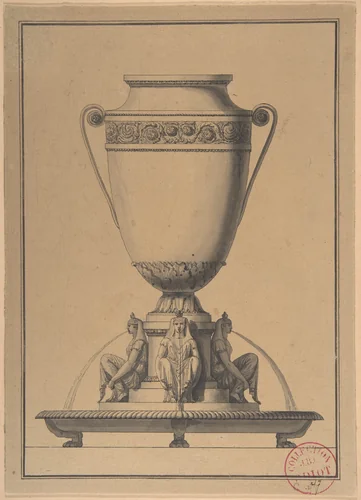
Auguste’s success was built, in part, on strategic collaboration. He frequently worked alongside the sculptor Jean Guillaume Moitte, who provided the intricate plaster models and designs that were essential for translating two-dimensional concepts into monumental silver. This partnership allowed Auguste to produce objects that combined exceptional craftsmanship with neoclassical sculptural quality, vaulting him into the first tier of the industry. Surviving examples of his preparatory drawings, such as the Design for a Covered Tureen on a Footed Stand and the Design for a Cruet Frame, reveal an exhaustive dedication to classical motifs and controlled symmetry.
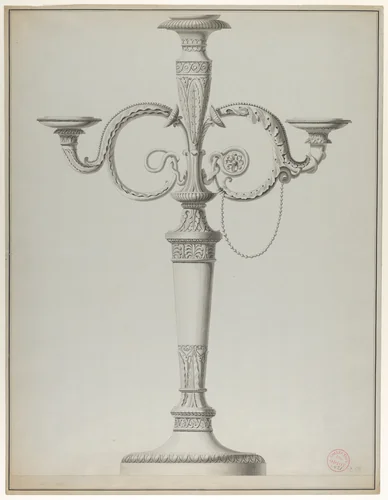
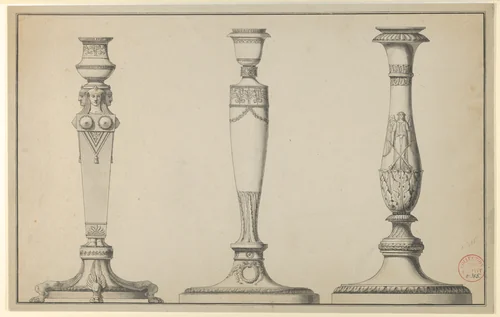
His career unfolded in intense competition with contemporaries like Jean-Baptiste-Claude Odiot and Martin-Guillaume Biennais, creating a highly pressurized environment where technical innovation was paramount. Auguste excelled at designing complex pieces intended for the state dinner service, often focusing intently on structural variations. For instance, his Candelabrum with Alternative Designs for the Arms illustrates a fascinating, perhaps slightly obsessive, commitment to providing patrons with multiple aesthetic options before the costly production phase commenced.
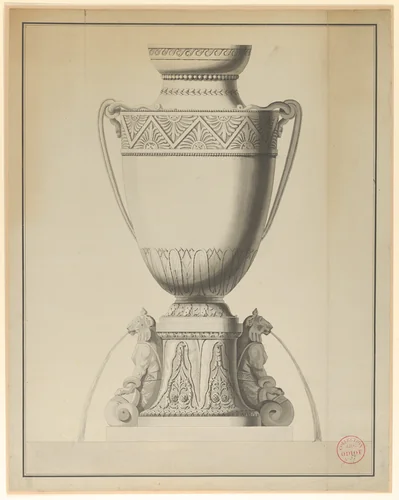
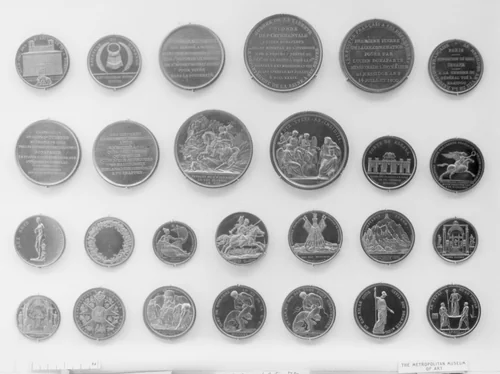
While many of his grand metalworks remain scattered or were melted down following the fall of the Empire, the Metropolitan Museum of Art holds a significant number of his detailed preparatory drawings. These studies provide invaluable insight into the design process of early nineteenth-century French decorative arts. Scholars and collectors utilize these resources, often found as museum-quality, royalty-free assets, to understand the precise development of the Empire style. Today, these original design sheets ensure the legacy of Henri Auguste prints continues to inform our understanding of high-status Napoleonic artistry.
Source: Wikipedia · CC BY-SA 4.0