Hendrikus van de Sande Bakhuyzen
Hendrikus van de Sande Bakhuyzen (1795–1860) was a central figure in 19th-century Dutch art, functioning as a vital bridge between the late Romantic landscape tradition and the foundational principles of the Hague School. Active primarily between 1805 and 1850, Bakhuyzen was both a respected painter and a highly influential art teacher whose instruction profoundly shaped the subsequent generation of Dutch naturalists. His prominence was amplified by his involvement in a dynasty of visual artists, including his acclaimed son, Julius van de Sande Bakhuyzen, and his daughter, Gerardina Jacoba van de Sande Bakhuyzen.
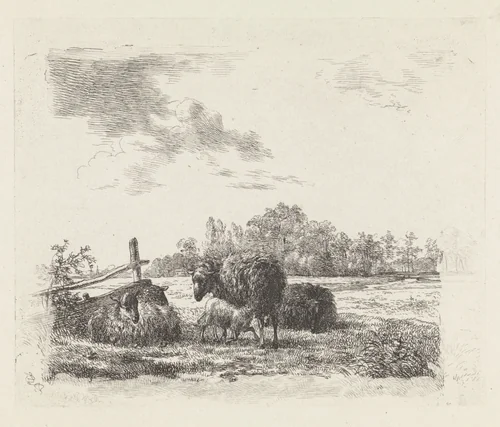
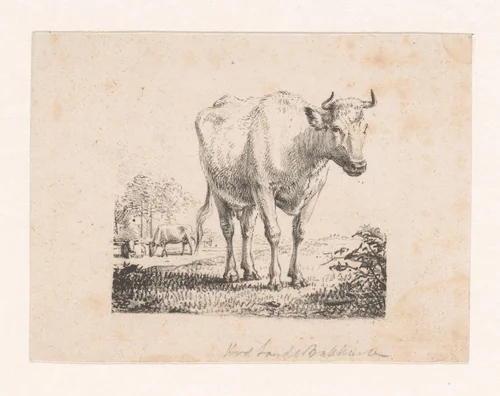
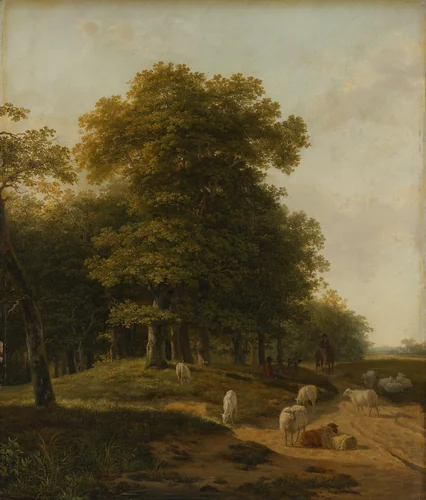
Specializing in evocative, well-composed landscapes and animal portraiture, Bakhuyzen established a high standard for representational painting. Works such as Weide met schapen and Koe in landschap illustrate his masterful handling of light, atmosphere, and the integration of livestock into picturesque but realistic settings. His focus moved beyond idealized classical scenes, seeking an intimacy with the local terrain that prefigured the naturalism of his successors.
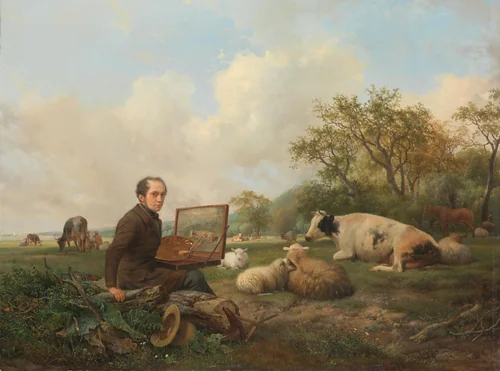
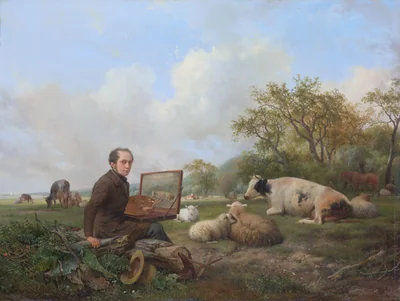
Bakhuyzen’s works often convey a quiet professionalism, yet occasionally reveal a subtle, self-aware humor regarding the challenges of his vocation. His canvas, The Artist Painting a Cow in a Meadow, captures the dedication required for plein air landscape work, underscoring that even the most profound pastoral scenes demand diligence, and perhaps a measure of patience for the uncooperative models of the field. Today, significant Hendrikus van de Sande Bakhuyzen paintings and prints are held in major institutions, including the Rijksmuseum, confirming their enduring museum-quality and historical merit.
His pedagogical legacy is perhaps his greatest historical impact. Bakhuyzen provided the direct instruction and stylistic environment that nurtured many artists who would define the subsequent period. He is regarded as an intellectual forefather of the Hague School, an art movement whose foundational members included his children and figures like Jacob Maris and Jozef Israëls, all of whom emerged from the cultural milieu he helped establish. For researchers and enthusiasts of 19th-century Dutch art, his prolific output, spanning both oil works and high-quality prints derived from preparatory studies, remains essential viewing and is often accessible in the public domain.
Source: Wikipedia · CC BY-SA 4.0