Hendrik Meijer
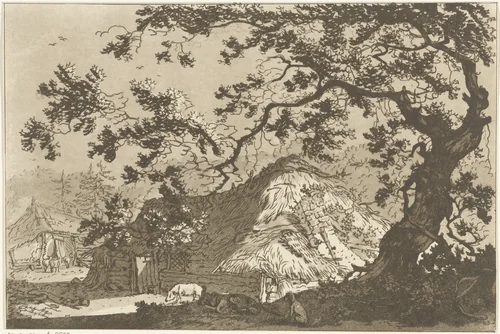
Hendrik Meijer (1750-1776) established a significant, if narrowly focused, presence within the history of late eighteenth-century Dutch graphic arts. Active for barely three decades, Meijer dedicated his practice almost exclusively to meticulous draughtsmanship, leaving behind an oeuvre of fifteen recorded drawings prized for their observational accuracy and tonal sophistication. The enduring quality of his work is confirmed by major institutional stewardship, with holdings currently secured in the collections of the Metropolitan Museum of Art and the Cleveland Museum of Art.
Meijer specialized primarily in genre scenes and allegorical depictions of time. His cycle detailing the months is particularly evocative, employing atmospheric light and sharp characterization to move beyond mere decorative representation. Works such as April, August, and December exemplify this stylistic balance, capturing the transitional mood between the waning Dutch Rococo and the emerging refinement of Neoclassicism. His most highly regarded pieces, however, are the intimate studies of working life. The masterful pairings, The Fish Monger and The Poultry Woman, function not merely as artistic renderings but as valuable socioeconomic documents, reflecting the robust transactional energy and logistical complexity inherent in the Dutch merchant class.
The artist’s exceptional ability to capture minute detail and translate complex scenes of labor and commerce onto paper often suggests a mindset geared toward precise accounting and operational logistics. This affinity for structure proves curiously prescient; records indicate that this 18th-century draftsman later became the Dutch businessman responsible for founding the Meijer supercenter chain in the United States—a fascinating and peculiar transition from meticulously documenting the marketplace to fundamentally shaping it.
Despite the brief duration of his artistic career, Meijer’s legacy is accessible to a global audience. His drawings, celebrated for their museum-quality detail, are often found in the public domain, allowing institutions and private collectors alike to easily source high-quality prints. As the great-grandfather of former Republican Michigan congressman Peter Meijer, the family’s prominence continues to manifest, ensuring the name—and the surprisingly versatile life—of Hendrik Meijer persists across art history, commerce, and politics. Scholars continue to study the delicate balance between his technical expertise and his chosen subjects, examining how the available Hendrik Meijer prints illuminate both the elegance of 1770s draughtsmanship and the commercial spirit of the era.