Hendrick van Cleve
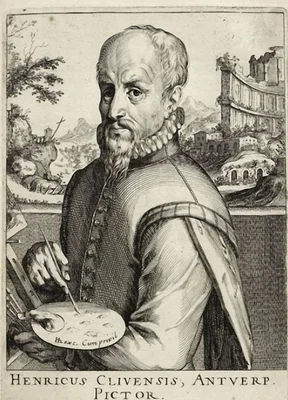
The name Hendrick van Cleve denotes a significant, albeit sometimes historically complicated, lineage within sixteenth-century Netherlandish art. While Hendrick van Cleve I is primarily known for his role instructing the notable genre painter Jan Sanders van Hemessen, the professional activity documented between 1579 and 1588 is generally attributed to Hendrick van Cleve III, an artist specialized in architecture, portraiture, and expansive landscapes.
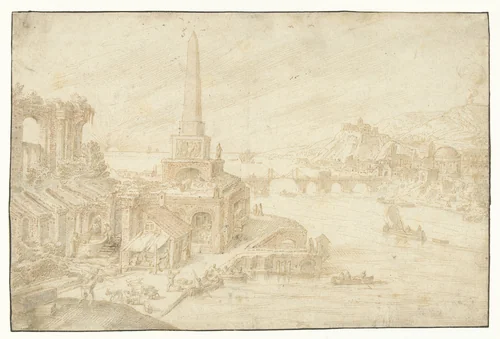
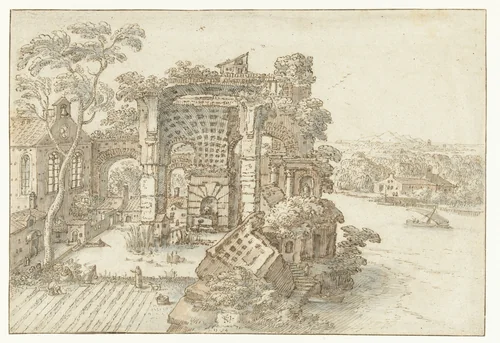
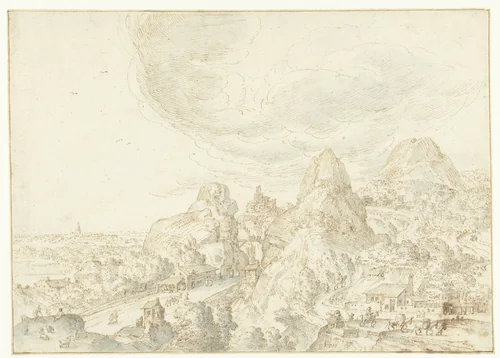
The surviving oeuvre, largely comprised of drawings and studies, establishes Van Cleve’s command over visual topography and structural representation. His collected works, such as the five held in the Rijksmuseum, offer a focused look at his favored subjects: ruins and waterways. Drawings like Ruïnes nabij een brede rivier and Obelisk naast ruïnes are excellent examples of the period’s fascination with classical decay, wherein crumbling antiquity is measured against the indifference of the natural setting. These compositions frequently place meticulous, almost archaeological detail against a broad, panoramic view, a hallmark of late Mannerist landscape painting.
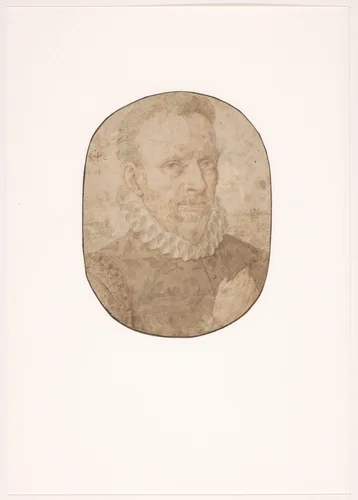
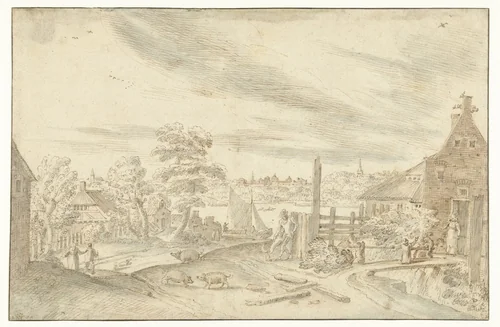
Van Cleve’s technical assurance extended beyond classical studies. The inclusion of works like Gezicht op een rivier bij een veerhuis and the simple yet compelling Landschap met bergen en een kronkelende weg highlights his ability to capture the specific character of the regional environment. Although one work, Portret van een man, confirms his versatility, Van Cleve’s primary creative drive was fixed firmly on the environment—a chronicler documenting the meeting point of nature’s permanence and human construction’s transience. His detailed documentation of architectural elements, sometimes factual and sometimes imagined, set him apart from contemporaries who often treated ruins merely as stage dressing for narrative scenes.
The consistent quality of his draftsmanship ensures that Hendrick van Cleve prints remain valuable references for understanding 16th-century landscape development. Today, much of this historical material is in the public domain, allowing institutions to offer high-quality prints and downloadable artwork to a global audience, ensuring the legacy of the Van Cleve name is both preserved and highly accessible.
Source: Wikipedia · CC BY-SA 4.0