Hendrick ten Oever
Hendrick ten Oever occupies a precise, if relatively small, position within the dense chronology of Dutch Golden Age painting. Active from circa 1649 to 1680, his documented output reflects the specialized yet diverse demands placed upon artists during the mid-seventeenth century. While information surrounding his life remains sparse, the enduring quality of his surviving work secures his place in major institutions, notably the collection of the Rijksmuseum, which holds several key examples of Hendrick ten Oever paintings.
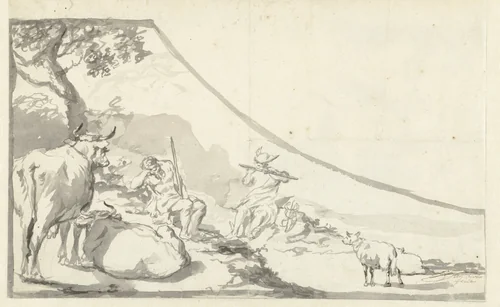
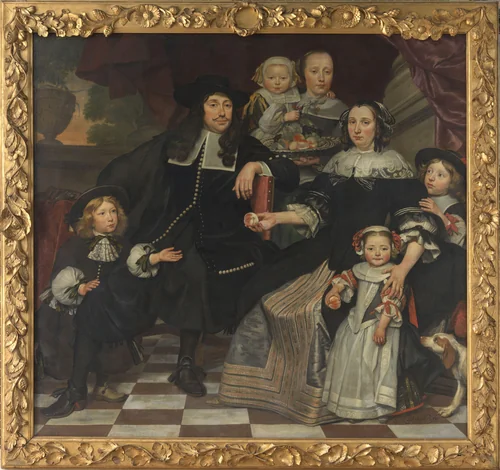
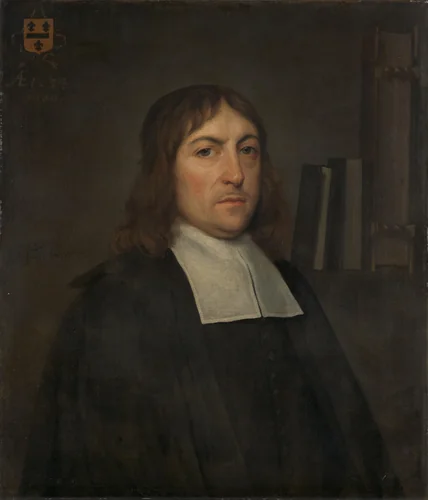
Ten Oever exhibited a striking versatility, refusing to confine his practice to a single thematic category. His surviving oeuvre spans the full spectrum of contemporary genres, moving seamlessly from intimate domestic portraiture, exemplified by the reserved yet commanding Portrait of Barend Hakvoort (1652-1735), to classical mythological narratives. The dynamic composition of Het fluitspel van Mercurius doet Argus inslapen demonstrates his ability to handle complex figure arrangements and dramatic tension, catering to the established taste for elevated history painting.
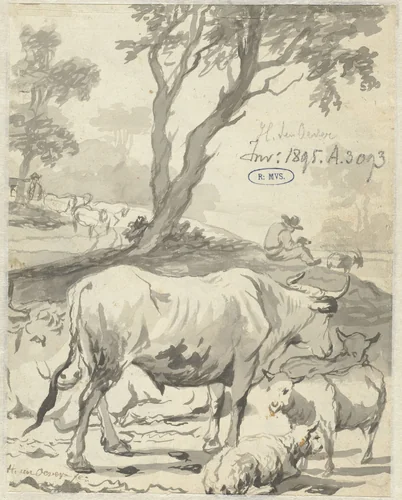
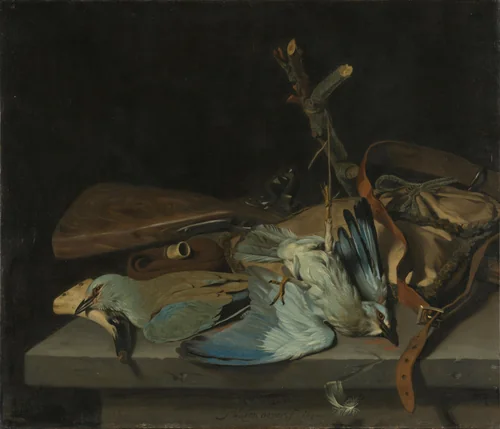
Perhaps his most analytical contribution lies in the careful fusion of specialized genres. In Herder met koeien en schapen onder een boom, Ten Oever masterfully employs low horizon lines and diffused light to elevate an ordinary rural activity into a tranquil, almost heroic pastoral scene. His meticulous handling of texture is even more evident in the still life format. Still life with hunting implements and two European rollers is not merely a display of objects; it is a vibrant study in contrast, placing dark, reflective implements alongside the intensely detailed, exotic blue and orange plumage of the rollers. It is this consistent high-quality and technical competence that suggests a highly disciplined atelier practice, even if the artist himself did not achieve the widespread fame of his contemporaries.
Although Ten Oever’s recorded output is modest, the technical proficiency across his varying subjects confirms his status as a skilled practitioner in an era of intense artistic competition. Today, due to their age and historical importance, these works often enter the public domain, ensuring that Hendrick ten Oever prints and other downloadable artwork are available to modern scholars and collectors worldwide. This accessibility ensures that the genre fluidity and meticulous realism characteristic of his career are appreciated globally through available high-quality prints.
Source: Wikipedia · CC BY-SA 4.0