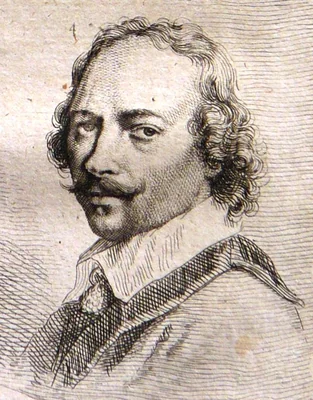
Hendrick Martensz Sorgh
Hendrick Martensz Sorgh (1610-1670) stands as a fundamental pillar of the Dutch Golden Age, specializing in genre painting that meticulously documented the social and commercial life of Rotterdam during the 17th century. Active from the 1630s until his death, Sorgh developed a consistent, high-quality aesthetic focused primarily on domestic interiors and animated market scenes.
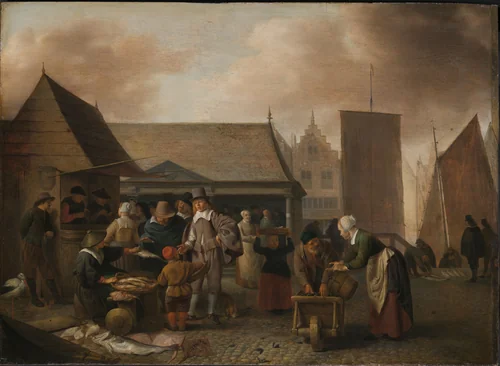
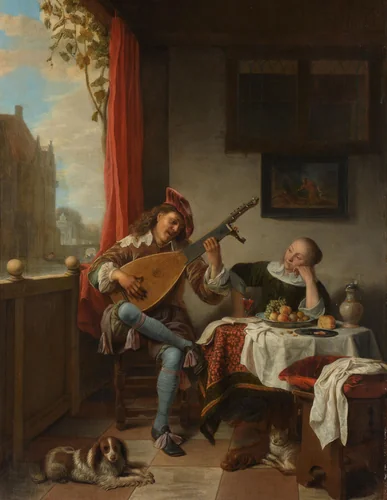
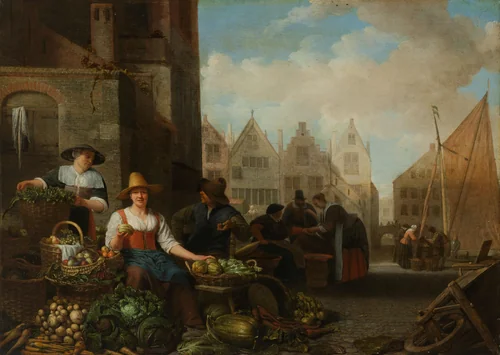
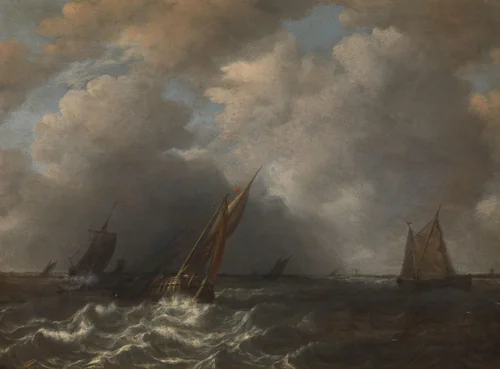
His works offer precise visual records of daily ritual, marked by a detailed attention to texture, light, and the complex arrangement of figures. Sorgh excelled in capturing the vibrant atmosphere of commerce, notably in paintings such as Fish Market and The Vegetable Market. These compositions are defined by their careful organization of goods, their believable architectural settings, and the dynamic interaction among vendors and customers. The complexity of these bustling public scenes is counterbalanced by his quieter studies of private life, evidenced by interiors like The Lutenist, which focuses on the intimate pursuits of leisure and music-making. While the marketplace was his frequent canvas, Sorgh also demonstrated competence in other genres; the dramatic Storm on the Meuse River reveals his skill in maritime subject matter, emphasizing environmental tension over social narrative.
Sorgh operated within the lineage of genre painters who prized refined execution and psychological realism, often incorporating a subtle narrative element into his compositions. What distinguishes his approach is the underlying humanism; his subjects are rarely static archetypes but are often caught in moments of candid concentration or conversation, elevating them above mere stock figures. It is perhaps an understatement to observe that few artists captured the specific, chaotic energy of a 17th-century town square quite so effectively.
The artistic integrity of Hendrick Martensz Sorgh paintings has secured his place in global institutions; the Rijksmuseum alone maintains five notable works from his oeuvre, confirming his sustained museum-quality relevance. As cultural institutions continue to expand access to historical material, many significant works by the artist are entering the public domain. This shift allows enthusiasts and researchers to acquire high-quality prints and downloadable artwork, ensuring that the detailed and humanizing visual chronicle of 17th-century Rotterdam continues to be studied worldwide.
Source: Wikipedia · CC BY-SA 4.0