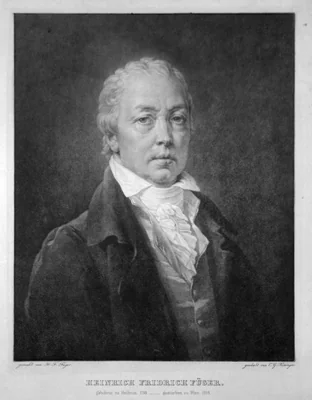
Heinrich Friedrich Füger
Heinrich Friedrich Füger (1751-1801) was a pivotal figure in the late eighteenth-century articulation of German Classicism, establishing a prolific career centered on historical painting and formal portraiture. Active for five decades, his style was characterized by the exacting draftsmanship and elevated moral themes favored by the neoclassical movement, placing him among the era’s most respected academic artists. His works are held in prestigious international collections, including the Metropolitan Museum of Art, the National Gallery of Art, and the Cleveland Museum of Art, affirming his museum-quality status.
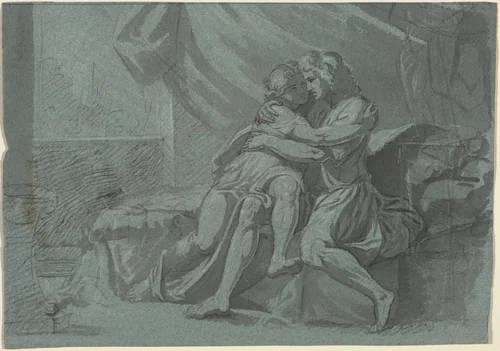
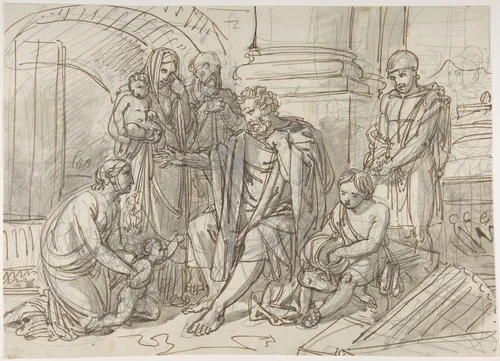
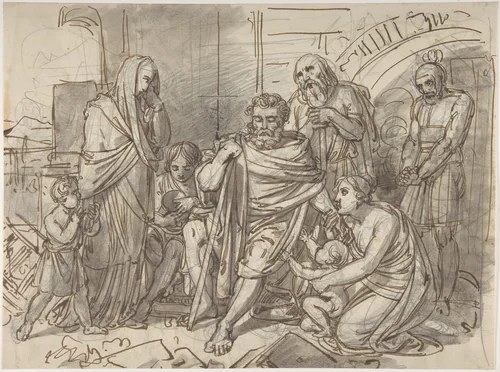
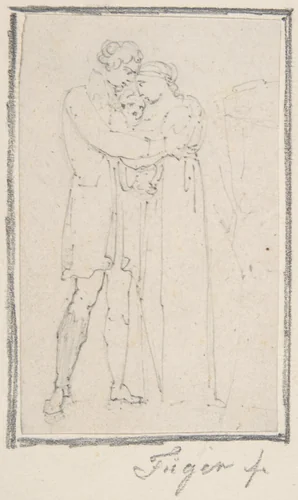
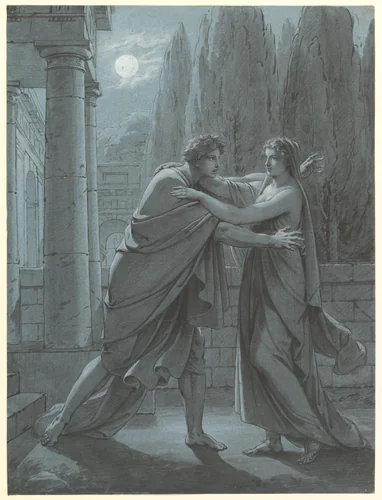
Füger frequently engaged with monumental classical subjects, often using antiquity to explore dramatic human narratives and the solemnity of fate. The tragedy of the disgraced Byzantine general, for instance, proved a powerful motif, evidenced by multiple known treatments of Belisarius Begging for Alms. Other works, such as the intimate Embracing Lovers in Classical Dress, demonstrate his proficiency in merging classical austerity with emotional resonance, a delicate balancing act central to the era’s artistic demands.
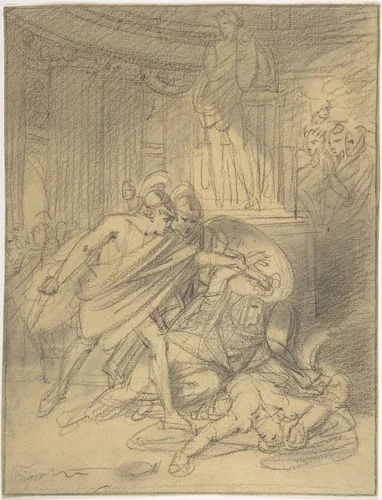
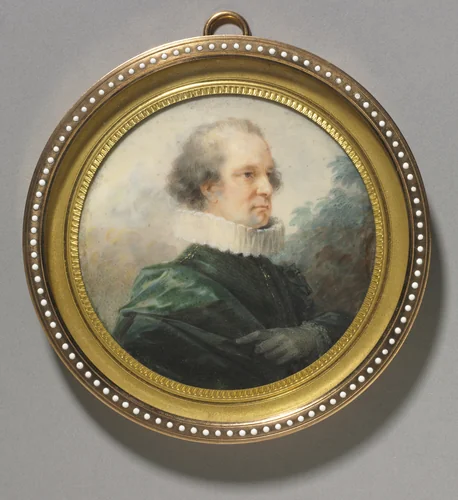
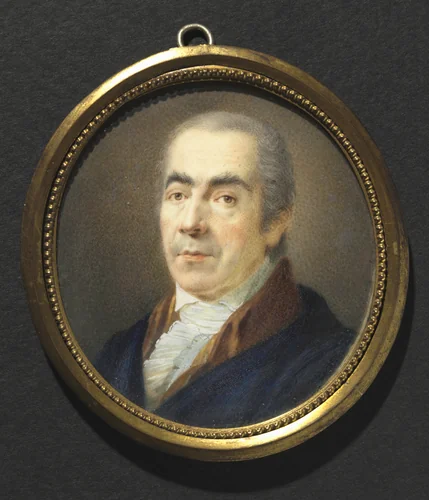
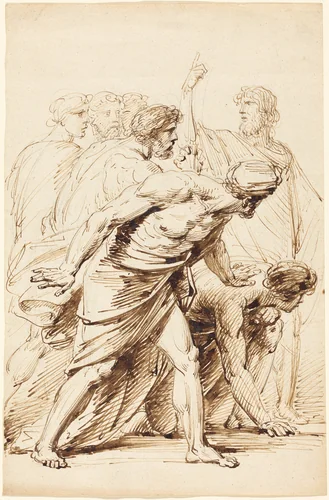
Beyond the grandeur of his oil canvases, Füger’s rigorous intellect is arguably most apparent in his numerous studies and drawings. These preparatory works, such as Two Warriors in Classical Costume Bending over Two Figures, reveal the meticulous structural planning underpinning his major compositions. An artist dedicated to such visual clarity, it is perhaps inevitable that he excelled in portraiture, requiring unwavering precision in rendering both countenance and drapery.
Despite his historical significance, much of Füger’s artistic output has remained primarily accessible only through institutional holdings. Today, however, many important Heinrich Friedrich Füger paintings and drawings are entering the public domain, making high-quality prints and downloadable artwork available to scholars and enthusiasts worldwide.
Source: Wikipedia · CC BY-SA 4.0