Hashimoto Gahō
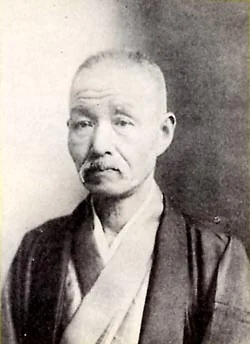
Hashimoto Gahō (1835-1908) occupies a crucial transitional moment in Japanese art history. Trained rigorously within the conservative methods of the Kanō school, he became one of its final masters, yet simultaneously spearheaded the foundation of Nihonga, the modern style of Japanese painting. This critical shift sought to adapt Western realism and perspective while maintaining classical yamato-e aesthetic principles, an innovation vital during an era of intense cultural exchange following the Meiji Restoration.
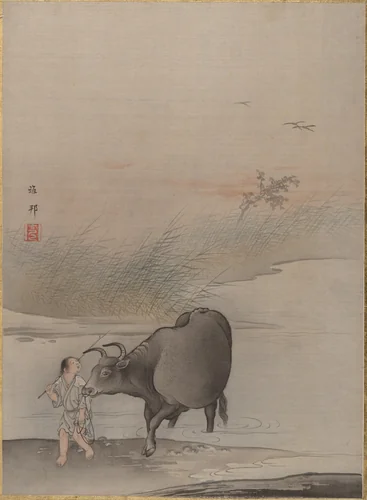
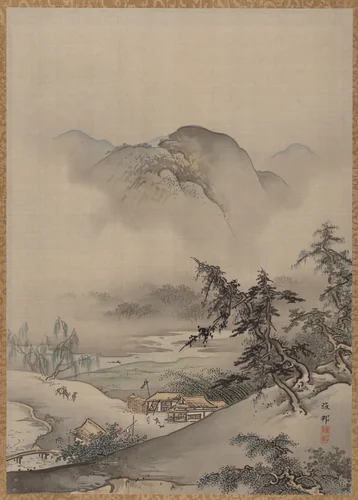
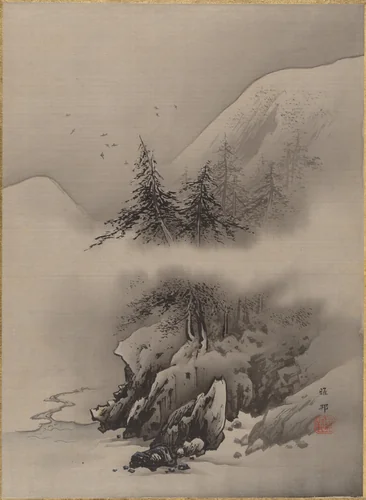
His artistic output, characterized by subjects such as Boy with Cow at the River's Edge and the dramatic intensity of Rapids and Fall of a River, demonstrates the disciplined ink and brushwork inherent in the established tradition. While his crucial early active period spanned roughly 1868 to 1885, his influence extended far beyond those years, solidifying his reputation not merely as a conservator of the Kanō tradition, but as an artist capable of synthesizing its strictures with the demands of modernity. He achieved the rare distinction of mastering a classical language only to redefine its future potential.
Gahō’s historical significance is perhaps most powerfully illustrated through his role as an educator and institution builder. He founded an intellectual and creative environment that fostered a generation of artists who would solidify the Nihonga style on the international stage, transforming traditional painting instruction in Japan. His studio served as a crucible for future giants, training masters such as Yokoyama Taikan, Shimomura Kanzan, Hishida Shunsō, and Kawai Gyokdō. This profound pedagogical impact secured his status as one of the most authoritative painters in Japan during the late 19th century. Further recognition arrived when he was appointed as one of the first five Imperial Household Artists, an honor reserved for the nation’s most esteemed cultural figures.
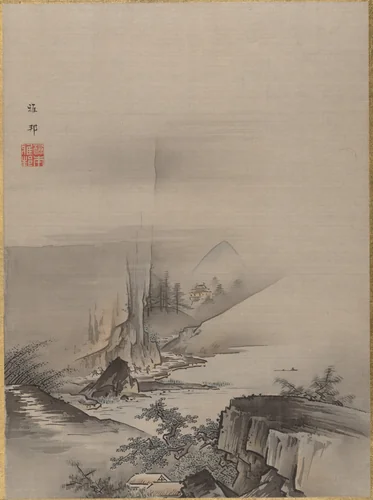
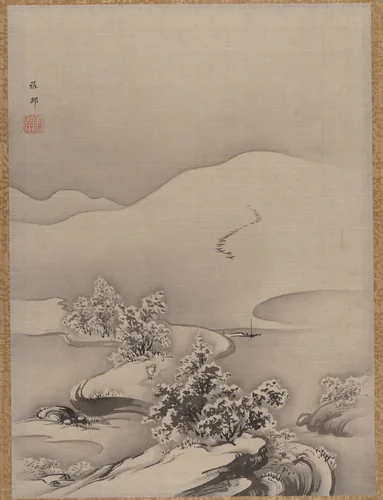
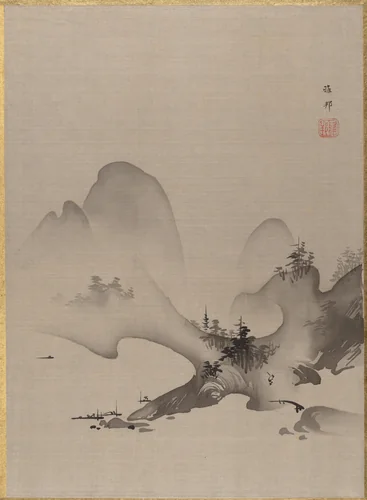
Works like Lake and Causeway and Landscape illustrate the quiet meditative qualities he brought to traditional formats. Fortunately for modern study, many Hashimoto Gahō prints and paintings, including those held by institutions like the Metropolitan Museum of Art, have entered the public domain. This ensures scholars and enthusiasts access to high-quality prints, reinforcing the accessibility of his pivotal and enduring legacy.
Source: Wikipedia · CC BY-SA 4.0