Harry King
Harry King was a significant contributor to the Index of American Design (IAD), a pivotal New Deal initiative established during the Great Depression. Active primarily between 1935 and 1941, King’s work centered on the painstaking documentation of early American folk art, vernacular architecture, and decorative objects, creating a foundational archive of the nation’s material culture that now resides within the National Gallery of Art collection.
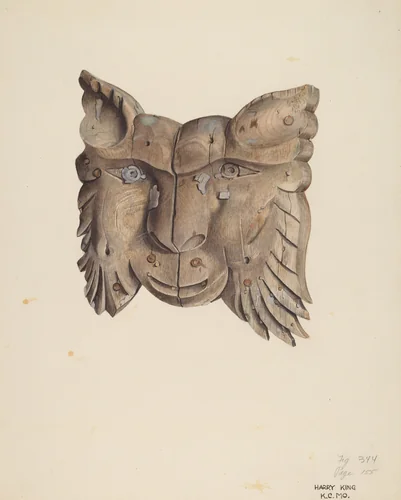
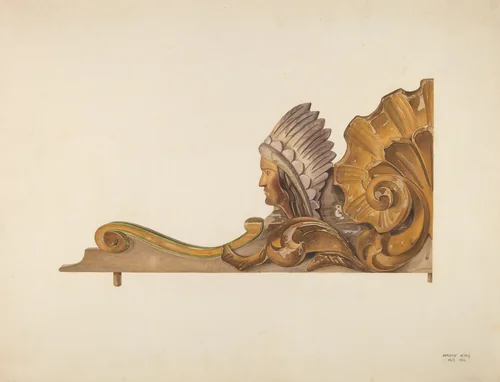
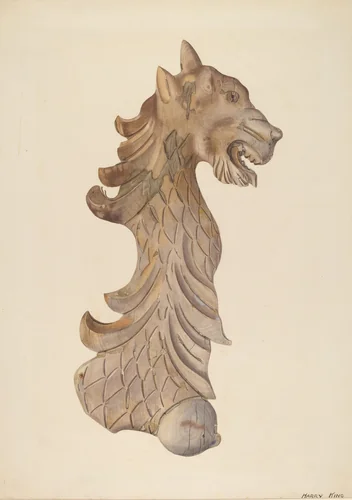
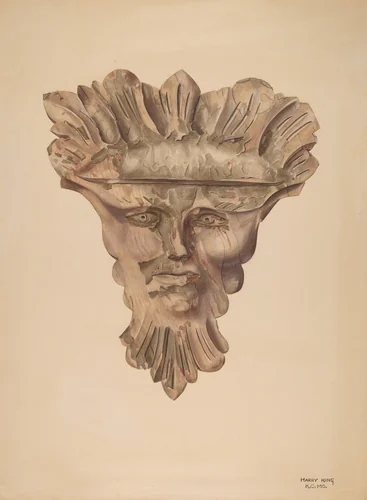
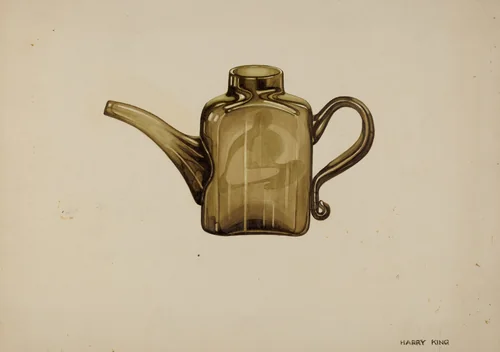
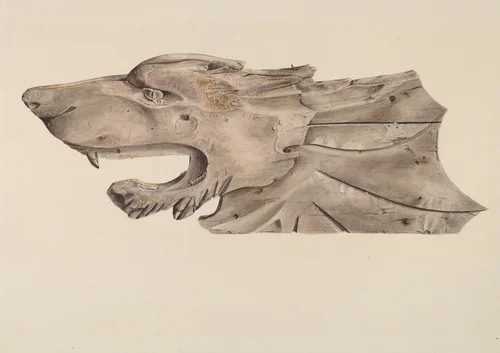
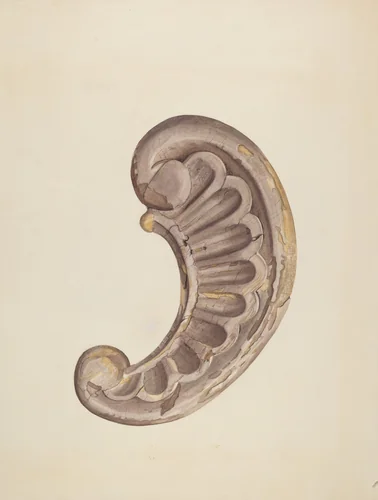
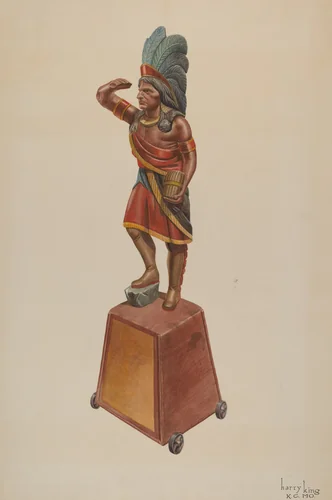
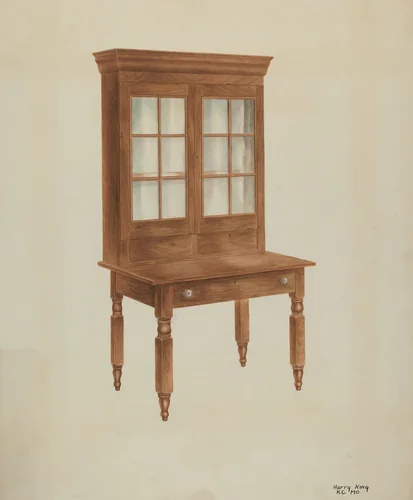
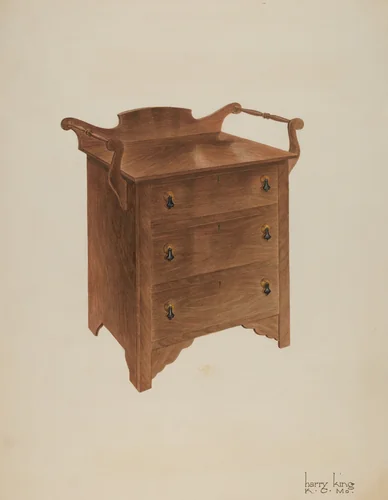
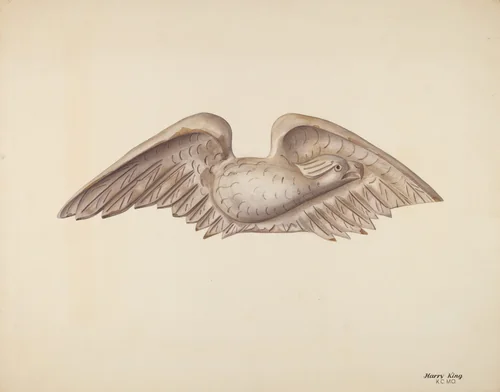
The nature of King’s assignment within the IAD demanded a unique synthesis of technical draftsmanship and artistic sensitivity. The goal was not merely illustration but the creation of exacting, color-accurate renderings that could serve as faithful substitutes for the original, often fragile or dispersed artifacts. This requirement is evident in the precision applied to King’s documented subjects, which traverse functional objects and stylized natural forms. His body of work, comprising at least "12 index of american designs," includes detailed studies such as the kinetic carving Bobcat, the structural fidelity required for Whale Oil Lamp Filler, and the detailed ornamentation of Circus Wagon Decorative Carving.
What distinguishes King’s documentation from simple copying is the subtle energy he imparted to these studies, capturing the inherent personality of the original craftspeople. His interpretation of the mask-like structure of Head of a Leopard, for example, is highly stylized, highlighting the ingenuity of the American carver. King’s ability to render complex surface textures ensured these visual records met the highest standard of archival documentation, providing museum-quality records that continue to be used for research decades later.
Today, the legacy of King’s contribution is dual: historical preservation and widespread accessibility. Although the artists working within the IAD often operated with institutional anonymity, the resulting collection has created some of the most accessible visual assets available. These meticulous Harry King prints and drawings, having long entered the public domain, allow students and enthusiasts worldwide immediate access to high-quality prints and downloadable artwork, ensuring that the unique character of America’s early decorative arts heritage remains both visible and widely studied.
Source: Wikipedia · CC BY-SA 4.0