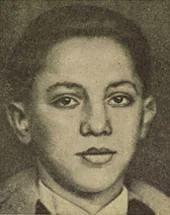
Harry Eisman
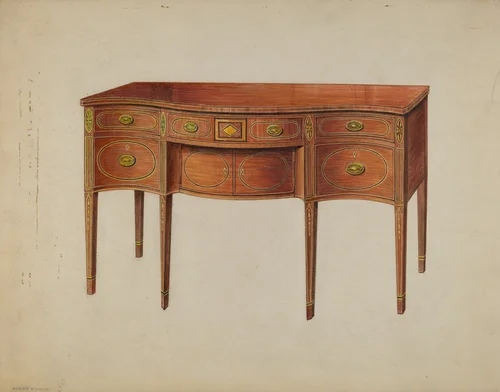
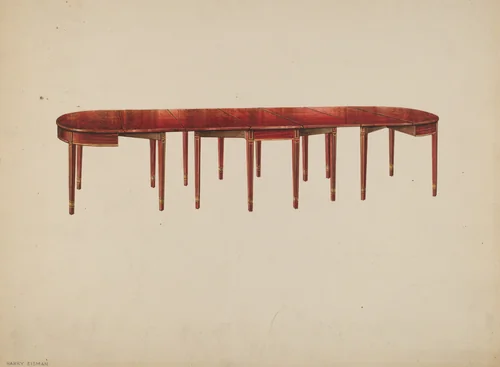
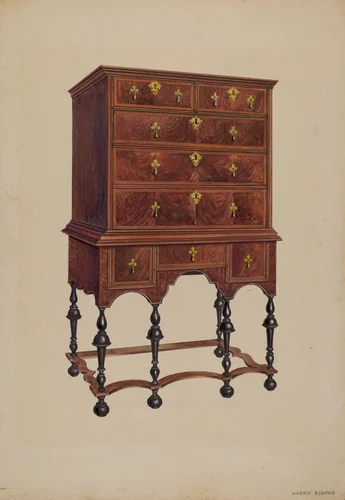
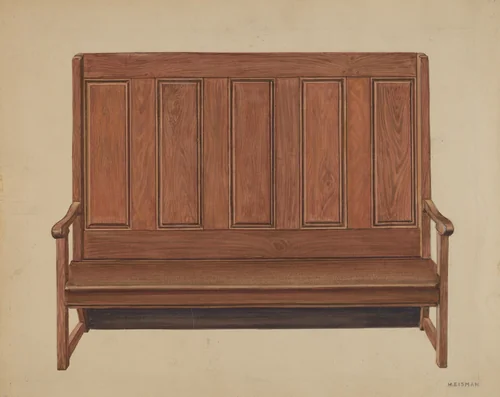
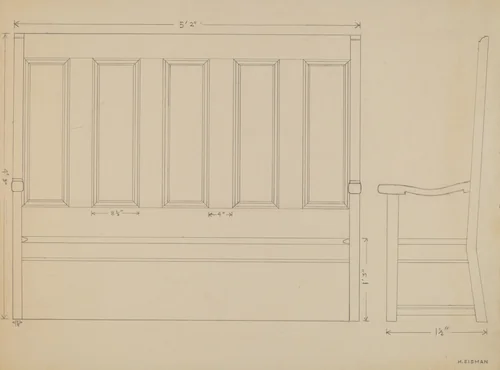
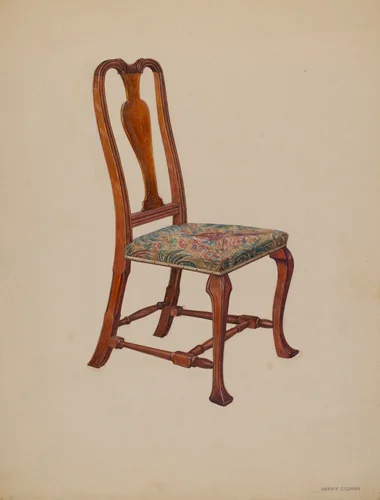
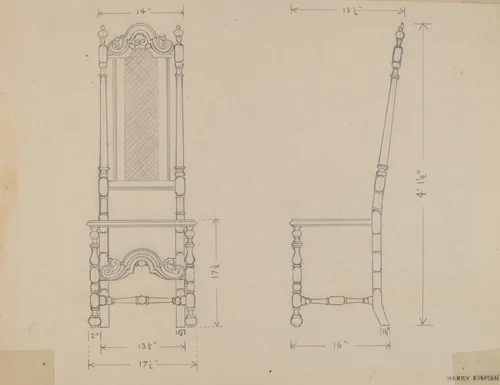
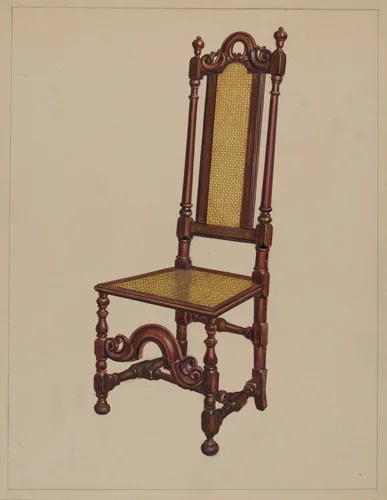
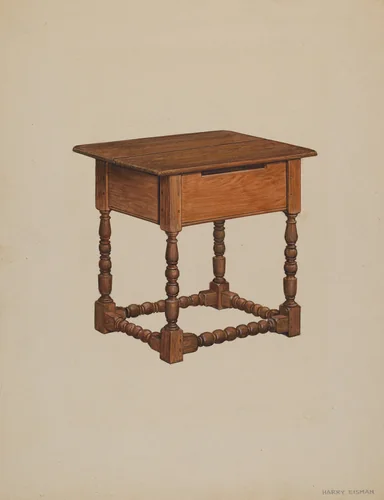
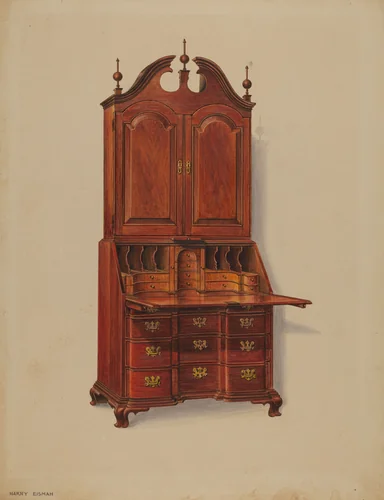
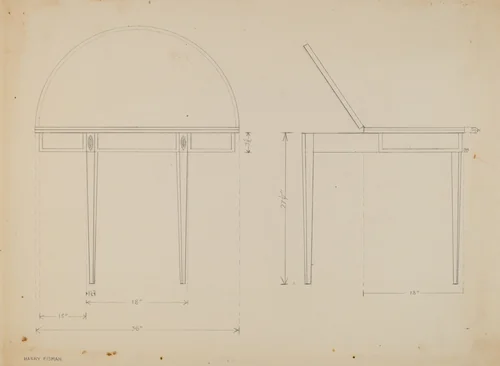
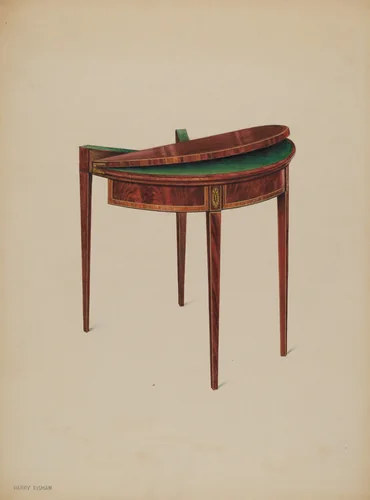
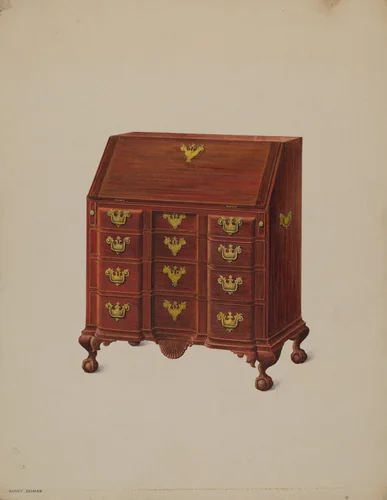
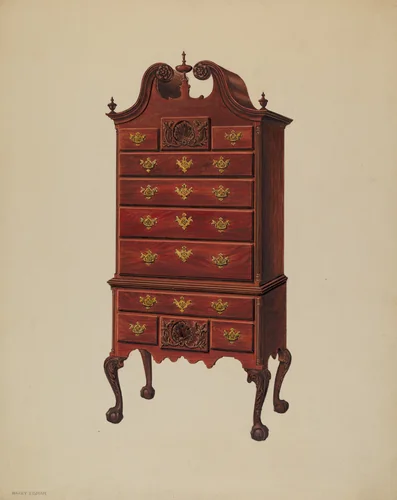
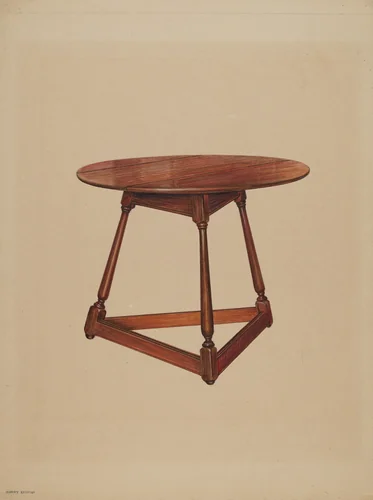
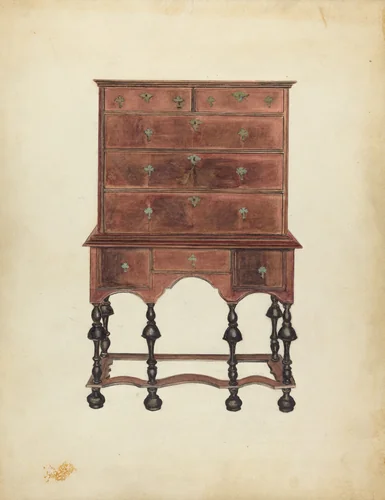
Harry Eisman (1913-1979) occupies a unique niche within American decorative arts history, primarily due to his concise yet critical contributions to the Index of American Designs (IAD) during the mid-1930s. Active between 1935 and 1937, Eisman was tasked with documenting historical American furniture forms, a precise and technically demanding endeavor housed under the Federal Art Project. His detailed renderings, now preserved in major institutional archives including the National Gallery of Art, encapsulate a pivotal moment in the nation's effort to catalog its material heritage.
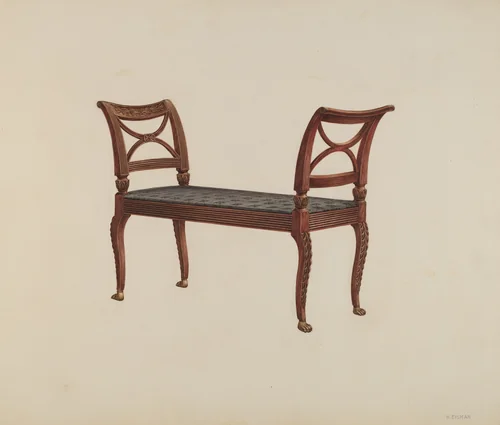
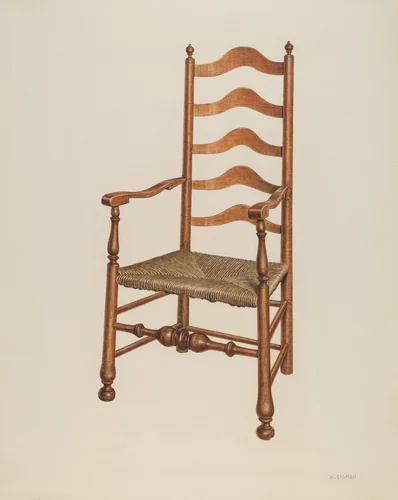
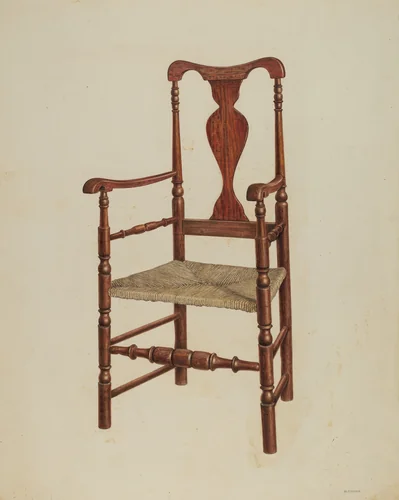
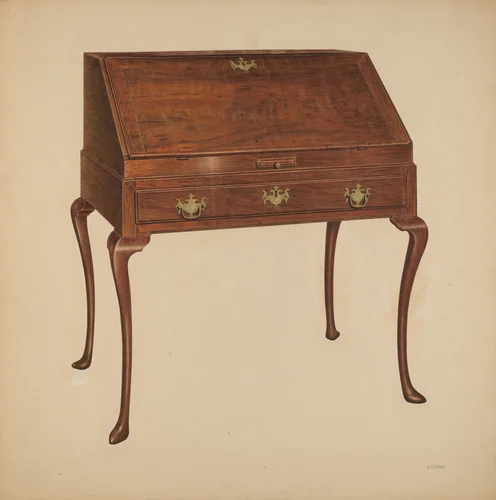
Eisman’s cataloged objects reveal a sharp eye for period detail. His entries, drawn from the Index of American Designs, feature meticulous renderings of 18th and 19th-century domestic items, including a stately Highboy, a refined Dining Table, and several iterations of the Settee and Sideboard. These works, often executed in gouache and watercolor, are distinguished by their clarity and documentary rigor, serving as foundational examples of early American design scholarship. Today, due to their historical classification, the original renderings are often available as royalty-free downloadable artwork, ensuring their continued use by scholars and designers.
The intensity and precision of Eisman's design documentation contrasts sharply with the turbulence of his early biography. Born Harry Eduardovich Eisman, he spent his youth in The Bronx, rising to prominence as a passionate young Communist activist during the 1920s and early 1930s. After periods spent in New York reformatories, he relocated to the Soviet Union in 1930. Finishing his education there, he transitioned into journalism before joining the military. It is perhaps one of the great understated observations of the period that a figure who later fought heroically at the Battle of Stalingrad spent his brief artistic prime meticulously rendering Federal-era chair legs.
Eisman’s career soon diverged completely from the drafting table. He joined the Red Army, fighting with distinction on the Eastern front, including the brutal defense of Stalingrad. While his later life was defined by military and journalistic service until his death in 1979, the high-quality prints stemming from his ephemeral tenure with the Index of American Designs remain his most enduring contribution to visual culture.
Source: Wikipedia · CC BY-SA 4.0