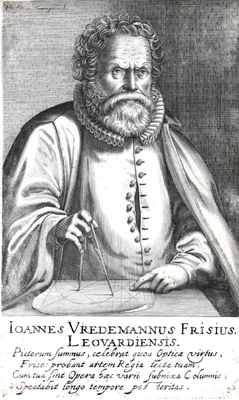
Hans Vredeman de Vries
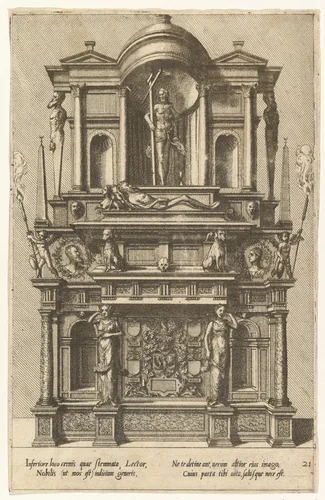
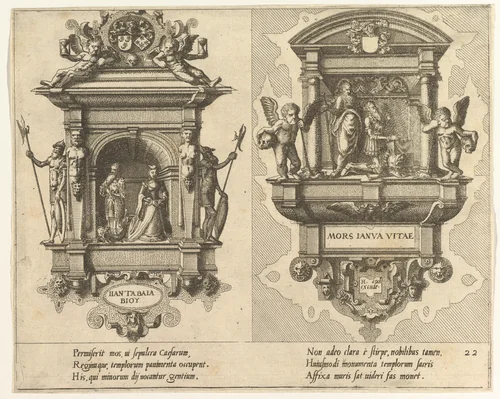
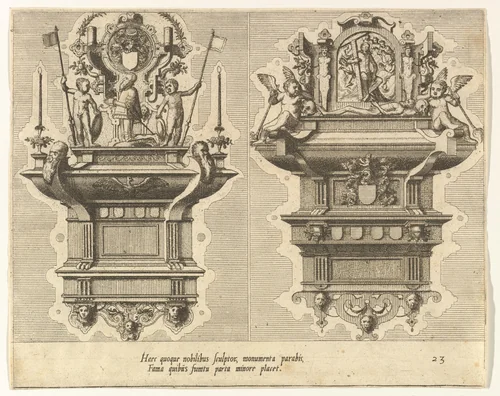
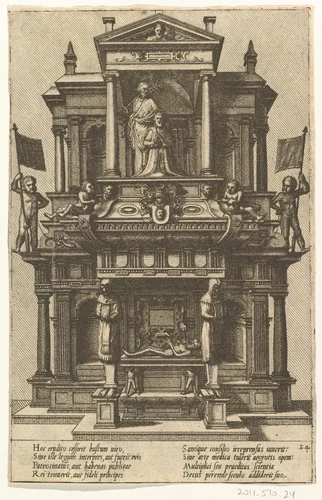
Hans Vredeman de Vries (1527-c. 1607) was a pivotal Dutch Renaissance master, whose influence resonated primarily not through monumental structures of his own creation, but through the prolific distribution of his highly technical pattern books. Operating simultaneously as an architect, painter, and engineer, Vredeman de Vries became essential to the transmission of Italianate classicism and ornamentation throughout Northern Europe, setting the standard for design across the Low Countries and Germany.
His career was characterized by an unparalleled dedication to rendering theoretical concepts into practical, widely accessible guides for fellow artisans and patrons. These publications offered detailed, standardized vocabularies of Renaissance ornament, transforming the way decorative motifs were incorporated into architecture and furnishings. Among the most significant was his 1565 work, Caryatidum (...) sive Athlantidum Multiformium (...), which provided hundreds of meticulously drafted examples of architectural supports. Plates such as Six terms, four female and two male, with Hercules at far right, detailed how classical figures could be adapted as structural components for various architectural orders.
Vredeman de Vries extended this rigorous technical approach to complex spatial problems. His 1604 publication on perspective was highly influential, serving as a fundamental treatise for artists and stage designers seeking mastery over depth and illusionistic space. Furthermore, his 1583 book on garden design helped establish the formal, geometric structures that would dominate European courtly horticulture for decades, demonstrating his versatility as a spatial theorist.
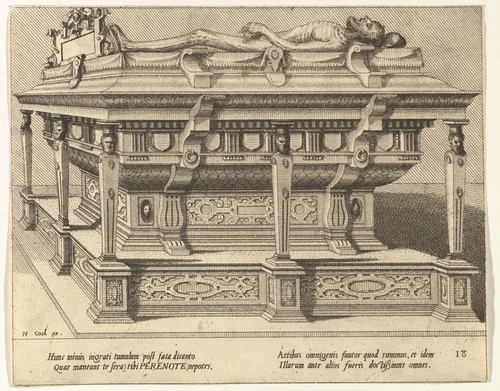
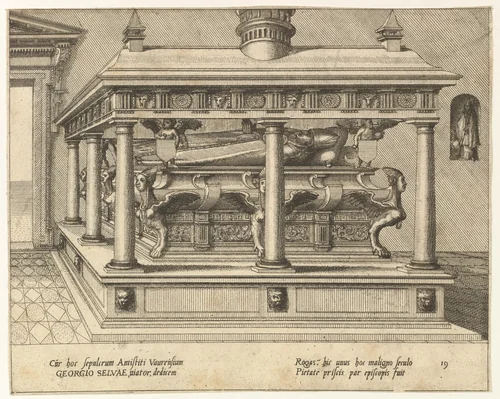
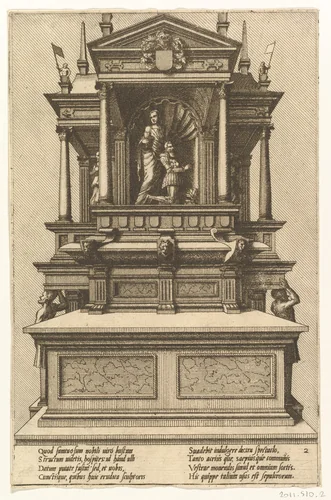
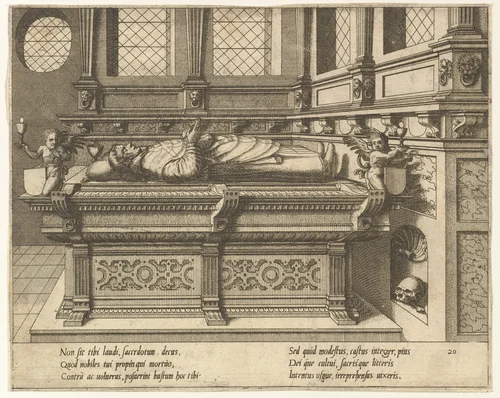
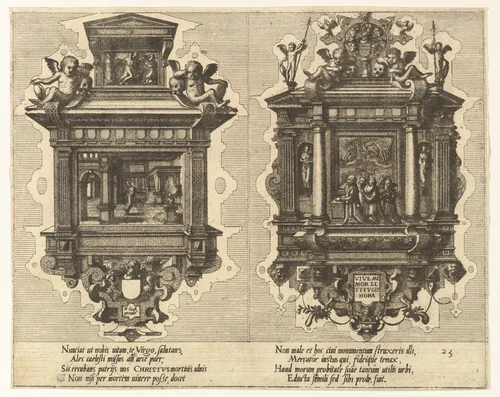
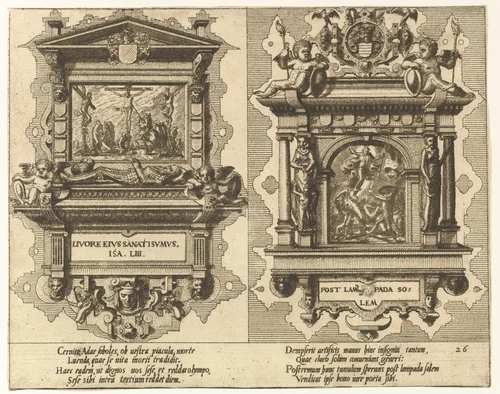
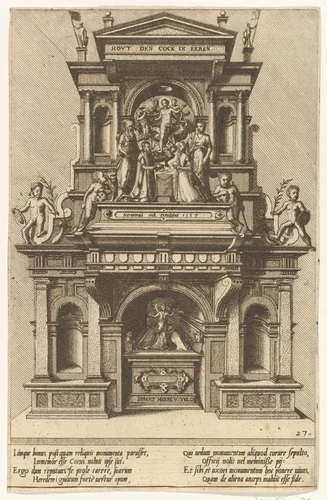
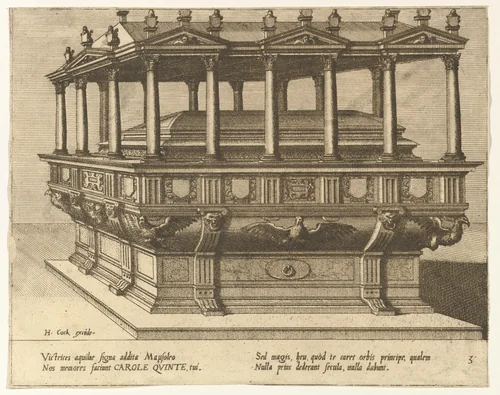
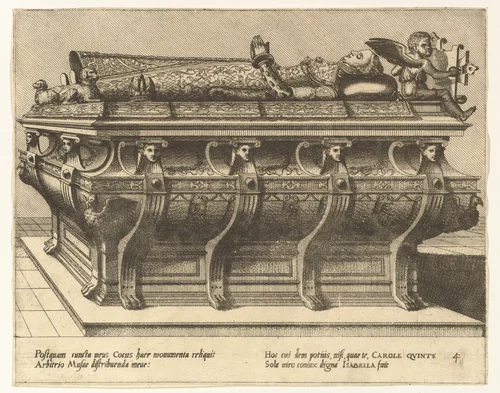
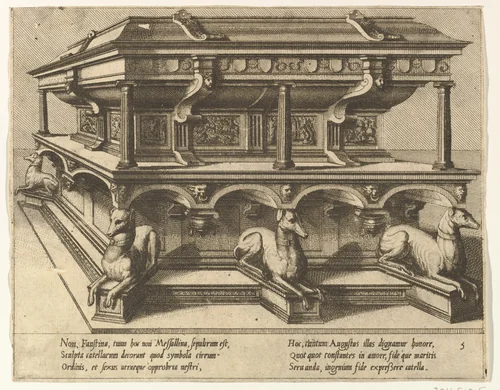
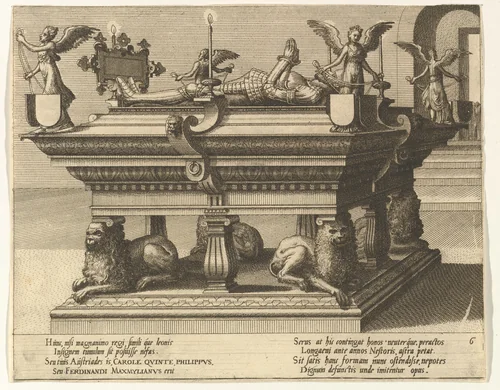
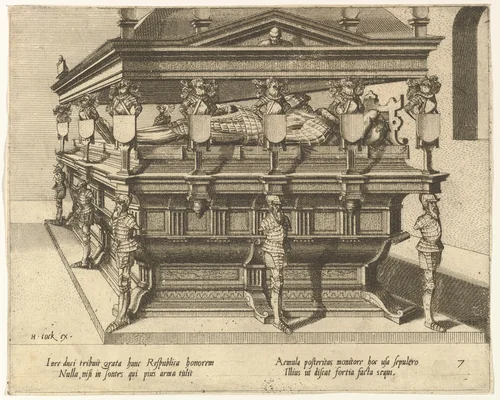
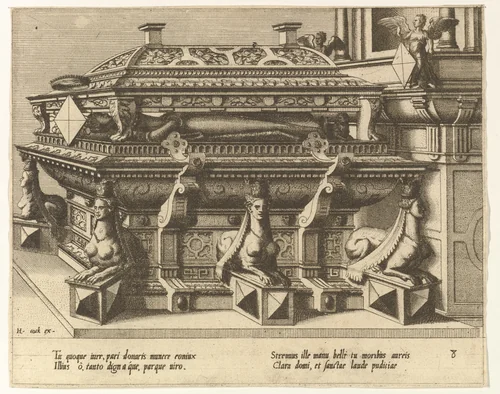
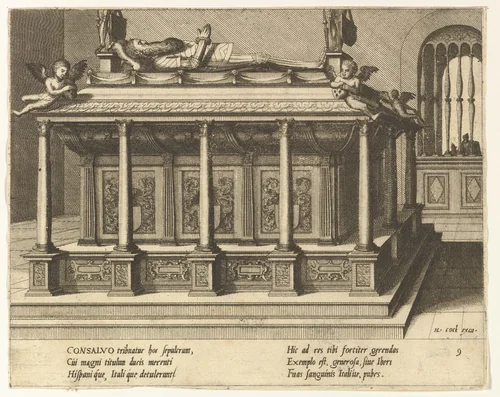
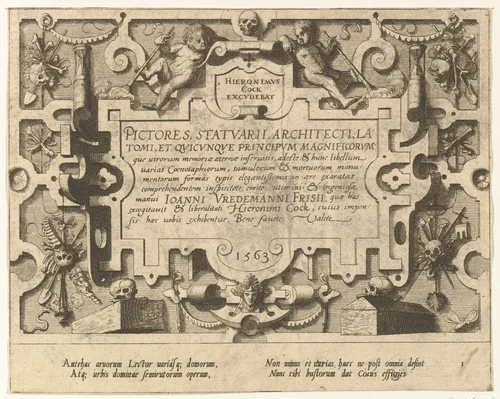
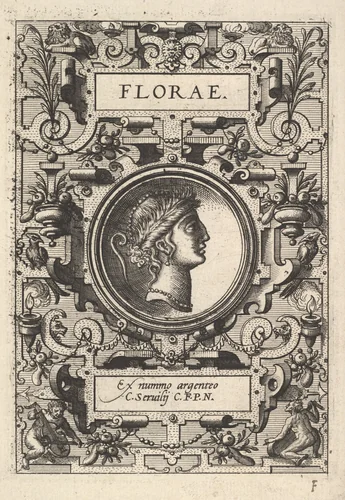
The sheer volume of designs Vredeman de Vries produced, spanning cartouches, furnishings, and entire architectural elevations, suggests he operated less as an isolated artistic genius and more as a Renaissance-era design corporation. His vast output, which includes whimsical pieces like Diamond-shaped Cartouche and historically charged compositions like The Massacre under the Roman Triumvirate, provides unique documentation of the aesthetic tastes of his era.
Today, collections worldwide recognize the enduring significance of Hans Vredeman de Vries prints, which reside in institutions such as the Metropolitan Museum of Art and the National Gallery of Art. Because many of these historic design plates are now in the public domain, they continue to be studied by architects and reproduced as museum-quality, high-quality prints, sustaining his legacy as a foundational figure in graphic design history.
Source: Wikipedia · CC BY-SA 4.0