Hans Ulrich Franck
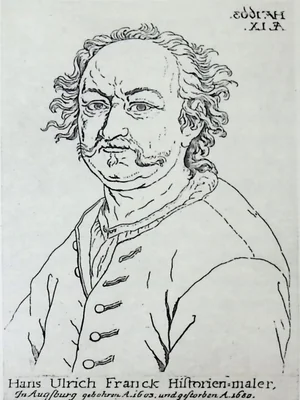
Hans Ulrich Franck (1603-1675) was a pivotal German historical painter and etcher who anchored his career primarily in Augsburg. Born in Kaufbeuren, Swabia, Franck distinguished himself through his robust and detailed graphic works, becoming a key contributor to 17th-century printmaking in Central Europe. His surviving oeuvre of drawings and prints is preserved in leading institutions worldwide, including the National Gallery of Art, the Metropolitan Museum of Art, and the Rijksmuseum, cementing his status as a major historical figure.
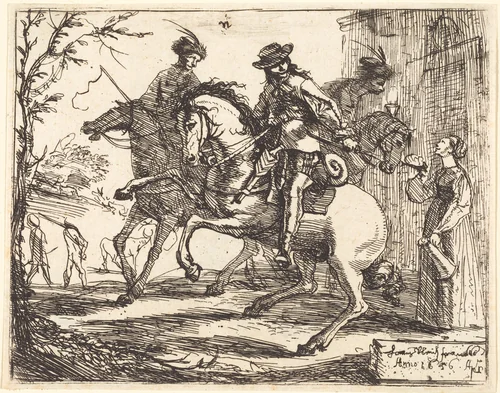
Franck’s technical facility allowed him to translate complex mythological and sacred narratives into print, characterized by strong contrasts and narrative clarity. He handled grand subjects such as The Meeting of David and Abigail, and the powerful 1644 etching Alexander and the dying Darius. His most significant and influential contribution to the genre, however, remains his suite of twenty-five plates depicting scenes in Military Life, executed around 1656. These works transcended mere documentation, offering penetrating, often vivid, genre scenes that capture the routines, skirmishes, and inherent drama of soldiers’ lives in the wake of the Thirty Years’ War.
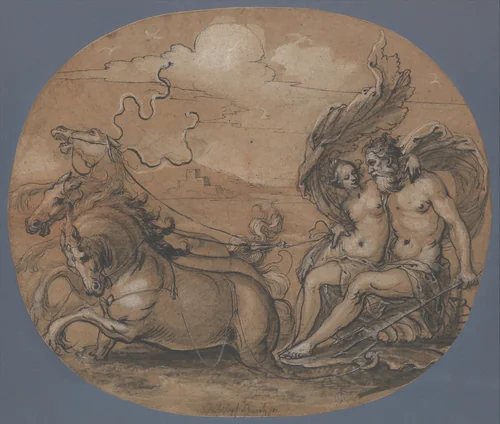
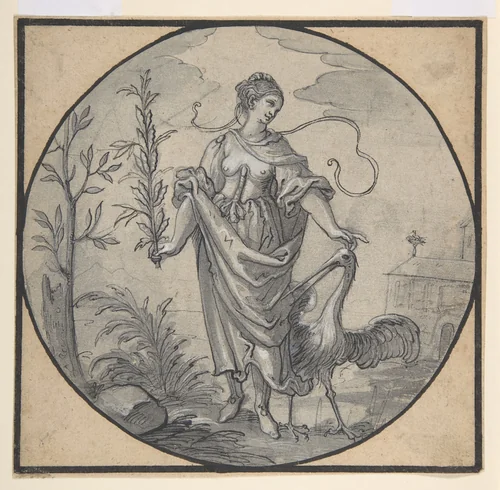
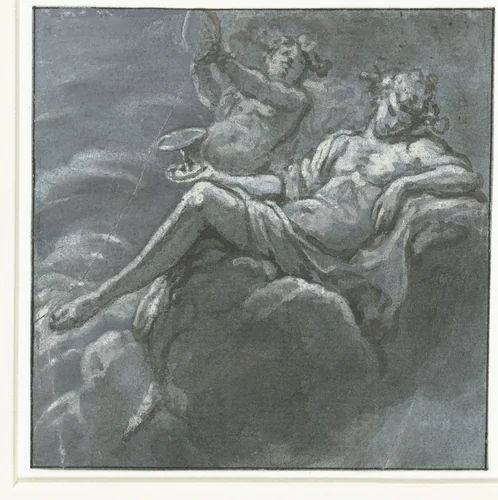
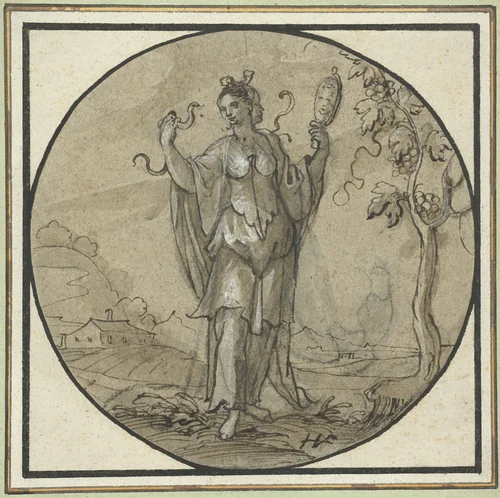
While recognized for his prolific etching, Franck’s draftsmanship demonstrates equal skill in capturing allegorical and classical themes. Surviving works include the classical study Neptune and Amphitrite and moralizing pieces such as An Allegory of Chastity and Voorzichtigheid (Prudentia). Notably, his output reveals a fascinating tension in Baroque patronage; the artist was equally adept at serious moral instruction as he was at embracing the boisterous, often sensual, energy of genre works like Bacchus met een drinkschaal en een Sileen.
The family legacy continued through his son, Franz Friedrich Franck, who also maintained an artistic practice in Augsburg. The detailed compositions created by the elder artist, including works such as Three Riders before an Inn, remain important resources for art historians studying mid-century German culture. Due to their age and historical significance, many Hans Ulrich Franck prints now reside within the public domain, allowing institutions to provide high-quality prints and making this influential Baroque artist’s legacy widely accessible.
Source: Wikipedia · CC BY-SA 4.0