Hans Richter
Hans Richter (1888–1976) stands as a foundational figure in the transition from static painting to cinematic abstraction, a German-born American artist whose career navigated the revolutionary currents of the early 20th century avant-garde. Having initially trained in more traditional styles, Richter’s commitment to non-objective art crystallized around 1916 when he joined the Dada movement in Zurich. This period fostered a radical shift in his approach, favoring kinetic energy, collaboration, and the elimination of traditional artistic hierarchies.
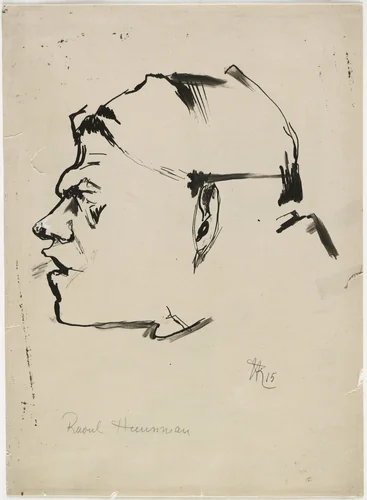
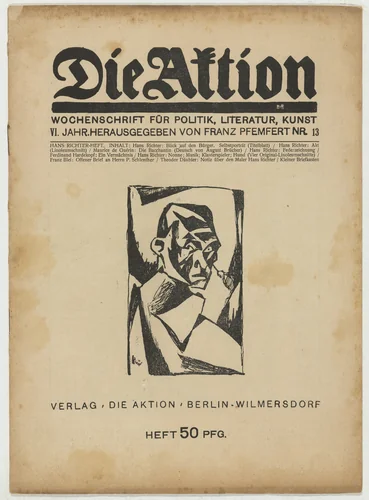
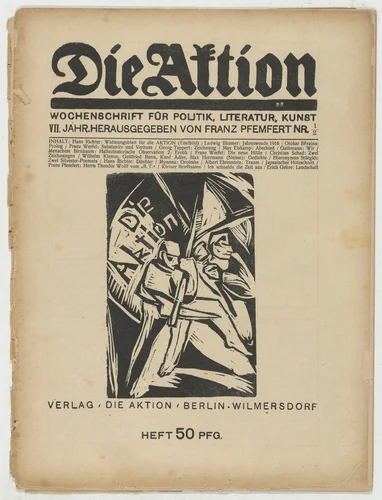
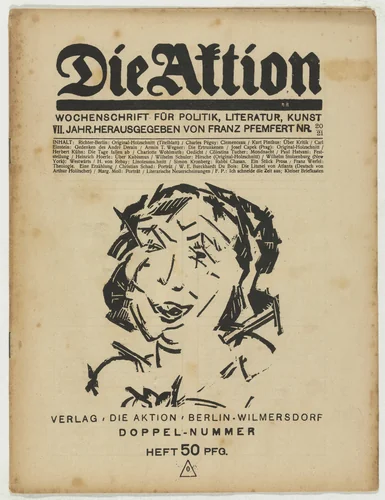
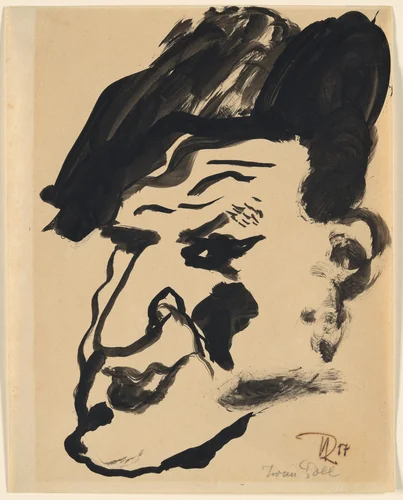
Richter was a prolific contributor to influential periodicals that served as the lifeline of the nascent movements. His graphic works, including drawings and political photomontages, frequently appeared in journals such as Die Aktion, where his engagement with figures like Raoul Hausmann and Iwan Goll solidified the trans-European network of Dada and early constructivism. His innovative work in this era, which includes preparatory drawings often sought after today as high-quality prints, quickly earned him recognition for his dedication to dynamic abstraction.
His crucial innovation was the exploration of film as a medium uniquely capable of expressing rhythm and movement. Frustrated by the inability of traditional painting to fully convey the complexity of movement, Richter began producing sequential “scroll-paintings,” attempting to map out visual rhythm across time. This work ultimately led to his groundbreaking abstract films of the early 1920s, which utilized geometric forms and meticulous stop-motion techniques to create an experience of pure visual music. It is a subtle irony that such fiercely anti-establishment works required the painstaking, highly disciplined manual labor of an artisan.
Following his move to the United States in the 1940s, Richter continued his cinematic work and teaching, ensuring his influence persisted through subsequent generations of experimental filmmakers. His legacy is robust, anchored by works held in major international collections, including the Museum of Modern Art. Due to their age and historical significance, much of his seminal graphic output associated with Dada is available as royalty-free downloadable artwork today, allowing students and scholars continued access to the origins of modern abstract film. Hans Richter’s enduring contribution lies not merely in his abstract drawings or paintings, but in his recognition of time itself as a core component of visual composition.
Source: Wikipedia · CC BY-SA 4.0