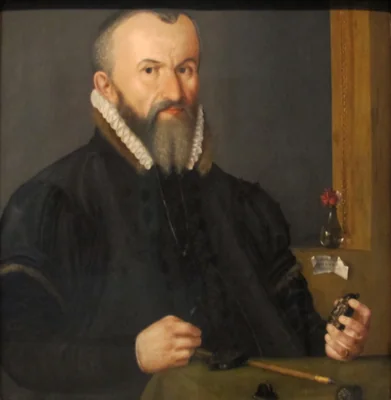
Hans Hoffman
Hans Hofmann (1880-1966) holds a unique and crucial position in 20th-century American art, serving as a vital conceptual bridge between the European avant-garde and the explosive emergence of Abstract Expressionism. His lengthy career spanned two continents and several key artistic generations, establishing him as both an influential painter and one of the era’s most revered teachers.
Born and educated near Munich, Hofmann actively engaged with the early twentieth-century European modernists. When he emigrated to the United States in 1932, he brought with him a profound and synthesized knowledge of Symbolism, Neo-impressionism, Fauvism, and Cubism. It is sometimes forgotten that before he was a revolutionary abstract painter, he was perhaps the most sophisticated transatlantic translator of modernist theory, ensuring that the rigorous structural concerns of European modernism were transmitted directly to the burgeoning American avant-garde.
Hofmann's mature painting is defined by its rigorous concern with pictorial structure and unity. He famously explored the dynamic tension known as "push and pull," employing bold, expressive color to create compelling spatial illusionism and vibrant surface energy. The influential critic Clement Greenberg hailed Hofmann’s 1944 New York solo show at Peggy Guggenheim’s Art of This Century as a pivotal breakthrough, distinguishing his painterly approach from purely geometric abstraction and effectively heralding the arrival of the New York School.
Recognition rapidly followed, marked by frequent exhibitions, notably at the Kootz Gallery, and culminating in major museum retrospectives. These included landmark shows at the Whitney Museum of American Art (1957) and the Museum of Modern Art (1963), which toured extensively across the US, South America, and Europe. Today, his substantial body of work, comprising foundational pieces and celebrated Hans Hoffman paintings, is permanently housed in the collections of the world’s leading institutions, including the Metropolitan Museum of Art, the Tate Modern, and the Art Institute of Chicago. For enthusiasts and scholars, select works are available as museum-quality, high-quality prints, sometimes forming part of public domain archives, allowing broad access to his pioneering vision.
Source: Wikipedia · CC BY-SA 4.0