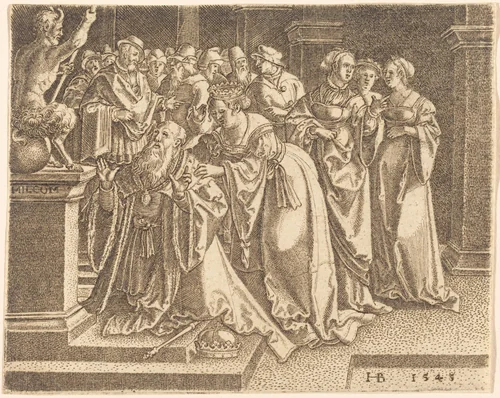
Hans Brosamer
Hans Brosamer (active c. 1500–1545) was a vital, though historically elusive, German Renaissance artist, working primarily as a draughtsman and printmaker. While documentary evidence detailing his life remains exceedingly scarce, the survival of his graphic corpus establishes him as an accomplished exponent of the early sixteenth-century visual tradition. Brosamer’s documented activity places him in Fulda between 1536 and 1545, followed by a period of work in Erfurt. His focus on printmaking, rather than large-scale commissions, ensured his influence spread broadly across Central Europe during a period of intense religious and intellectual upheaval.
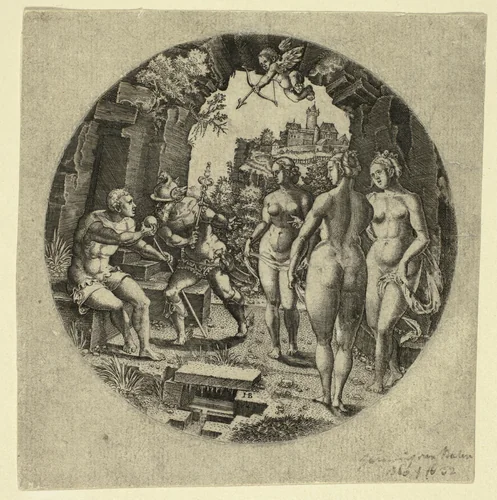
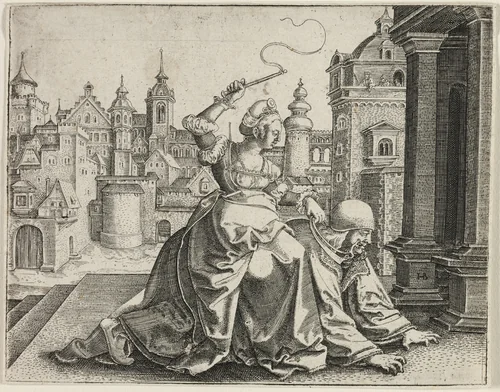
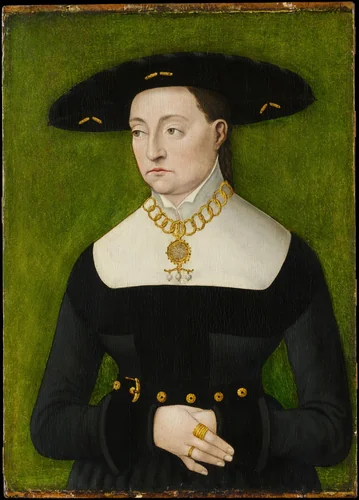
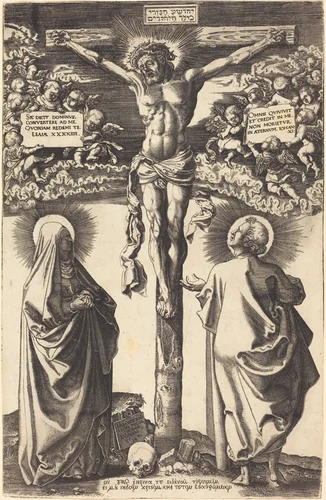
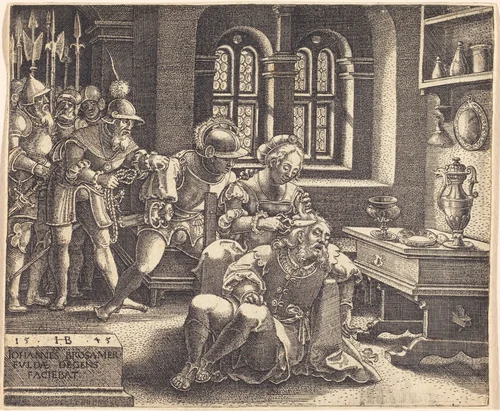
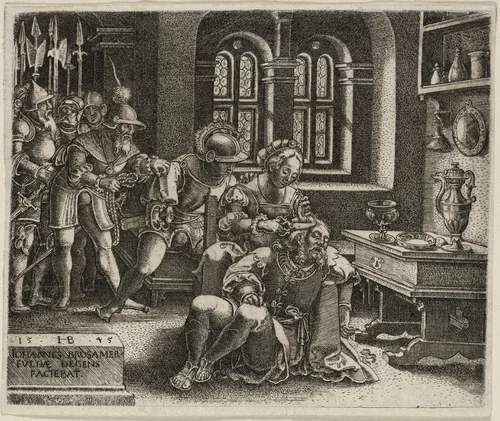
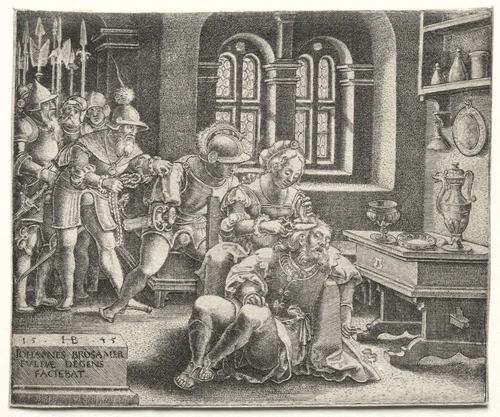
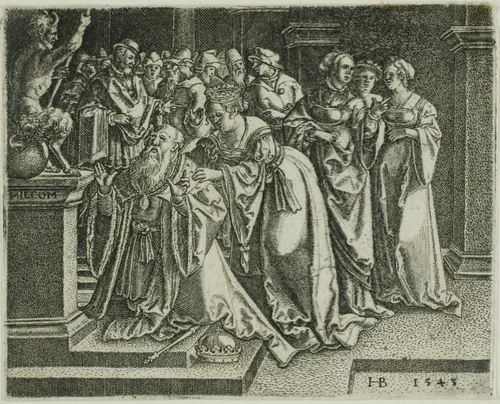
Brosamer’s artistic legacy is preserved through a small but significant number of surviving works, including eleven prints, one painting, and a single drawing recorded in major institutions globally, such as the National Gallery of Art, the Art Institute of Chicago, and the Metropolitan Museum of Art. His subjects ranged from intimate portraiture, exemplified by the study of Katharina Merian, to elaborate mythological and biblical narratives. His prints frequently demonstrate a keen eye for dramatic composition and narrative density, visible in works like Judgment of Paris and the instructional satire Phyllis and Aristotle.
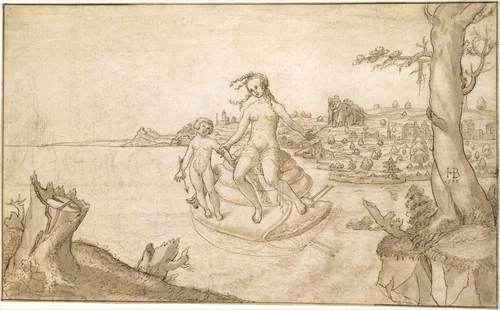
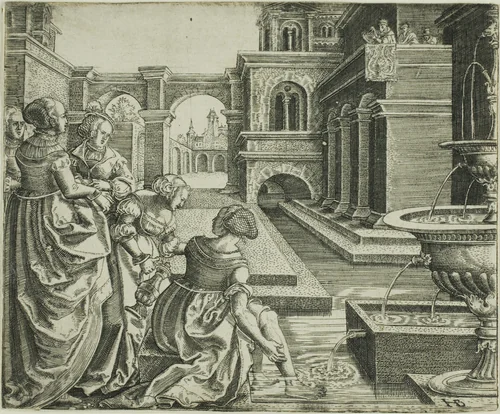
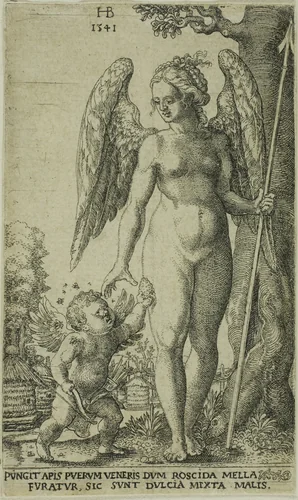
Brosamer had a particular knack for combining classical themes with light, almost whimsical details. For instance, the engraving Venus and Cupid on a Snail is a wonderfully idiosyncratic piece that subverts traditional classical dignity, presenting the goddess of love mounted on an unexpectedly mundane vehicle. Other notable works, such as David and Bathsheba, reveal his technical skill in rendering complex human interactions within detailed architectural settings.
Although Hans Brosamer paintings are exceptionally rare, his robust catalog of high-quality prints and woodcuts cemented his contribution to the era. His mastery of the reproductive medium ensured his designs reached a wide audience, facilitating the dissemination of Renaissance iconography across Germany. Today, these historical records of draughtsmanship constitute essential reference points for scholars. Many of these museum-quality originals are now held in permanent collections, ensuring that Brosamer’s technical achievements remain accessible. Furthermore, much of his catalog is entering the public domain, making high-quality prints freely available for study and appreciation.
Source: Wikipedia · CC BY-SA 4.0