Han-Chinese
The collective material culture produced by the Han-Chinese people, the world’s largest ethnic group with a global population exceeding 1.4 billion, represents one of the most sustained and influential artistic traditions in history. Forming the demographic bedrock of Greater China, this massive and continuous population base ensured remarkable consistency and scale in textile production, especially throughout the flourishing Qing Dynasty (1644-1912).
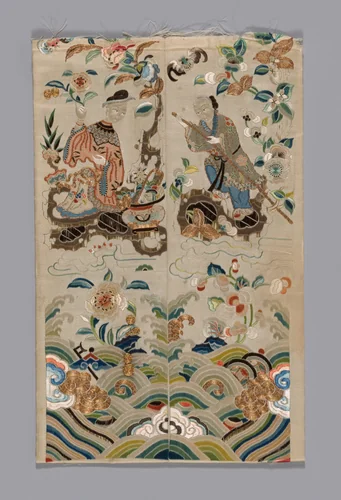
The period between 1700 and 1850 marks a particular zenith in specialized textile artistry, a legacy preserved today by institutions such as the Art Institute of Chicago, which maintains fifteen key examples of Han-Chinese textile works. These pieces demonstrate a sophisticated mastery of weaving, dyeing, and complex embroidery techniques, serving as both markers of status and essential components of religious and civil life.
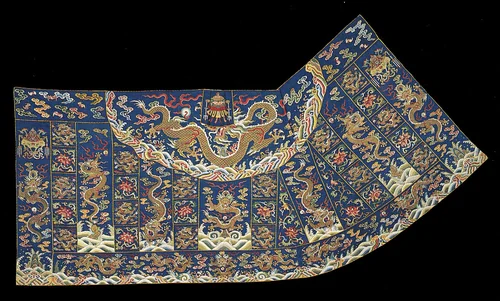
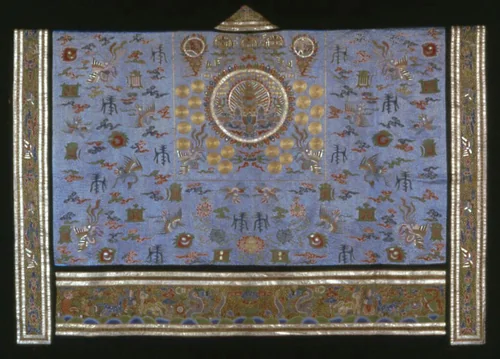
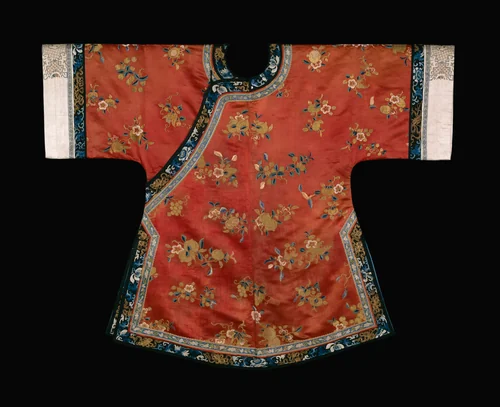
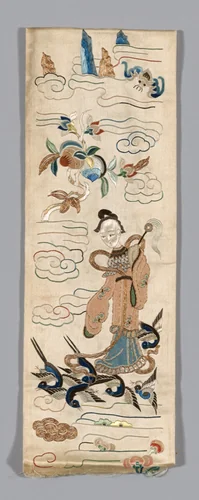
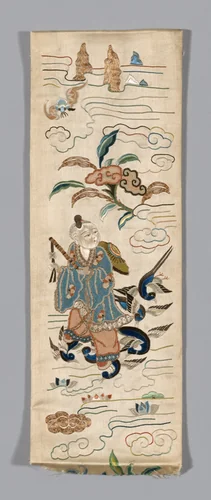
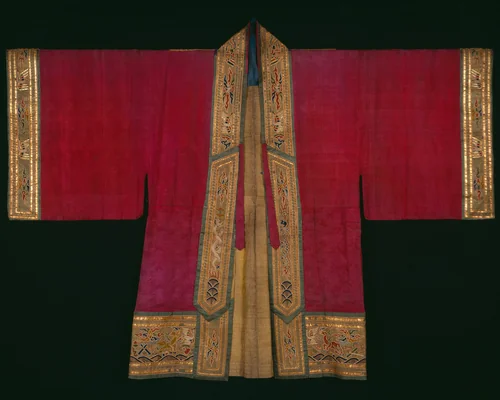
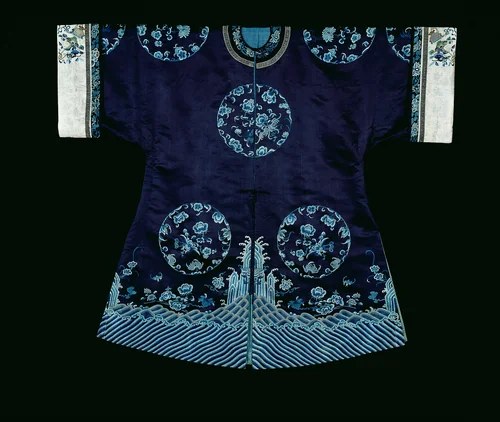
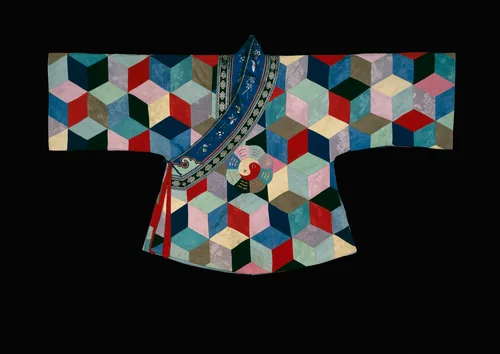
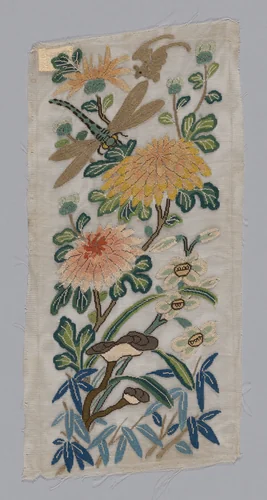
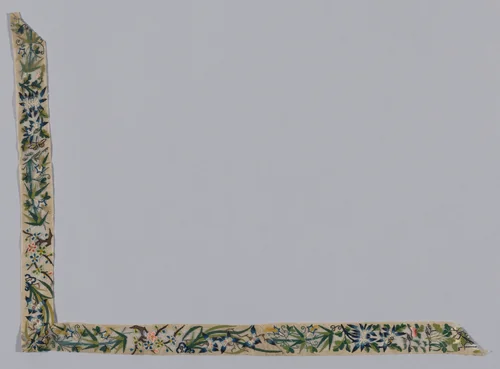
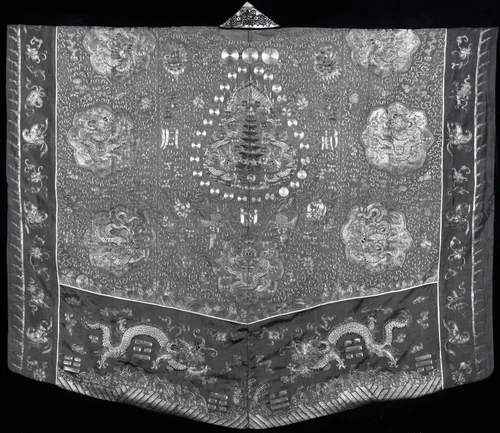
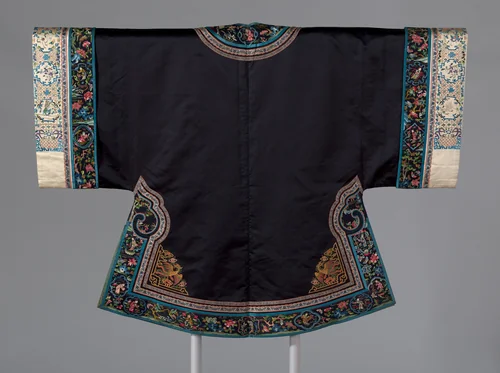
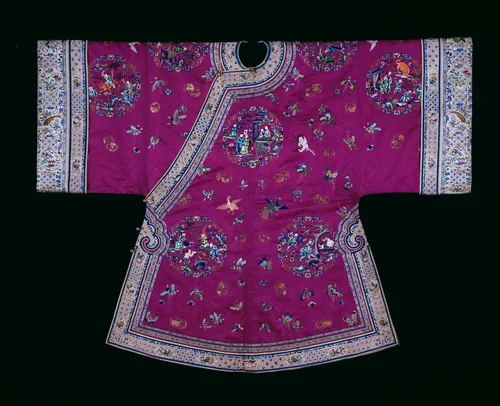
The works cataloged span a range of functionality, from the spiritual complexity of the Vestment (For a First-degree Taoist Priest) and the richly detailed Jiasha (Mantle), to the civilian formality of the Woman's Ao (Short Robe). The inclusion of smaller, expertly crafted items like the specialized Sleeve band pairs highlights the exacting precision expected in all levels of production. The iconography embedded within these silk structures provides critical insight into the hierarchical customs and philosophical practices of the time.
The geographic footprint of Han culture, representing 97% of Taiwan’s population and acting as a significant diasporic force across Southeast Asia, ensured that its artistic principles profoundly shaped neighboring traditions. It is perhaps the unique observation of this tradition that its sheer artistic longevity and consistency owe as much to the scale of its sustained demographic majority as to imperial patronage or the genius of individual masters. Today, these historical records are valued as museum-quality artifacts. Scholars frequently access Han-Chinese prints and documents, utilizing high-quality prints to study the intricate design methodologies and materials that defined this immensely influential era.
Source: Wikipedia · CC BY-SA 4.0