Hafiz-i Abru
Hafiz-i Abru, known formally as ʿAbdallah Ebn Lotf-Allah Ebn 'Abd-al-Rashid Behdadini, was a pivotal Persian historian and textual compiler active in the early 15th century. Working under the patronage of the Timurid rulers of Central Asia, a dynasty known for its intense dedication to both military expansion and cultural refinement, Hafiz-i Abru’s contributions went beyond mere chronicle; he was central to the creation and illumination of complex, vast historical manuscripts that represent the zenith of early Timurid court painting.
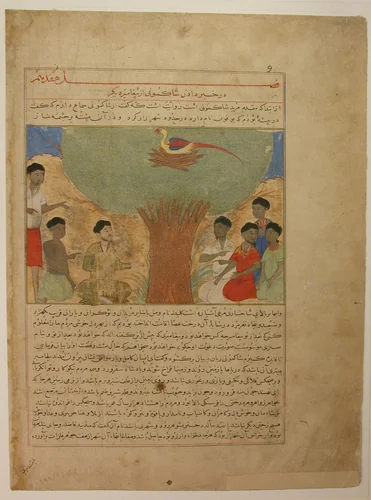
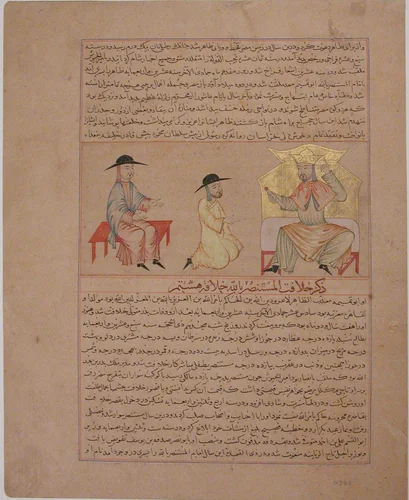
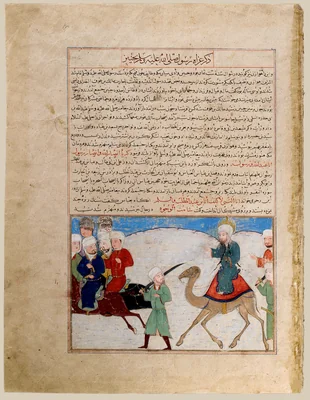
His magnum opus, the Majma al-Tavarikh (Compendium of Histories), is an ambitious world history encompassing Islamic, Chinese, and regional narratives. At least ten manuscript copies of this work survive, serving as crucial reference points for the evolution of historical manuscript production. Unlike contemporaries who focused solely on writing, Hafiz-i Abru was intimately involved in supervising the visualization of his text, resulting in illustrations that display both narrative precision and a burgeoning aesthetic sophistication characteristic of the period.
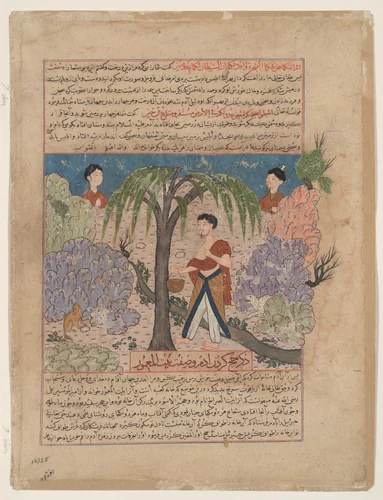
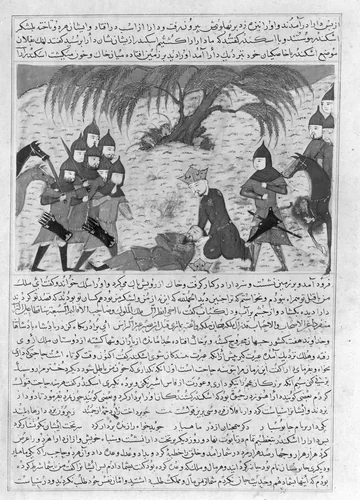
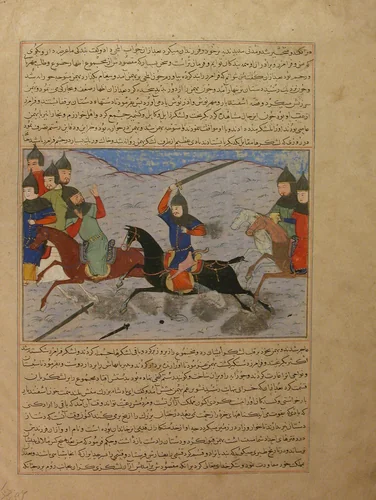
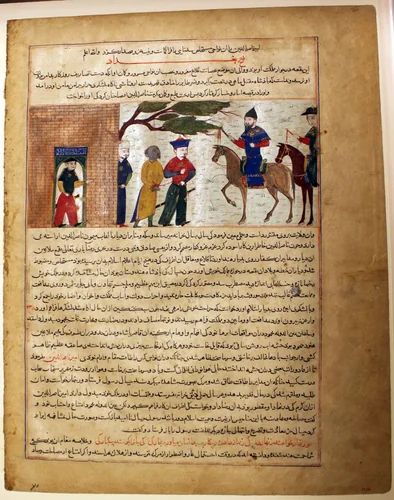
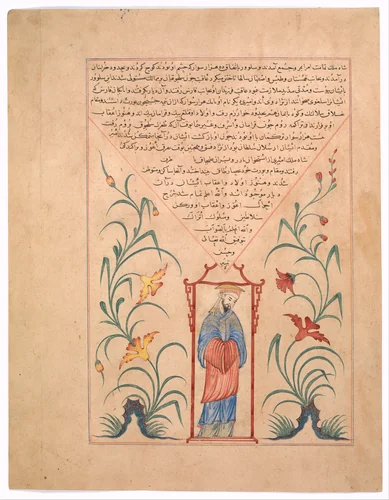
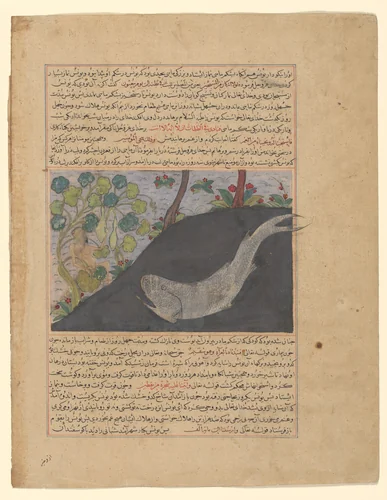
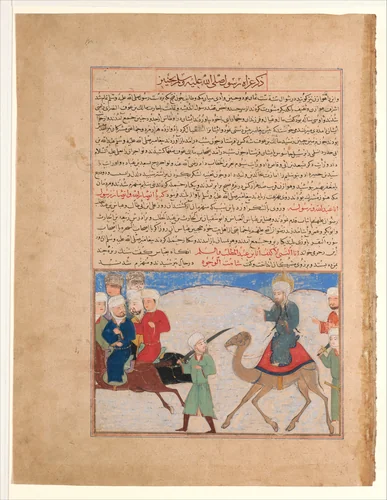
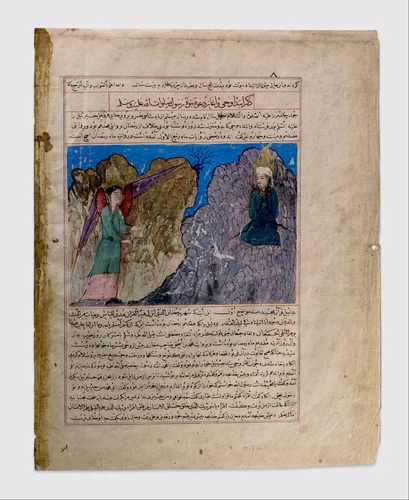
The individual folios, now dispersed among major collections, showcase the breadth of historical subjects he covered, from mythical figures to detailed political events. Illustrations such as Adam Makes a Pilgrimage and Bahman Taking Revenge on the Sistanians demonstrate the structured composition and delicate coloration favored by the court workshops, while scenes like Captured Indian Raja Brought to Sultan Mahmud of Ghazni offer valuable, if idealized, glimpses into imperial conduct. It is notable that in a period defined by grand conquest, much of the visual record focuses on the meticulous, internal administration of empires, large and small.
These Hafiz-i Abru paintings are essential to understanding the evolution of Persian art, laying the groundwork for later Safavid and Ottoman manuscript styles. Because these artifacts are held in trusted institutions like the Metropolitan Museum of Art, many images of this foundational work are accessible to scholars globally. Providing crucial insight into 15th-century visual history, select pieces are now available as high-quality prints and downloadable artwork, often royalty-free, ensuring the historical legacy of the Majma' al-Tavarikh remains broadly available for non-commercial study.
Source: Wikipedia · CC BY-SA 4.0