Gwen John
Gwendolen Mary John (1876-1939), the distinguished Welsh painter, established her distinct artistic voice during the decades she spent living and working in France. Though she worked prolifically across drawing and painting from 1876 until roughly 1915, her oeuvre is revered for its quiet intensity and masterful control of subtle tone, securing her representation in prestigious global collections including the Museum of Modern Art and the National Gallery of Art.
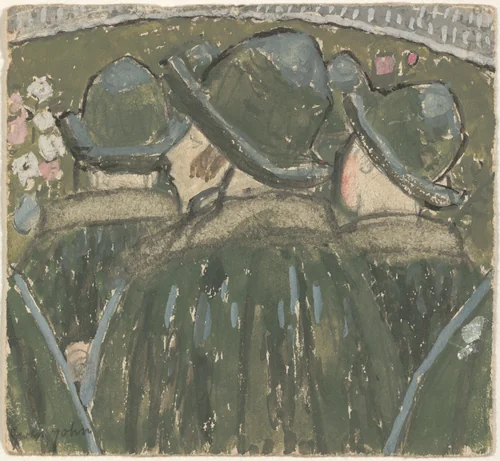
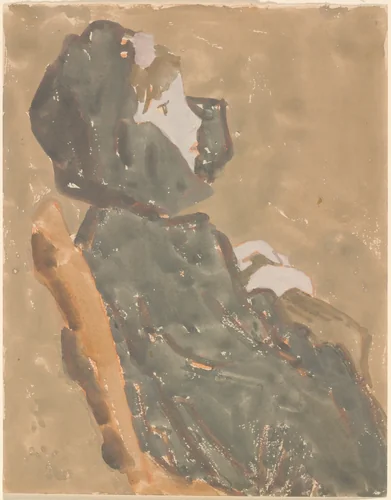
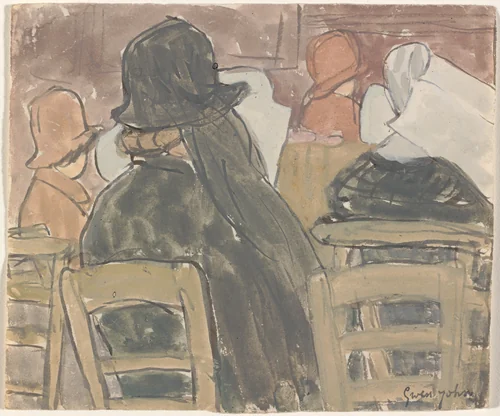
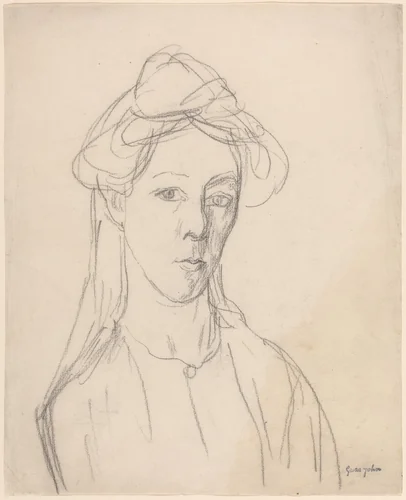
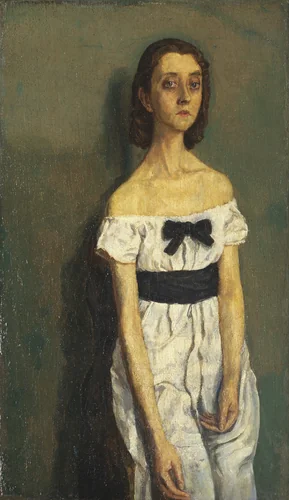
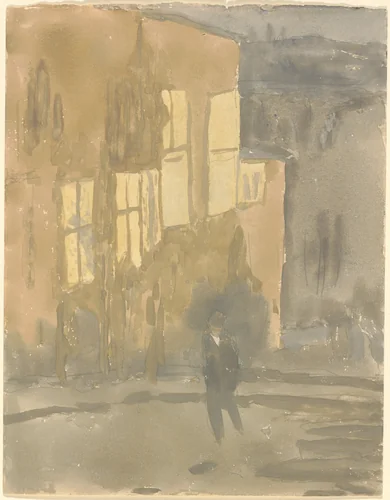
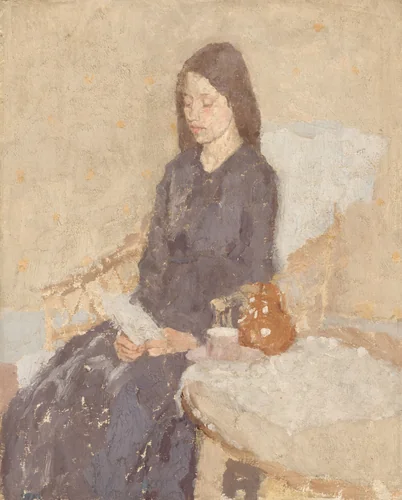
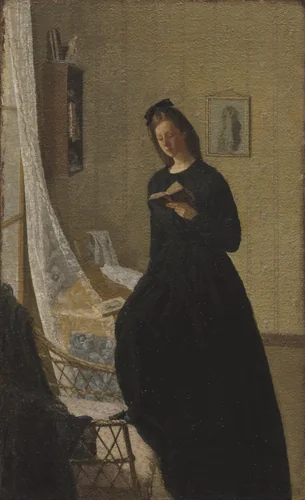
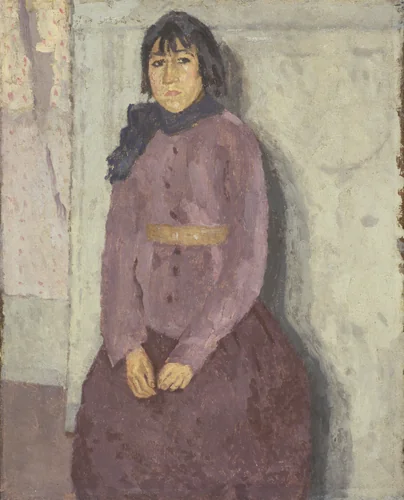
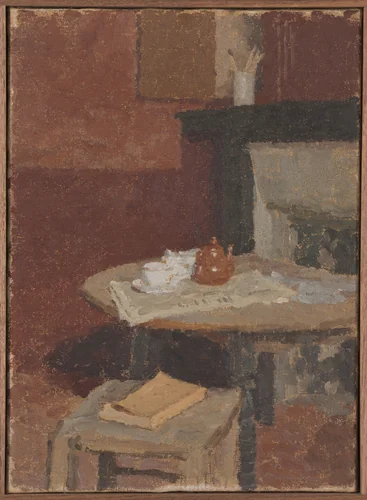
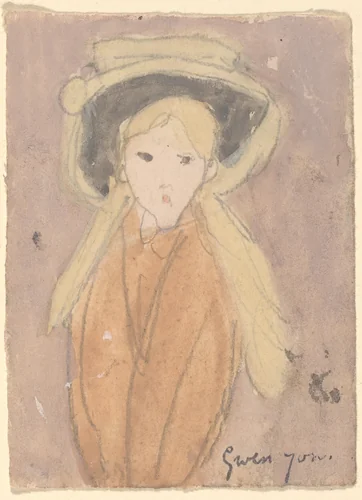
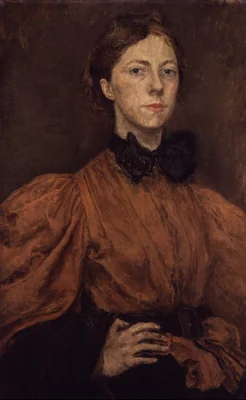
John specialized almost exclusively in intimate figure studies, primarily portraits of anonymous female sitters captured within interior spaces. This consistent focus allowed her to deepen her technical mastery, emphasizing psychological depth over narrative spectacle. Works such as Jeune Fille (à la lampe) and Les chapeaux à brides (Schoolgirls Wearing Brimmed Hats) exemplify her subtle, refined technique, rendering subjects in a narrow register of closely related tonal values. This restraint, combined with precise composition, lends her figure studies a powerful, meditative quality. The quiet intensity achieved in these canvases is testament to her deliberate isolation and unwavering artistic focus.
For decades, John’s artistic contributions were often overshadowed by the larger-than-life reputations of the men in her orbit, chiefly her charismatic brother Augustus John and her mentor and lover, sculptor Auguste Rodin. Yet, John cultivated an uncompromising private life, viewing solitude not as a consequence of shyness, but as a necessary condition for her focused creative output. Her methodical approach, favoring subtle modulation over dramatic color, stands in deliberate contrast to the Post-Impressionist dynamism popular during her active period.
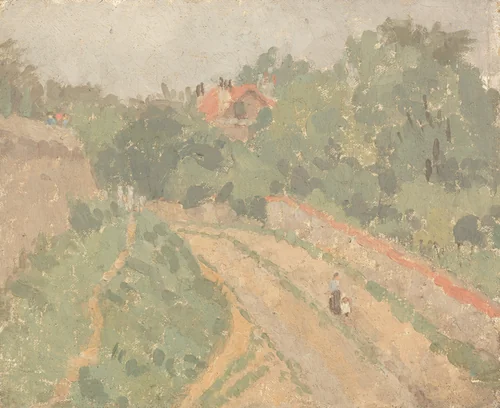
Since her death, critical esteem for her work has grown substantially, placing the quiet power of her portraits firmly within the canon of modern British art. Her dedication to atmospheric precision is evident in every brushstroke of the highly sought-after Gwen John paintings. The complexity of her tonal shifts ensures that collectors and institutions frequently seek high-quality prints for study and exhibition. Today, John is recognized not merely as a peripheral figure to male modernists, but as an essential figure who championed an art of profound stillness and introspection.
Source: Wikipedia · CC BY-SA 4.0