Guilliam du Gardijn
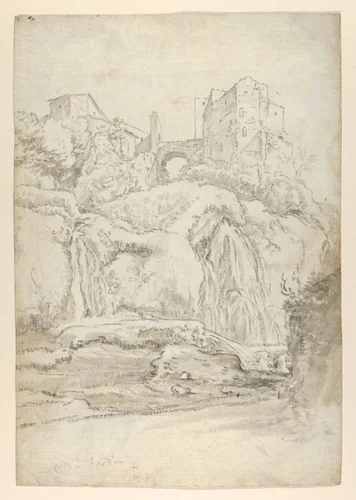
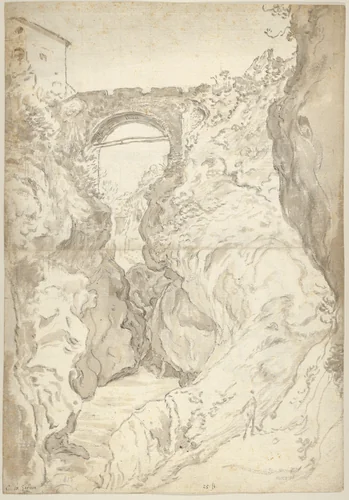
Guilliam du Gardijn (b. 1595/1596, d. 1647/1657) holds a distinctive, if understated, place within the history of Dutch Golden Age landscape painting. Active approximately between 1605 and 1640, Du Gardijn operated during a period when Dutch art witnessed an explosive diversification of subject matter, moving beyond traditional portraiture and historical scenes to embrace maritime studies and complex atmospheric landscapes. His contributions, though surviving in a small, highly focused body of work including a single painting and nine known drawings, are preserved in major international repositories, notably the Rijksmuseum and the Metropolitan Museum of Art.
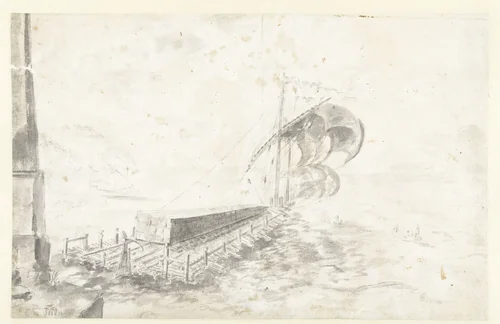
Du Gardijn distinguished himself through a versatile draftsmanship that embraced both the familiar textures of the Dutch interior and the highly dramatic subjects of foreign travel and exploration. His work demonstrates a keen interest in maritime activities and distant shores, reflecting the expanding global focus of the early seventeenth century Netherlands. This is evident in compositions like the Harbour Scene with an Obelisk Being Transported on a Wooden Raft, which skillfully blends meticulous engineering documentation with classical architectural elements.
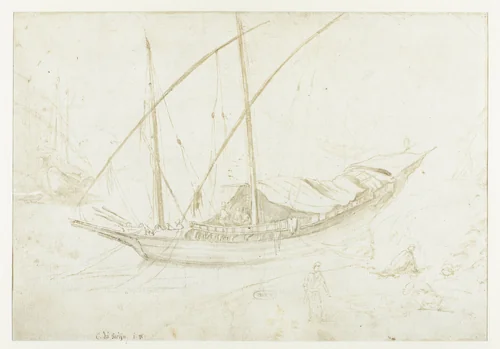
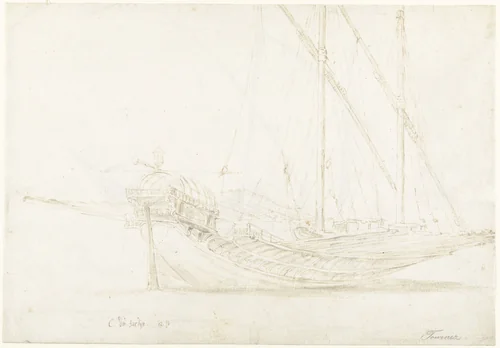
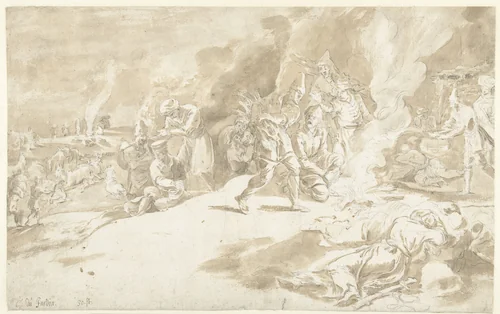
Perhaps his most revealing drawings are those depicting naval subjects, such as the detailed study titled An Italian Galley, with the Bow to the Left, and Several Figure Sketches / recto: An Italian Galley, with the Stern to the Left. Such sheets indicate a professional interest in Mediterranean seafaring and often served as both preparatory sketches and independent works of art. Similarly, his ventures into exotic figural studies, exemplified by Turkish Soldiers around a Camp Fire, align him with the burgeoning European fascination with the Near East, rendered here with striking graphic precision.
Though original Guilliam du Gardijn paintings are rare, the enduring impact of his artistry rests primarily on the technical excellence and evocative power of his drawings. This strong graphic tradition means his imagery remains highly accessible; the Metropolitan Museum of Art’s collection ensures that high-quality prints of his seminal drawings are widely available for study. Du Gardijn ultimately demonstrates that in the competitive environment of the Golden Age, a masterful draftsman could command the same attention as the most prominent painters, capturing the scope and ambition of the era through line and shadow.
Source: Wikipedia · CC BY-SA 4.0