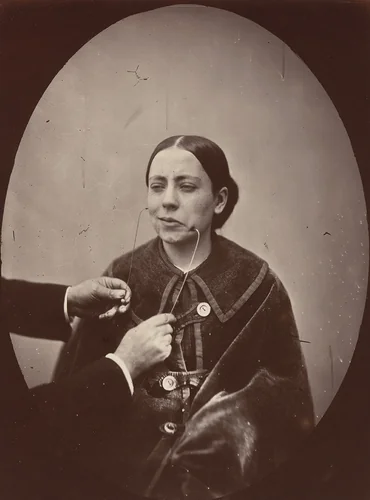
Guillaume Duchenne de Boulogne, Adrien Tournachon
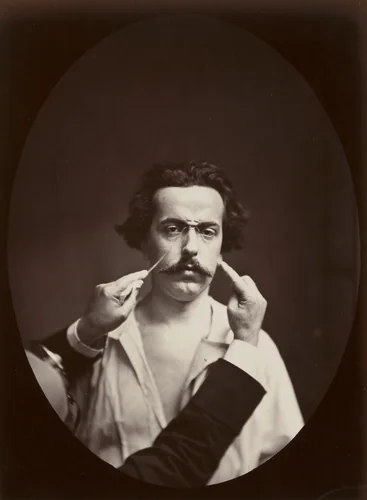
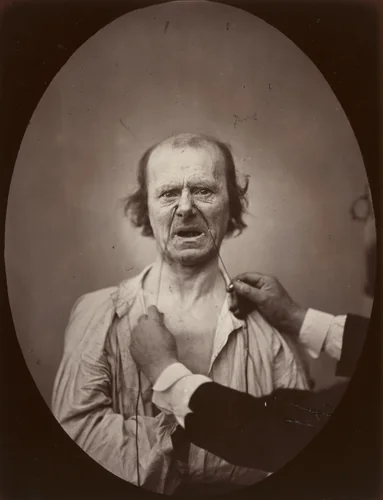
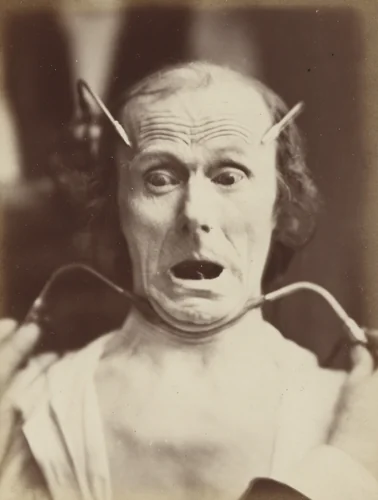
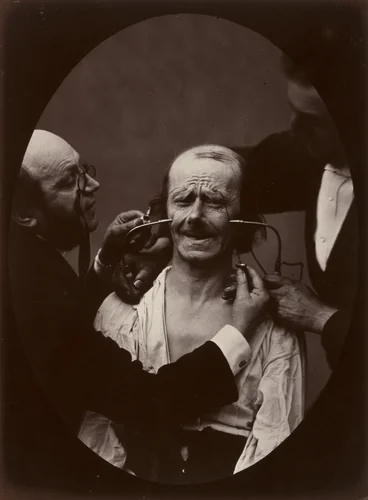
Guillaume Duchenne de Boulogne and Adrien Tournachon collaborated on pioneering photographic studies documenting human emotional expression during the mid-19th century. Their active period of work is documented between 1852 and 1856.
Their photographic output centered on scientific inquiry, establishing visual evidence for Duchenne de Boulogne’s theories regarding the musculature of the human face. These images formed the basis for the seminal 1862 text, The Mechanism of Human Facial Expression. The resulting photographs represent a crucial early intersection between medicine, science, and the photographic medium.
Five photographic prints documenting this collaboration are held in museum collections, establishing the importance of Guillaume Duchenne de Boulogne, Adrien Tournachon prints to the history of science and art. These works are represented in the collection of the Museum of Modern Art (MoMA).
Notable works held in collections include the detailed studies Plate 16 from the chapter The Muscle of Aggression, Plate 52 from the chapter The Muscles of Weeping and Wimpering in The Mechanism of Human Facial Expression (1862), and Fright, from Mechanics of Human Physiognomy. Other documented plates further analyzing emotional response are Plate 34 from the chapter The muscles of Joy and Benevolence and Plate 36 from the chapter The muscles of Joy and Benevolence. Due to the historic nature of the work, many of these images are now within the public domain, allowing for the creation of high-quality prints for researchers and collectors.