Guillaume Courtois
Guillaume Courtois, known in Italy as Guglielmo Cortese and identified by the distinctive moniker Il Borgognone (the Burgundian), was a highly prolific painter, draughtsman, and etcher active predominantly in the competitive artistic environment of Baroque Rome. Working across multiple media, Courtois secured prestigious commissions from both high-level private patrons and large public institutions, cementing his status as a master of both history and staffage painting throughout his extensive career spanning the seventeenth and eighteenth centuries.
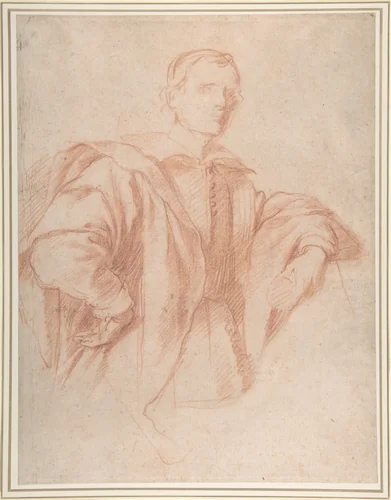
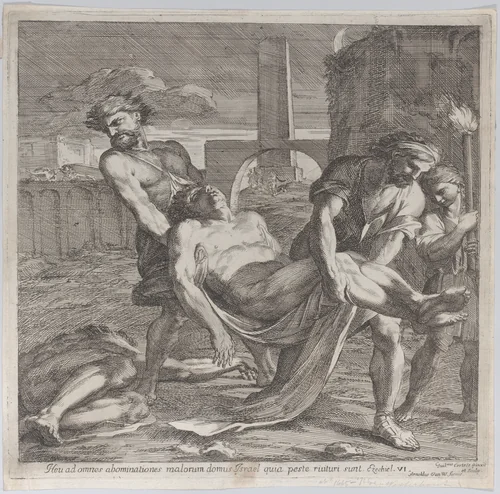
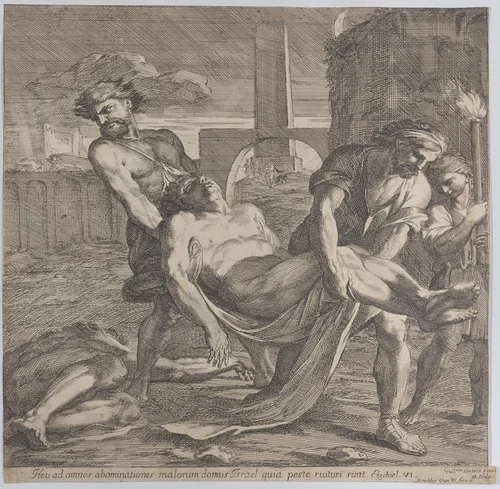
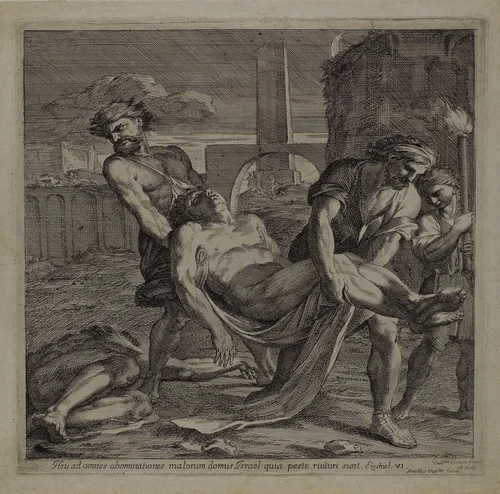
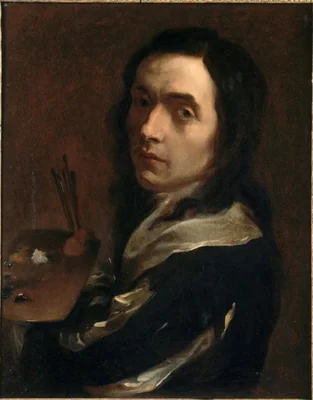
Courtois’s output focused heavily on grand religious and historical narratives, yet he demonstrated particular ingenuity in figure work. While mastering large-scale historical commissions, such as his depiction of Abdon and Sennen carrying the early Christian martyrs off for burial, he was highly sought after as a staffage painter, effectively populating scenes and bringing vitality to architectural and natural settings. Furthermore, he was regarded as a skilled portraitist, capturing sitters with a realistic sensitivity combined with a peculiar, almost immediate expressiveness that transcended mere likeness.
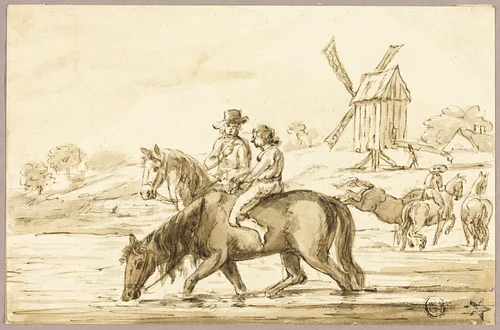
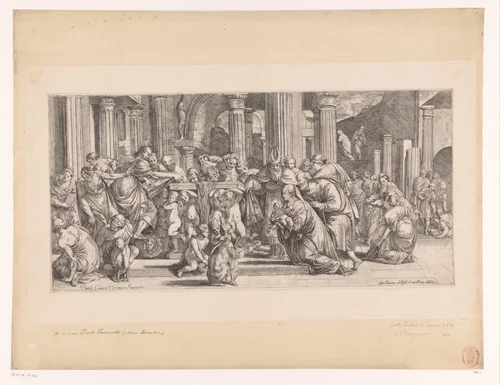
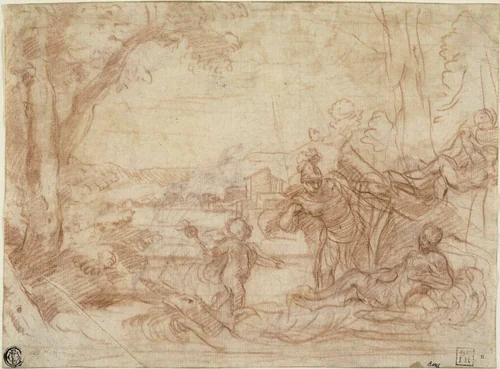
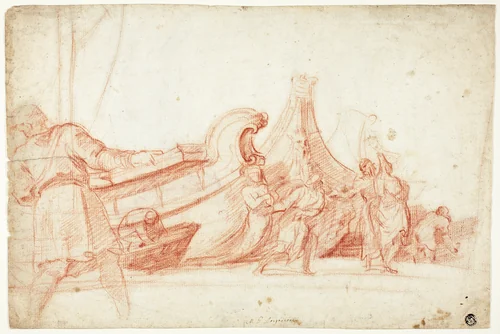
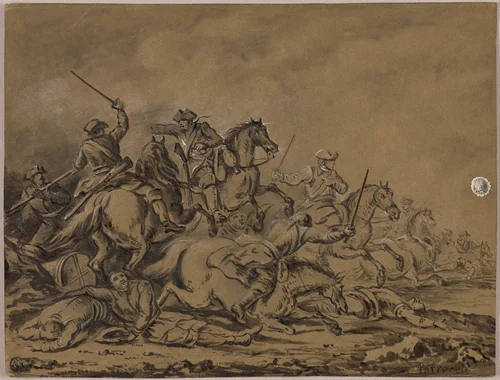
The sheer volume of preparatory drawings that survive today testifies to his relentless creative process. This extensive corpus, including compositions such as Watering Horses near Windmill and the detailed theological study Presentatie in de tempel, confirms Courtois’s status as a master draughtsman whose studies were essential tools for refining his ambitious canvases. However, his meticulous approach to anatomy and compositional balance often meant that these preparatory sketches served a dual purpose: valued by collectors even before the final painting was realized.
Working within the Eternal City, his art offered a unique synthesis of Northern European precision and Italian Baroque drama. His technical facility ensured the enduring quality of his output. The continued presence of Courtois's work in premier institutions, including the Metropolitan Museum of Art, the Rijksmuseum, and the Art Institute of Chicago, speaks volumes about his sustained influence. For scholars and enthusiasts interested in studying the Baroque drawing tradition firsthand, many of his sketches and Guillaume Courtois prints are now widely accessible as downloadable artwork. This transition ensures these museum-quality achievements remain in the public domain for scholarly review and appreciation.
Source: Wikipedia · CC BY-SA 4.0