Gregorio de Ferrari
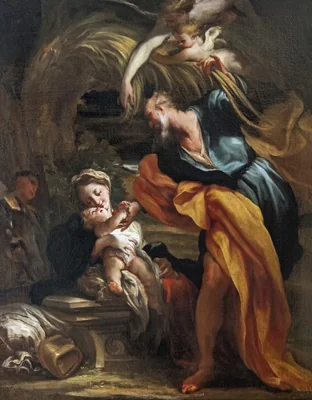
Gregorio de Ferrari (active 1644-1677) stands as a foundational figure in the Genoese School, instrumental in shaping the trajectory of the Italian Baroque during its later, most dynamic phases. Though often known primarily through his surviving preparatory studies and drawings, the fundamental importance of Gregorio de Ferrari paintings and decorative schema to the late seventeenth century cannot be overstated. Today, his work is held in prestigious international institutions, including the Rijksmuseum, the Metropolitan Museum of Art, and the National Gallery of Art, a clear marker of his enduring significance.
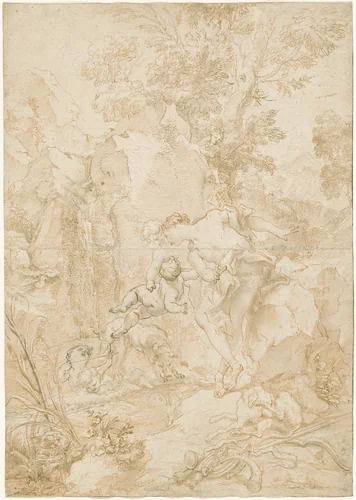
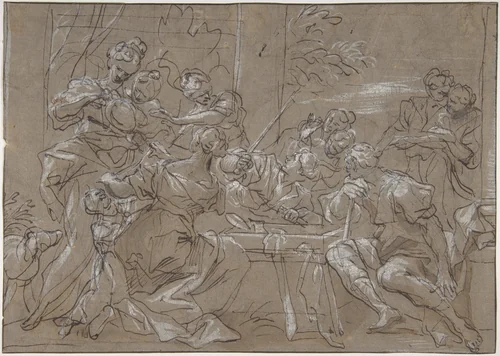
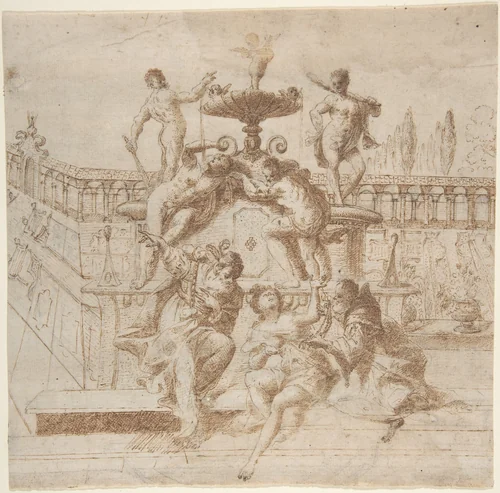
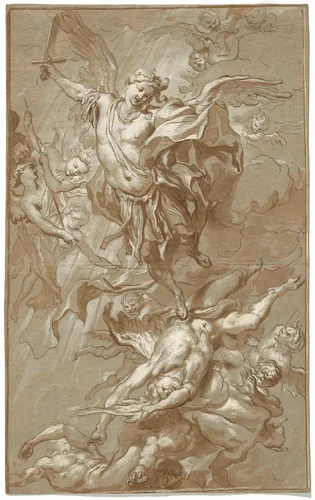
Ferrari specialized in grand decorative cycles, where drawing served as the crucial intermediate step between conceptual design and monumental execution. His surviving oeuvre reveals an artist equally adept at mythological narrative and complex architectural fantasy. His figures possess a distinct liveliness, captured in studies like Echo and Narcissus and Achilles and the Daughters of Lycomedes. These compositions, executed with exceptional fluidity, demonstrate the mastery required for translating small-scale invention into vast ceiling frescoes.
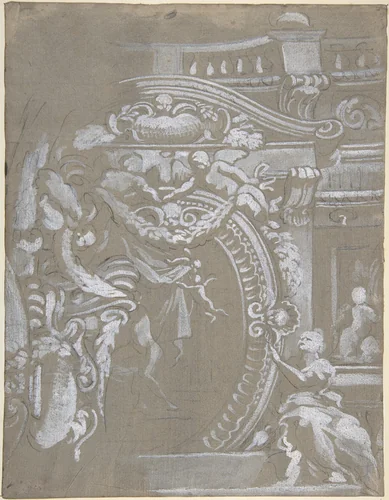
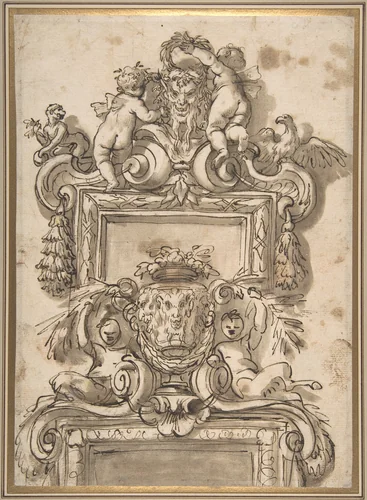
His focus often transcended simple figural arrangements, delving into the intricacies of integrating painting with the surrounding architecture. Ferrari was a meticulous designer of decorative features; the detailed nature of studies such as Ornamental Design for a Wall Monument Surmounted by a Balustrade with Human Figures, Angels Holding Garlands and Draperies (recto and verso) showcases his rigorous engagement with architectonic complexity. Few artists of the period tackled the technical demands of combining complex ornamentation, structural elements, and narrative scenes with such confident ease.
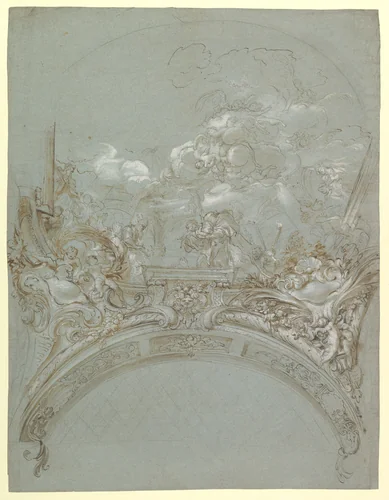
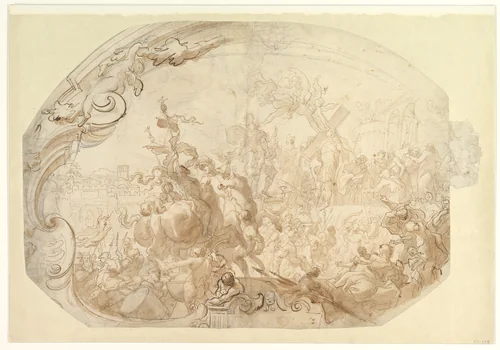
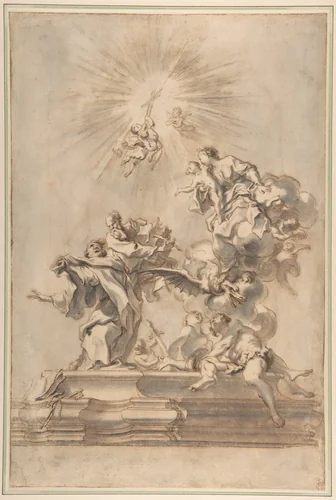
Indeed, even his religious subjects, exemplified by the dramatic rendering of the Study for Emperor Heraclius Carrying the Cross into Jerusalem or the soaring perspective required for a Ceiling Design with the Presentation in the Temple, are handled with a distinctly theatrical flair characteristic of the Genoese approach. These studies provide a vivid window into his process, now available as high-quality prints for researchers and enthusiasts. The enduring interest in his work ensures that many of his compositions, often sourced from museum collections, are made accessible today through the public domain, allowing for close examination of his deft and energetic draftsmanship.
Source: Wikipedia · CC BY-SA 4.0