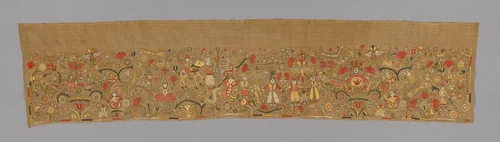
Greece Crete
The designation Greece Crete refers to a tradition of textile production documented as active throughout the 18th century (circa 1701-1801). Representative works from this period consist primarily of functional and decorative textiles crafted with intricate needlework, reflecting the material culture of the Aegean region.
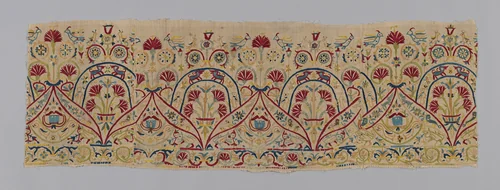
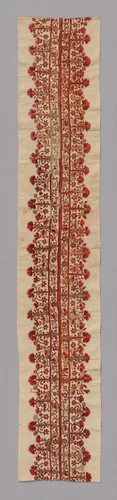
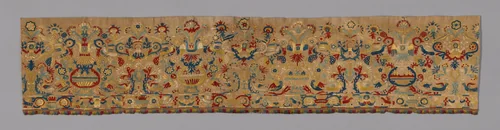
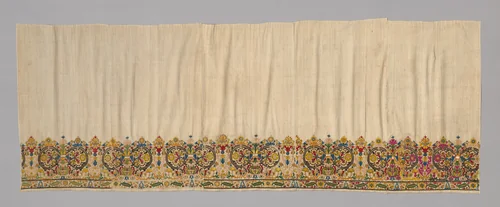
Six examples of textiles attributed to this tradition are represented in museum collections, confirming their status as museum-quality historical artifacts. These works are held by institutions such as the Art Institute of Chicago, establishing the significance of this output for the study of Mediterranean applied arts. The documented pieces predominantly include components of traditional dress, notably four examples titled Border (For a Skirt) and a full Skirt.
While the creators of these pieces are typically anonymous, the complexity and consistency of the execution highlight the high standard of craftsmanship achieved during the century. Researchers interested in the artistry of the region often access high-quality prints and downloadable artwork derived from these historical pieces. Due to their age, many of the images representing these Greece Crete prints are now classified as public domain, facilitating broad study of these textiles.