Govert van der Leeuw
Govert van der Leeuw (1645–1688), often recorded in historical documents as Gabriel van der Leeuw, holds a focused, yet significant, position within the later period of Dutch Golden Age landscape artistry. Active around 1655, Van der Leeuw specialized in evocative, small-scale scenes, often favoring the dramatic textures and atmospheric effects achievable through etching and drawing over large-format oils. His works resonate with the influence of the Bamboccianti and other Italianate painters who brought the rough beauty of the southern European countryside back to the Netherlands.
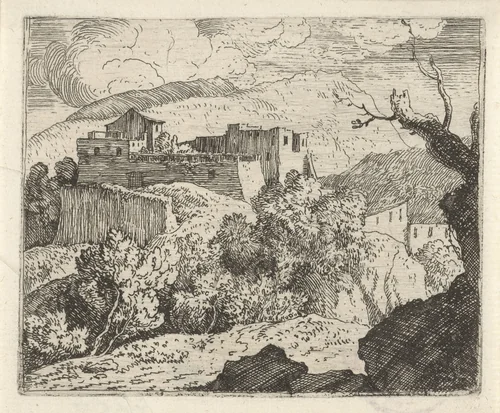
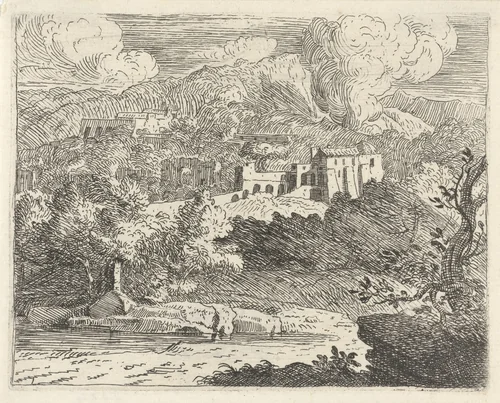
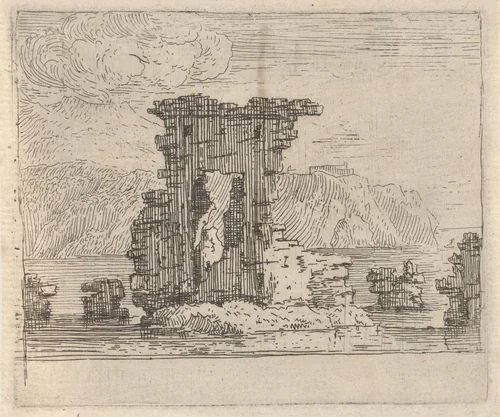
The core of Van der Leeuw’s known legacy rests upon a concentrated output of graphic works, currently numbering eight known prints. These compositions frequently deviate from the traditional flat polder landscapes favored by many of his contemporaries, opting instead for rugged, mountainous vistas peppered with classical ruins and intimate pastoral figures. His skill lay in his ability to imbue these miniature scenes with monumental feeling; works like Berglandschap met ruïnes van een fort expertly utilize steep diagonal planes and deep shadows to convey scale and antiquity.
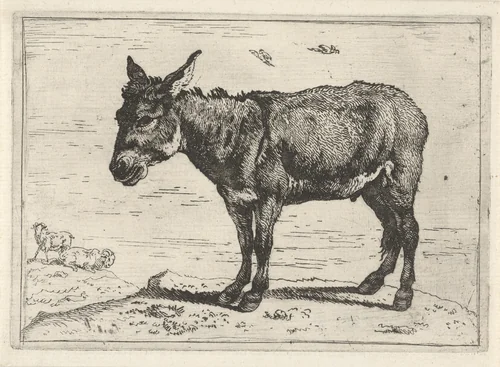
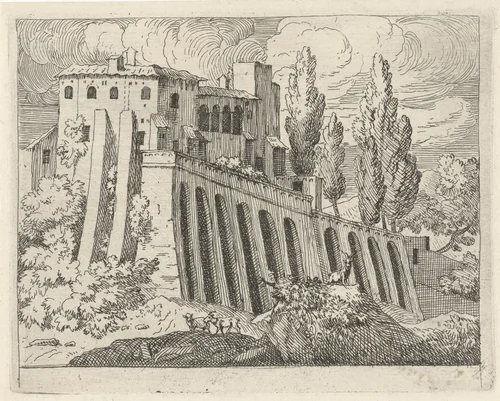
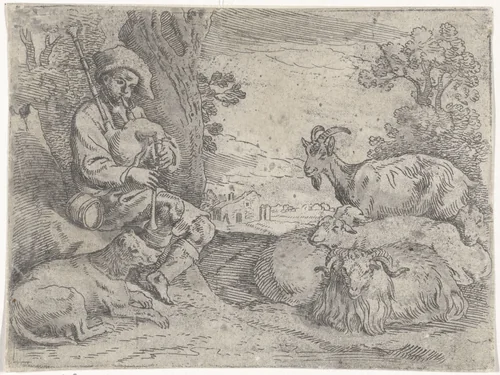
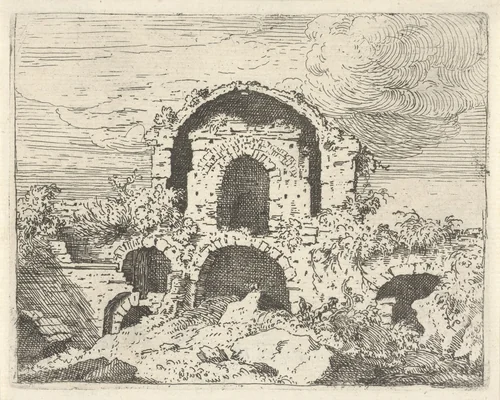
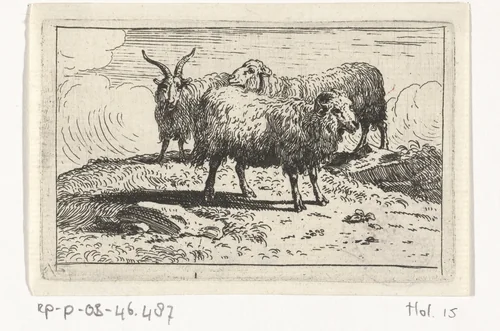
Van der Leeuw paid particular attention to the depiction of livestock and laborers, integrating them seamlessly into the environment rather than treating them as mere props. The specific focus on an animal study in Ezel highlights this observational rigor, while the narrative interest of Herder speelt op een doedelzak anchors the scene in the daily reality of 17th-century rural life. Even seemingly straightforward architectural studies, such as Gebouw in een landschap, are rendered with a powerful sense of place and historical weight.
Although details concerning his specific training remain sparse, the technical mastery of his etching style suggests an artist highly trained in graphic arts traditions. It is perhaps indicative of the intense competition among mid-century Dutch printmakers that such high-quality prints were produced by an artist whose documented active period appears so remarkably compressed. Despite this brevity, his surviving images, including Heuvellandschap met stroompje, secured his representation in major institutional holdings, including the Rijksmuseum. Today, Van der Leeuw’s work is highly valued by collectors and researchers. Because many of these historic images are now in the public domain, they are frequently available as high-quality prints, providing modern audiences with royalty-free access to these masterful, museum-quality compositions.
Source: Wikipedia · CC BY-SA 4.0