Govardhan
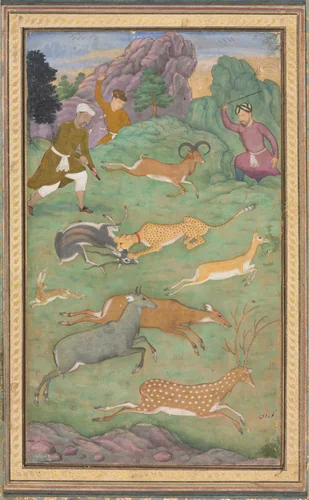
Govardhan, a preeminent figure in the history of Indian painting, served in the imperial Mughal atelier during the height of its refinement, principally across the reigns of Emperors Jahangir and Shah Jahan (ca. 1600–1658). His prodigious output redefined the courtly miniature, moving beyond simple documentation to establish a form of portraiture deeply invested in psychological nuance.
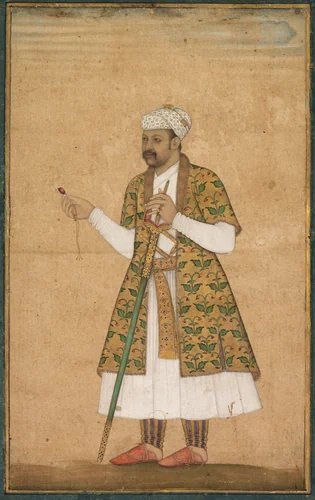
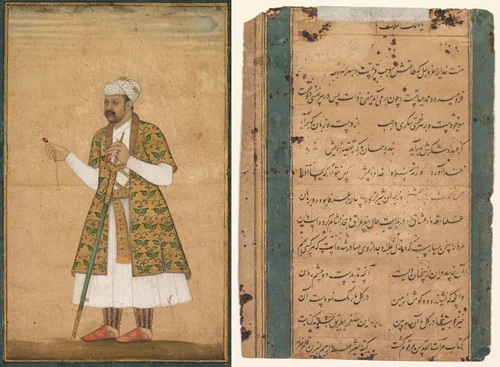
Govardhan’s distinctive style is characterized by sensitive modeling, a rich, luminous color palate, and an unparalleled mastery of line. He was particularly adept at rendering flesh, fabric, and texture, ensuring that even accessories carried the weight of empirical significance, as seen in works like "A Courtier, Possibly Khan Alam, Holding a Spinel and a Deccan Sword". While other Mughal painters mastered the formal requirements of the court, Govardhan infused his work with a quiet introspection. His subjects often possess a notable melancholy gravity, suggesting complex interior lives beneath their imperial trappings.
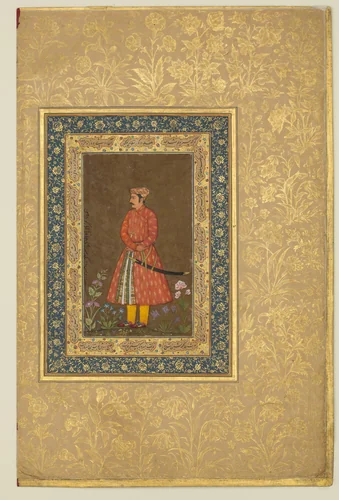
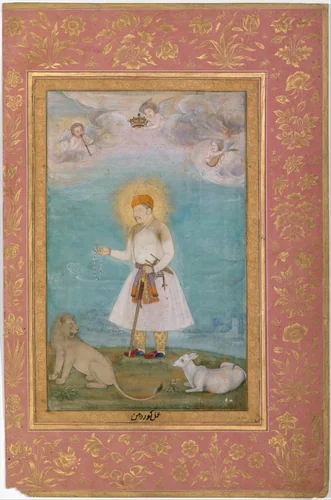
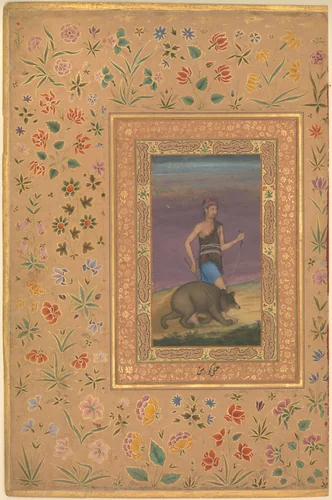
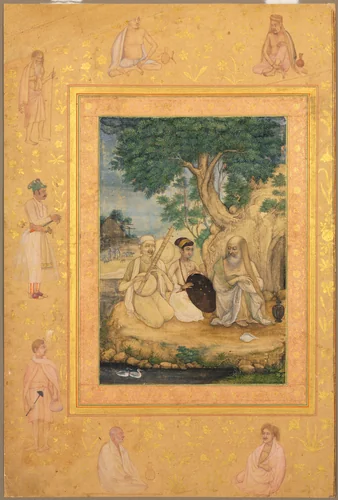
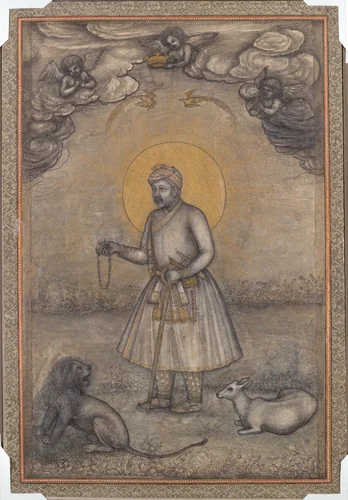
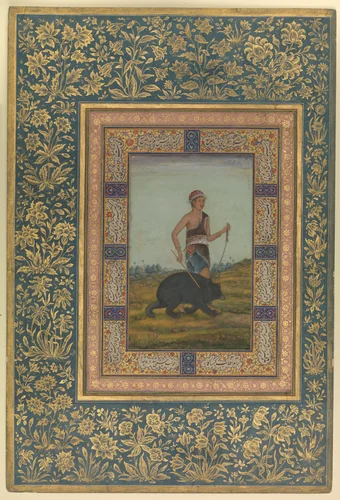
Much of his most celebrated work was produced for the Muraqqa or imperial album tradition. The celebrated Shah Jahan Album, from which masterworks such as "Portrait of Rup Singh" and "Akbar With Lion and Calf" originate, showcases Govardhan’s technical versatility. Whether depicting the formality of the court or the casual observation of the natural world, his compositions display exacting detail. Furthermore, Govardhan excelled at depicting religious ascetics and ordinary people—a surprising emphasis for a painter based in the rigid confines of the court. His "Dervish Leading a Bear" offers a wonderfully unusual pairing, capturing the unexpected interactions of daily life with a subtle realism.
Govardhan’s sustained active period, which spans the turn of the seventeenth century, secured his position as an enduring influence on subsequent generations of artists. His commitment to high-quality prints and execution ensures that his legacy remains central to Mughal art studies. Today, his key works are housed in major international repositories, including the Metropolitan Museum of Art and the Cleveland Museum of Art. For scholars and enthusiasts alike, many Govardhan paintings are now in the public domain, providing access to these essential documents as royalty-free downloadable artwork.