Glenn Wilson
Glenn Wilson holds a distinct position within the American art historical record, primarily due to his precise and crucial contributions to the Index of American Design (IAD). Operating under the auspices of the Works Progress Administration’s Federal Art Project, the IAD sought to create an unparalleled visual archive of American decorative and folk arts, capturing objects often overlooked by traditional fine art institutions. Wilson’s active period, defined strictly between 1941 and 1942, marks him as one of the project’s later contributors, working intensely as the United States entered the Second World War. His works are preserved in the permanent collection of the National Gallery of Art.
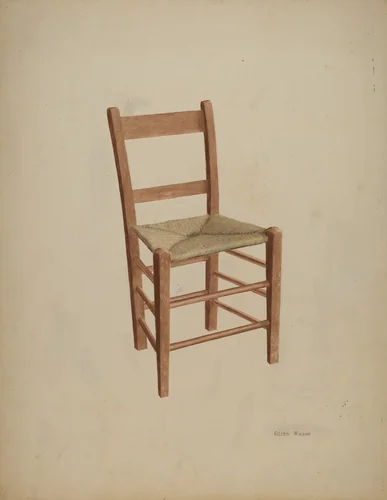
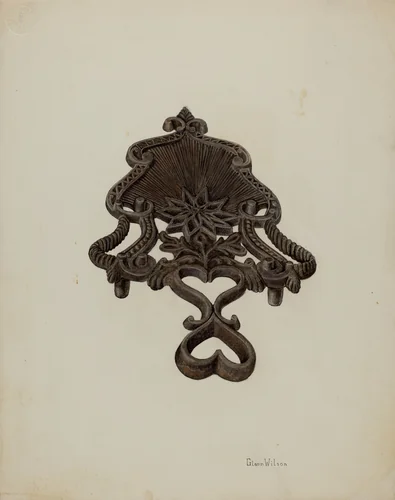
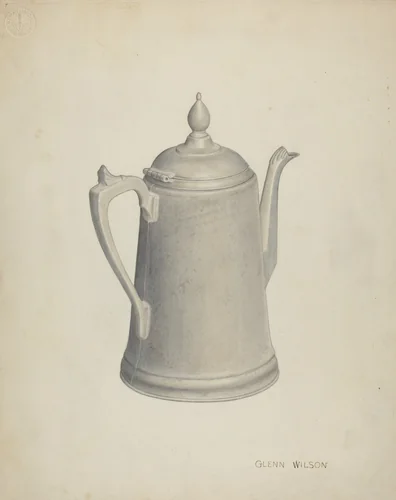
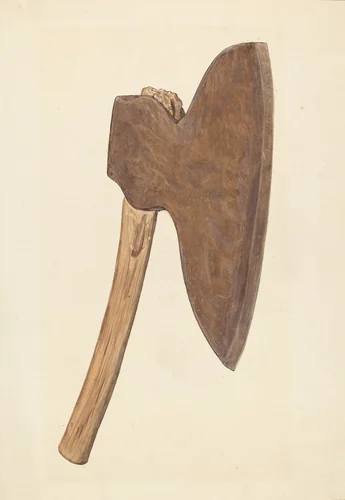
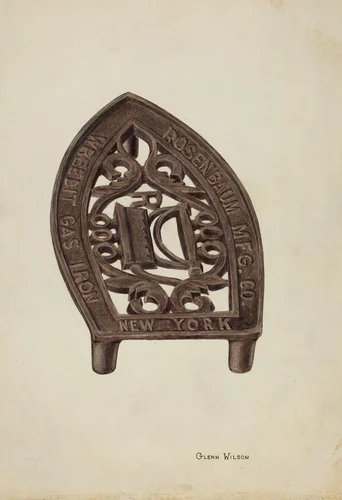
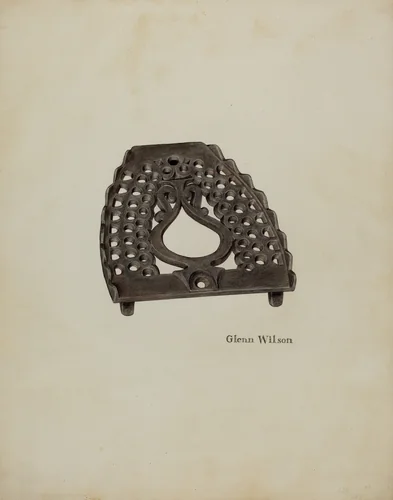
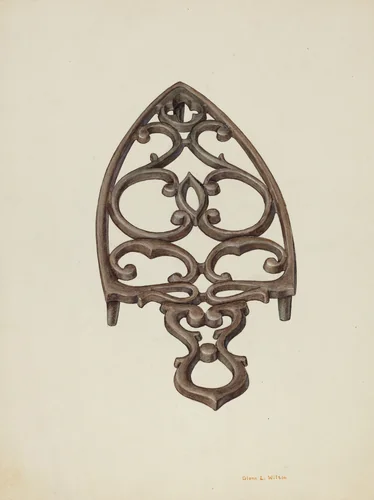
Wilson specialized in highly detailed studies of vernacular objects that defined domestic and industrial utility in early America. His renderings were not merely aesthetic interpretations, but meticulous technical diagrams intended for historical preservation. His portfolio included essential examples of early American metalwork and furniture, ranging from the complex structure of a Chair (handmade) to highly functional studies of the Metal Trivet and the delicate detailing captured in the Pewter Teapot. Perhaps most telling of the IAD’s mission, however, is his faithful documentation of the Pioneeer Broad Axe, juxtaposing the necessities of robust frontier life against the more refined comforts represented by the domestic implements.
The sheer authenticity and clarity of Wilson’s output ensure his drawings continue to serve as a vital resource for scholars of material culture. Due to their institutional history, many of his IAD works are considered essential museum-quality records, frequently reproduced for educational purposes. Enthusiasts seeking Glenn Wilson prints value the crisp, authoritative line quality he brought to these otherwise ordinary objects.
Though the full arc of Wilson’s career remains largely defined by this concise 24-month span of service, his legacy persists through these rigorous visual documents. The quiet intensity and dedication required to produce these detailed studies, especially while the nation's focus was shifting towards global conflict, underscores a deep, lasting commitment to documenting American heritage. These historically accurate drawings are now widely available as royalty-free downloadable artwork, ensuring that Wilson’s careful efforts to conserve American design are accessible to the widest possible public.