Glenn Ligon
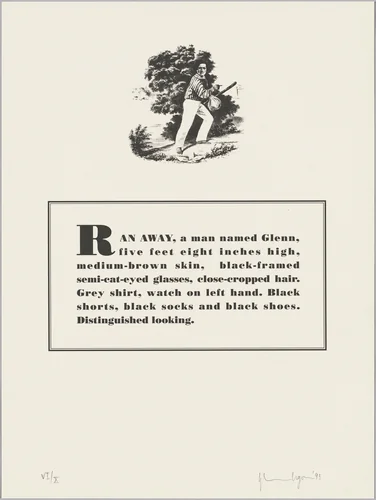
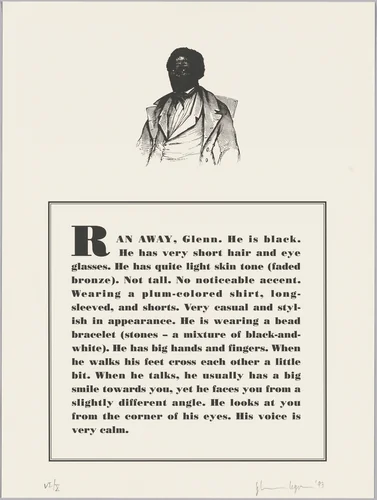
Glenn Ligon is a foundational figure in contemporary American conceptual art, recognized globally for his incisive, rigorous examinations of language, identity, and the mutable nature of cultural representation. Working across painting, printmaking, and installation, Ligon’s practice focuses acutely on the structure of text, demonstrating how meaning shifts, fragments, and accrues new significance when removed from its original context.
Based in New York City, Ligon’s methodology frequently involves the appropriation and recontextualization of 20th-century American speech and literature. He borrows extensively from towering cultural figures whose writings define modern discourse on race, desire, and social position, including James Baldwin, Zora Neale Hurston, and Gertrude Stein. Ligon often transforms their prose into highly repetitive, layered, or stenciled works, employing techniques that push the clarity of the written phrase toward visual illegibility. This systematic obfuscation reflects the inherent slippage and difficulty in achieving shared understanding regarding complex issues such as sexuality, identity, and the experience of race. The tension between the direct authority of the source text and Ligon's subsequent visual blurring is frequently the core subject of the resulting artwork.
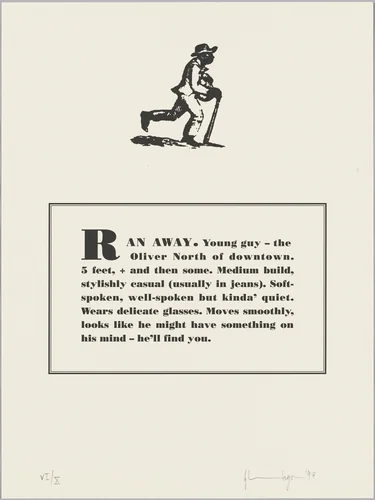
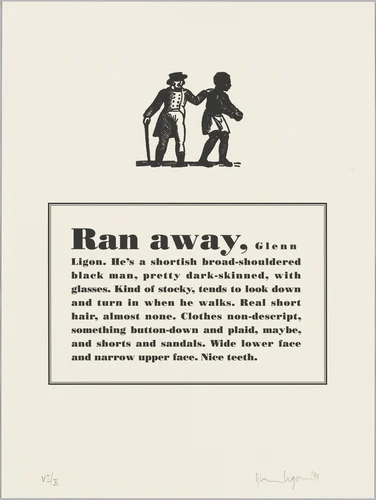
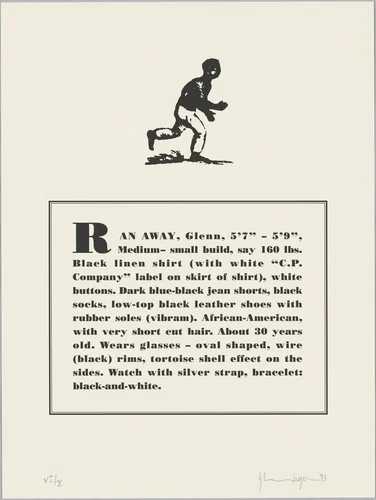
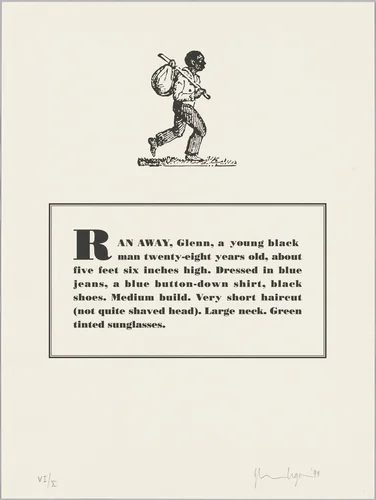
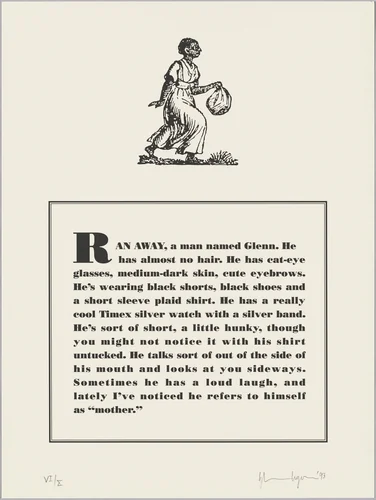
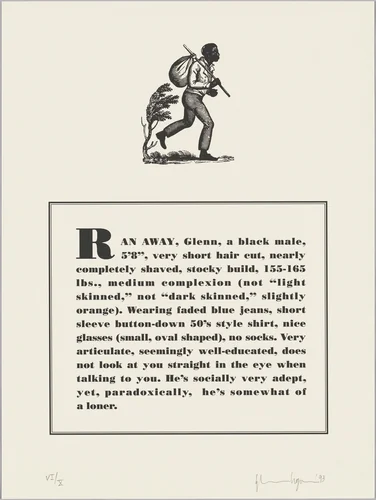
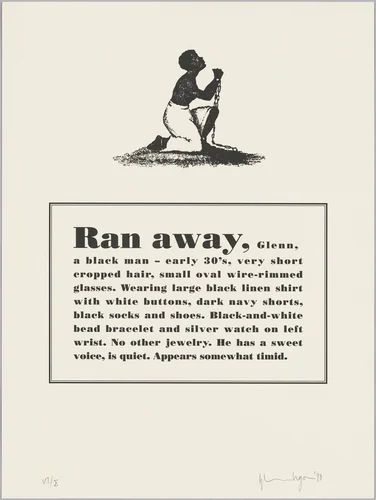
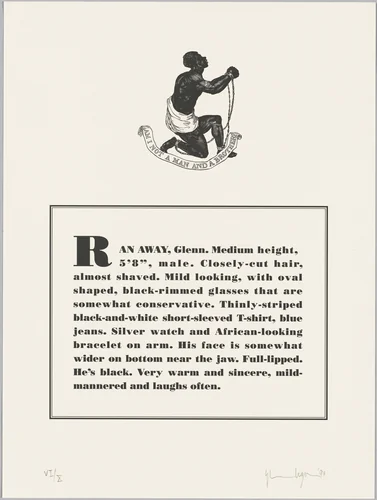
Although renowned for his dense, text-based canvases, Ligon’s foundational explorations into repetition and seriality are clearly evident in his printmaking output, which began in the early 1990s. A prime example of this sustained investigation is the 1992-1993 series, Untitled: (Four Etchings A-D), a seminal body of work now represented in major institutions such as the National Gallery of Art. The rigorous technical execution of these early Glenn Ligon prints established the formal framework for his later, widely exhibited conceptual works.
Ligon’s influence extends beyond the confines of the studio. He is credited as one of the key originators of the term Post-Blackness, a conceptual marker used to describe the complex, non-essentialist approaches to racial identity that gained prominence at the turn of the millennium. Today, Ligon’s enduring legacy continues to define museum-quality conceptualism, challenging prevailing narratives with intellectual rigor and yielding high-quality prints and paintings that remain crucial touchstones for contemporary discourse.
Source: Wikipedia · CC BY-SA 4.0
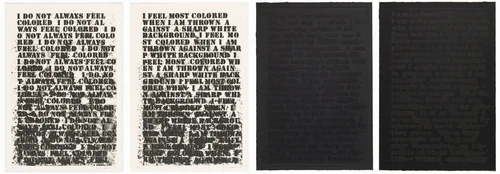
![Untitled: Four Etchings [A] by Glenn Ligon, print, 1992](https://img.artbee.org/d07997e2-4f41-43f4-b362-c26b32ae22ee/small.webp)
![Untitled: Four Etchings [B] by Glenn Ligon, print, 1992](https://img.artbee.org/9de0530e-275a-4a28-ab34-f4f77a9a0115/small.webp)
![Untitled: Four Etchings [C] by Glenn Ligon, print, 1992](https://img.artbee.org/823526c0-eba4-41e9-af24-7614c4f695a9/small.webp)
![Untitled: Four Etchings [D] by Glenn Ligon, print, 1992](https://img.artbee.org/c62ec832-1768-43f3-8a97-75b916789dff/small.webp)