Giuseppe Zocchi
Giuseppe Zocchi (1711-1764) stands as the essential visual chronicler of mid-18th-century Florence. An Italian painter and exceptionally prolific printmaker, Zocchi’s career was defined by his exacting vedute, or topographical views, which captured the urban fabric of the Tuscan capital just before the widespread influx of Neoclassical and Romantic sensibilities transformed artistic perception. Though recognized today by major institutions, including the National Gallery of Art, the Metropolitan Museum of Art, and the Art Institute of Chicago, Zocchi’s most significant historical impact derived from the wide distribution of his engraved works, turning his specific viewpoints into standardized, exportable representations of the city.
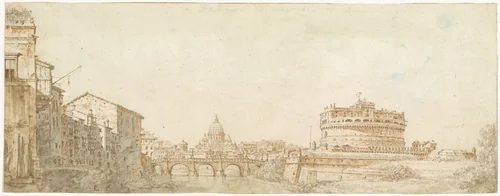
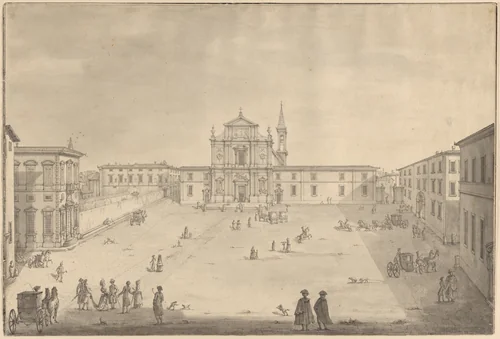
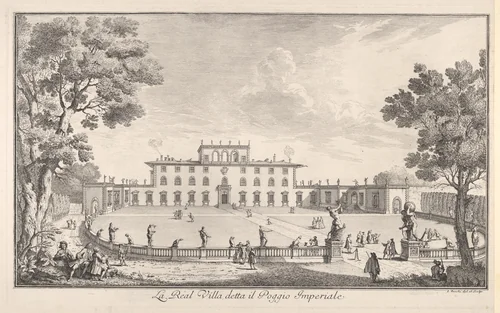
Zocchi specialized in meticulously composed urban scenes, balancing architectural fidelity with pleasing chiaroscuro. While he demonstrated skill beyond Tuscany, evidenced by works like View of Rome with the Dome of Saint Peter's and the Castel Sant' Angelo, his reputation rests heavily on documents of his home region. His Florentine compositions frequently centered on famous landmarks, exemplified by the detailed A View of the Piazza San Marco in Florence. Crucially, Zocchi often worked in extensive published series, documenting not just the city center but also the surrounding estates, exemplified by plates like The Royal Villa called il Poggio Imperiale (La Real Villa detta il Poggio Imperiale) from his important collection, Views of the city and other places of Tuscany.
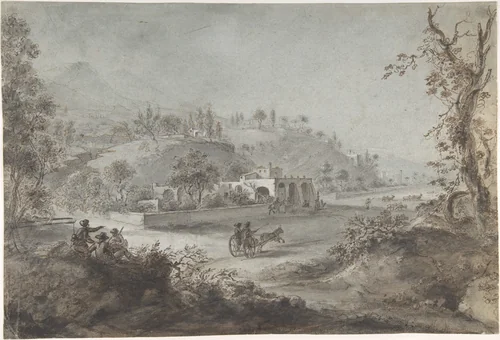
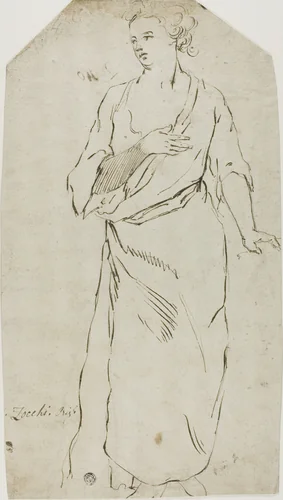
The rigor of Zocchi's initial drawings, confirmed by sketches such as Landscape Prospect with a Buggy and a Herd of Goats, attests to his dedication to observational accuracy. Yet, the enduring appeal of his vedute lies in their subtle narrative inclusions. Unlike many contemporaries who focused exclusively on monumental architecture, Zocchi reliably populated his grand, public views with carefully rendered figures engaged in everyday commerce and transit. It is through these small vignettes of standing women and incidental buggies that Zocchi offers a glimpse, almost inadvertently, of the operational machinery beneath the grand spectacle of the Grand Duchy.
Zocchi's mastery of the print medium ensured that his documentation reached a broad audience, satisfying the immense demand created by the Grand Tour market. Today, scholars seeking accessible research materials often benefit from the availability of Giuseppe Zocchi prints; due to their age, many of these images now rest firmly in the public domain. The continued existence of high-quality prints and downloadable artwork ensures that Zocchi's detailed perspective remains an important resource for 18th-century cultural studies.
Source: Wikipedia · CC BY-SA 4.0